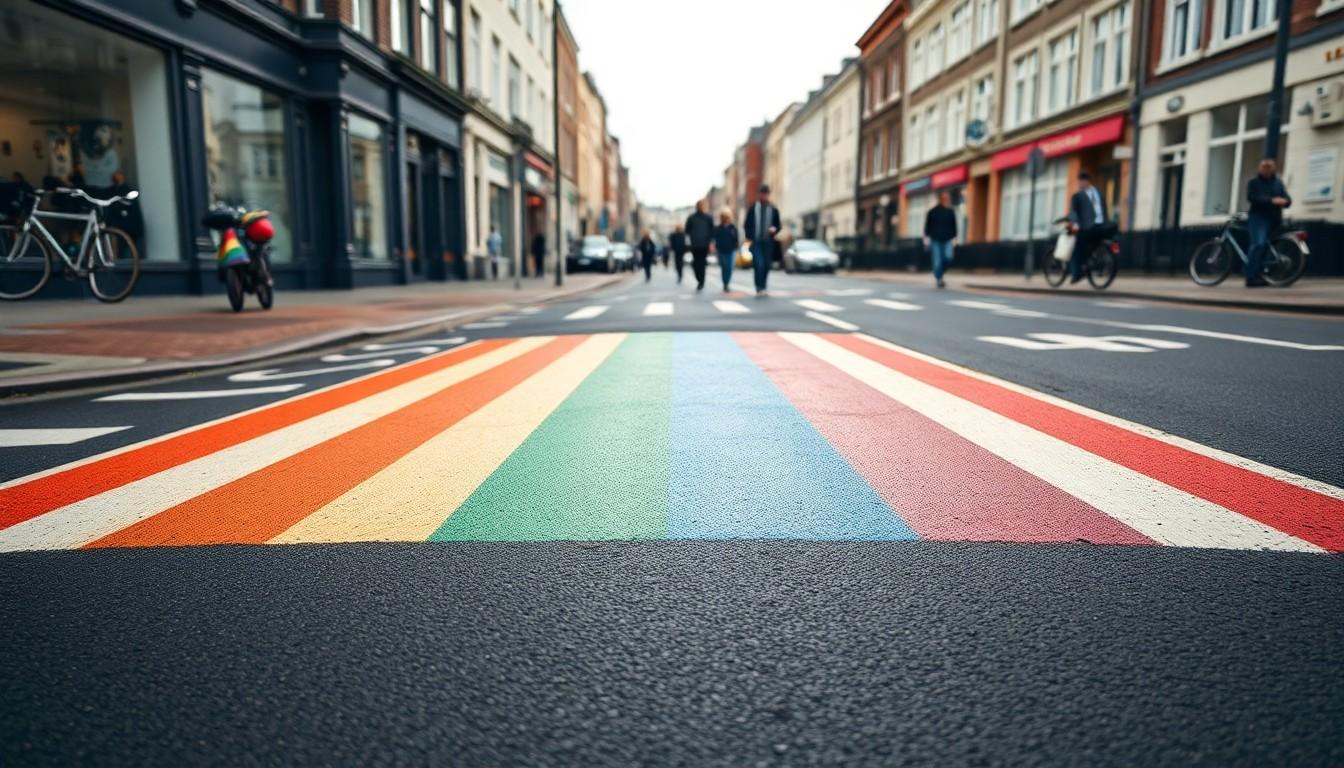
Shoppers, commuters and activists are all noticing rainbow crosswalks popping up , and asking whether colourful paint really helps pedestrians, represents communities or creates new hazards. Here’s why the debate matters, where safety and symbolism collide, and practical steps councils can take.
Essential Takeaways
- Symbol versus substance: Rainbow crosswalks signal inclusion but don’t on their own change underlying safety or rights issues.
- Surface risk: Fresh paint can reduce skid resistance when wet; timing and treatment matter for pedestrian grip.
- Local reaction varies: Some cities keep and maintain colourful crossings, others have removed them after vandalism or safety complaints.
- Simple fixes exist: Anti-slip coatings, warning signage, and community consultation cut the real-world downsides.
- Look beyond paint: True inclusion needs policies and protections, not only public art.
Why the rainbow crosswalk sparks such lively debate
The sight of a freshly painted rainbow zebra is purposefully cheerful, and it can feel like a warm reassurance if you belong to the LGBTQ+ community. But it quickly becomes complicated when the surface gleams after rain or fresh paint and someone slips. Media coverage from across the US shows that incidents, complaints and even removals have followed in some places, so the question is not just symbolic , it’s practical. Councils trying to show support are finding they must also manage safety, maintenance and controversy.
What the safety evidence actually says
Traffic-safety research makes a clear point: high-visibility markings can improve pedestrian safety, but paint alone is no silver bullet. The National Highway Traffic Safety Administration and pedestrian-safety workbooks emphasise contrast, maintenance and skid resistance. Freshly applied or glossy paint can reduce traction when wet, so timing, materials and surface treatment matter. That means cities that want colourful crossings should work with engineers, not just artists.
Real-world responses from cities , remove, repair or retain?
Responses vary. Some councils have removed rainbow crosswalks after vandalism or complaints; others have defended and repaired them, treating them as permanent fixtures. Reporting shows a patchwork approach: in some towns the crossings have become civic landmarks, while in others they’ve been temporary gestures or targets in culture-war flashpoints. The mixed outcomes underline that local context , traffic volumes, weather, and community feeling , should shape decisions.
Practical steps for safer, more durable colourful crossings
If your council wants a rainbow crosswalk but also wants to avoid slips and disputes, there are straightforward steps. Use anti-slip aggregates or textured coatings for grip, schedule painting in dry spells and with quick-curing products, and put up temporary warning signs until the surface is fully cured. Consult road-safety experts and involve local groups so the work is seen as both meaningful and safe. Small investments in materials and communication make a big difference.
Why symbolism still matters , and what comes next
Painted crossings can be joyful and visible gestures of inclusion, but they’re only a start. Political leaders and campaigners who criticise them for being token gestures have a point: legal protections, safety measures and community services matter more for day-to-day wellbeing. That said, art in public space can open conversations, show solidarity and nudge culture. The sensible path is to treat rainbow crosswalks as part of a wider strategy , celebrate, yes, but also legislate and maintain.
It's a small change cities can make better: keep the colour, but make sure nobody slips on the way to feeling safer.
Source Reference Map
Story idea inspired by: [1]
Sources by paragraph: