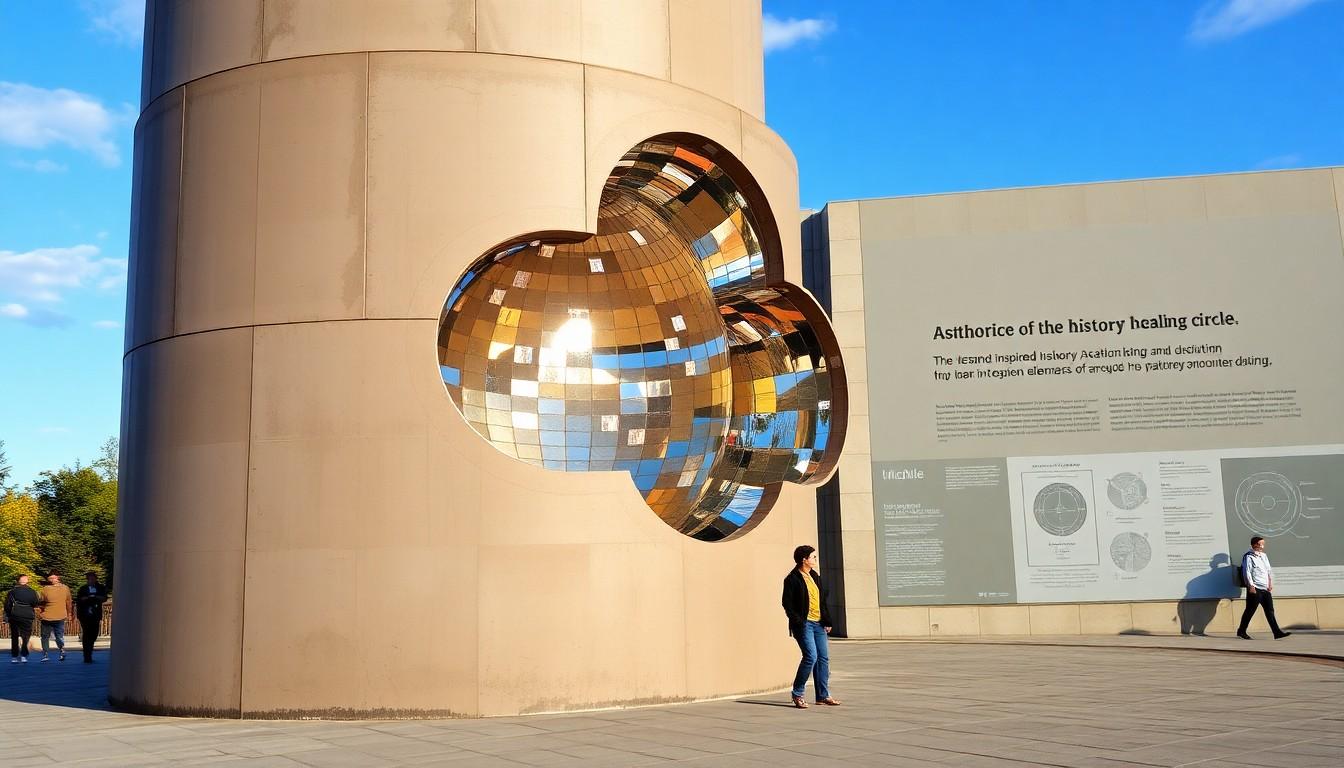
Watch closely: Canada has unveiled a striking new 2SLGBTQ+ monument on the Ottawa riverbank that aims to memorialise a painful history while celebrating resilience , it glitters, it’s ceremonial, and it’s sparking debate about symbolism, Indigenous partnerships and what public remembrance should look like.
Essential Takeaways
- Location and scale: The Thunderhead stands beside the Ottawa River, a 30-foot-tall cylindrical memorial visible from the capital’s parliamentary precinct, with mirrored interior surfaces that create a disco-ball glow.
- Design features: The monument’s cloud-shaped carveout is lined with thousands of mirrored tiles; surrounding landscaping includes a stage, medicinal plant garden, and a healing circle with a firepit.
- Origins of funding: Built with money from the LGBT Purge Fund, the project follows a class-action settlement aiming to acknowledge harms suffered by 2SLGBTQ+ people under past government policies.
- Cultural framing: The memorial blends contemporary 2SLGBTQ+ symbolism with Indigenous elements and language such as Two-Spirit and Indigiqueer, a choice that’s raised questions about history and intent.
- Visitor experience: An interpretive wall traces the history of persecution and survival, and the site is intended for ceremonies, gatherings, and ongoing community programming.
A glittering landmark with a very deliberate nod to nightlife culture
The clearest sensory detail is visual: at night the Thunderhead reflects light like a disco ball, an obvious reference to queer nightlife and safe spaces where many in the community found sanctuary. According to Parks Canada and project materials, the mirrored interior is intentionally theatrical , it’s meant to shine back at viewers and animate the riverbank after dark. Designers say the effect honours the role of clubs and gatherings in queer culture, while also signalling joy after trauma.
The concept grew from consultations and a mandate to create a place of remembrance and celebration. The federal government’s monument page and the LGBT Purge Fund outline the intent to commemorate survivors and educate visitors. If you go, expect a place that deliberately mixes spectacle with sober storytelling.
Why Indigenous terms and ceremonial elements appear here
Project descriptions and interpretive content make clear the site was created alongside Indigenous and 2SLGBTQ+ contributors, incorporating elements like a medicinal plant garden, a healing circle, and stones gathered from across provinces and territories. The use of labels such as Two-Spirit and Indigiqueer reflects contemporary identity language used by many Indigenous queer and trans people.
Resources on Two-Spirit identity note the term’s relatively recent adoption and its specific cultural context, while Indigiqueer emerged even later as a way some people prefer to describe modern Indigenous queer experience. That history matters when a national monument aims to blend spiritual, cultural and political meanings , and critics and supporters alike are talking about whether that blend feels authentic or instrumental.
How the project was paid for and what the interpretive wall says
The Thunderhead was built with funds from the LGBT Purge Fund, the reparations-style pot created after a class-action lawsuit over historic government persecution. The interpretive wall at the site outlines colonial-era policies, the purge’s impact on 2SLGBTQ+ people and the movement toward acknowledgment and healing.
According to the project’s published interpretive content, the wall is intended to teach visitors about discrimination and the ongoing need for redress. If you’re interested in context before visiting, the LGBT Purge Fund and federal heritage pages publish background materials and statements about the monument’s goals.
Debates over symbolism and historical accuracy
Public monuments always attract argument, and Thunderhead is no different. Some commentators have questioned the juxtaposition of Indigenous spiritual motifs with contemporary queer iconography, warning about the risks of simplifying complex histories. Others welcome the site as a rare, prominent national recognition of harms and survival.
It’s worth noting that the language used in public interpretation , terms, timelines and origin stories , influences how visitors understand the past. For many, the presence of Two-Spirit and Indigiqueer terminology signals visibility and inclusion. For others, the relatively recent coinage of those terms raises questions about presenting them as ancient traditions. The conversation around Thunderhead is likely to continue as people visit, reflect and respond.
Visiting practicalities and what to look for
If you plan to see Thunderhead in person, expect a compact but layered site: the cylinder, mirrored interior, the interpretive wall, seating carved from local Tyndall Stone, and a firepit designed for ceremonies. The surrounding park invites gatherings, performances and quiet reflection, and there are notes about programming on opening announcements.
Take a torch at night to see the disco-ball effect from different angles, but also spend time reading the wall in daylight to absorb the historical material. Consider bringing an open mind , the site aims to teach and to provoke , and check official channels for ceremony schedules or guided programming.
It's a small but vivid addition to Ottawa’s public landscape, and one that will keep people talking.
Source Reference Map
Story idea inspired by: [1]
Sources by paragraph: