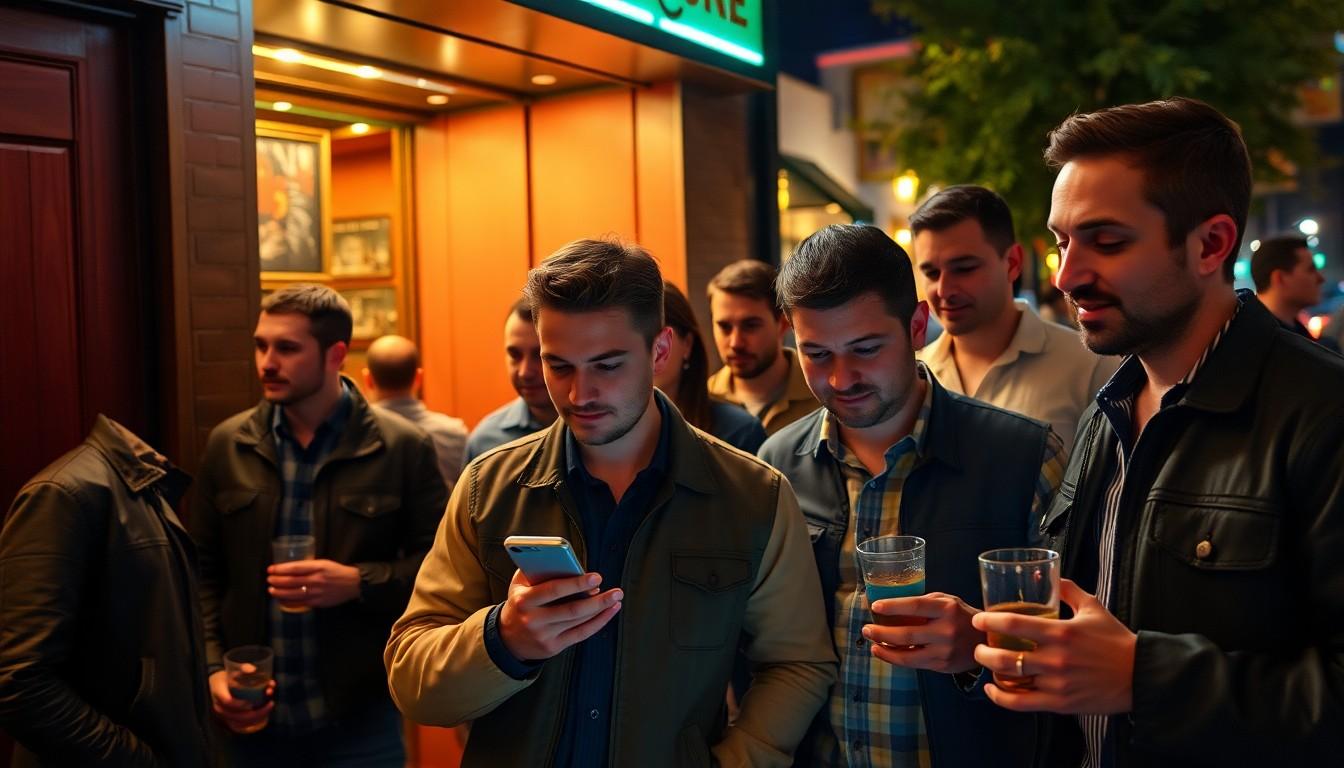
Notice how leaving the house used to mean stepping into a whole other world; now our phones come with us and change the rules. Gay men who remember pre-smartphone scenes are reworking how they go out, blending old hunting grounds with new apps to make social nights feel less lonely and more intentional.
Essential Takeaways
- Old-school maps mattered: before apps, people learned which bars, nights and bookshops held queer community, building social knowledge like a treasure map , tactile and local.
- Fortresses became portable: smartphones now hold identities, photos and hookups, making them comforting but also isolating when you’re physically out.
- Going out still works: in-person scenes still offer unpredictable chemistry and joy that an algorithm can’t replicate , smells, music, and eye contact still count.
- Choose your outing with intent: pick venues and nights that match your energy , dance, chat, hook up, or just be , and allow yourself time without screens.
- Practical balance wins: use apps to plan and screen, then put the phone away to actually meet people; set simple rules like “no phone during first hour.”
Why the pre-internet nightlife feels like a different planet
There’s a tactile nostalgia to those late-night trips to a queer bar or a specific bookstore shelf that phones can’t imitate. People remember the thrill of asking a friend for directions to a party, the car ride, the uncertain promise of who might be there. According to oral histories and community recollections, those outings were part ritual, part expedition, and emotionally charged in ways a curated feed rarely is. That intensity produced weird, cringy and brilliant memories alike, and it’s what many older queers say they miss.
How smartphones turned your home into a portable fortress
Smartphones brought the comforts of home into your pocket , music, porn, friends, memories , and that’s both a gift and a hazard. Research into digital behaviour shows devices reduce social friction by offering safety and information, but they can also keep us psychologically inside our forts while standing in a crowded bar. The result: you might physically be at a party, but your attention is split between live conversations and an algorithm whispering elsewhere. The trick is using that safety to reduce anxiety, not to erase the immediate moment.
The modern map: apps, Partiful invites and curated nights
Today’s social maps are digital. Event pages, Partiful invites, and group chats tell you who’s likely to be somewhere and whether the vibe is right. That clarity can save you time and emotional energy , if you trust the RSVP. Industry surveys and cultural commentators note that the visible certainty of digital RSVPs has reshaped how people plan nights, making scenes more predictable but also more easily filtered. If you’re choosy, this is great; if you crave serendipity, you might need to hunt it harder.
Why in-person still beats a match sometimes
You can’t swipe smell, rhythm, or the micro-moment when a song hits and someone starts dancing like they mean it. Community reports from the pre-app era and research on social wellbeing both highlight that in-person encounters cultivate belonging in ways screens don’t. For queer people, the bar, club or café remains a site of choreography , rituals of eye contact, flirtation and group solidarity. Treat outings as experiments: try one night with a phone-break rule and note how your attention changes.
Practical rules for balancing fortress and freedom
Make simple, achievable rules that let your phone help without hijacking your night. Try these: check the invite list before you leave, then silence notifications for the first 45–60 minutes. Have a one-text check-in slip for safety, but otherwise keep the device in your pocket. If you’re dating, swap handles in person rather than live-scrolling someone’s feed while you talk. These small boundaries let you benefit from planning tools while still experiencing the messy, human stuff that made queer nightlife vital.
Looking ahead: what the next chapter of going out might look like
The interplay between digital maps and physical places will keep evolving. Promoters and venues already lean on apps to build community, while older regulars try to preserve the unpredictability that made scenes electric. Expect hybrid rituals , planned meet-ups with built-in phone-free pockets, or pop-ups that signal “come for the vibe, leave the scrolling.” And yes, there’s room for nostalgia without romanticising: those awkward, brave trips out taught people how to find each other, and we can still learn from that courage.
It’s a small change to go out with intention and tuck your fortress away; try it once and see what happens.
Source Reference Map
Story idea inspired by: [1]
Sources by paragraph: