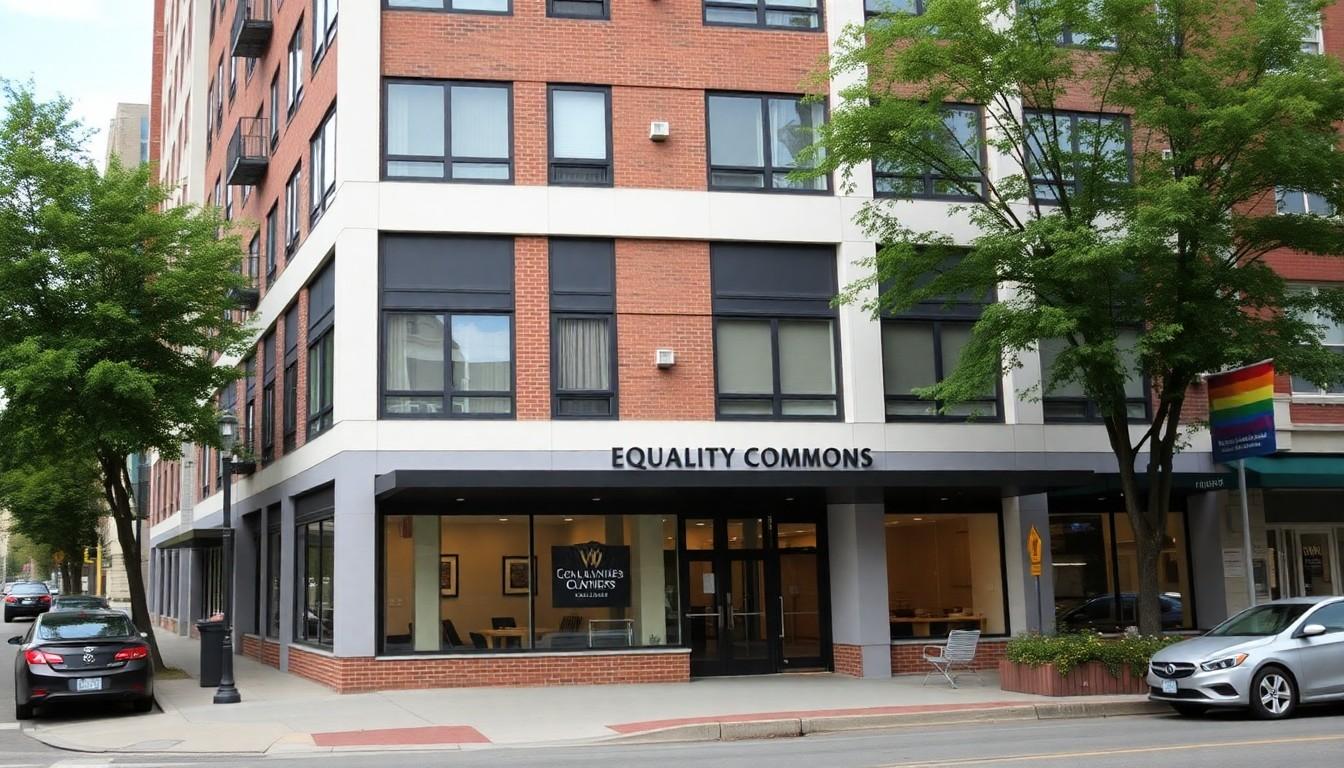
Watch Portland’s skyline get a little friendlier , Equality Commons, a 54-unit affordable housing community for residents 55 and older, has opened in downtown Portland to offer LGBTQ+ older adults and allies safe, affirming homes with support services and shared spaces that matter.
Essential Takeaways
- New housing stock: Equality Commons offers 54 income-restricted apartments: studios, one-bedrooms and two-bedrooms, with 19 accessible units.
- Community features: Residents get a community room, retail café with outdoor seating, back patio, laundry facilities and a bike room , cosy, social spots that reduce isolation.
- Targeted support: The development is designed as an LGBTQ+-affirming environment with programming and services to help older adults age with dignity.
- Local need: Older LGBTQ+ adults face higher risks of poverty, isolation and discrimination; this project aims to address both housing shortage and safety concerns.
- Developer info: Equality Community Center (ECC) leads the effort; more details and FAQs are available on ECC’s website.
Why this matters now: safety, dignity and dwindling options
Portland has gained a new, quietly bold answer to two persistent problems: a shortage of affordable housing for older adults and the specific insecurity many LGBTQ+ seniors face. The opening of Equality Commons puts 54 more affordable homes into a market where scarcity is a daily reality, and it does so with an explicitly affirming design. According to local reporting, the site mixes practical amenities with social spaces , a café, community room and patio , that feel warm rather than institutional.
The human angle is obvious. Older LGBTQ+ people are more likely to live alone, lack family caregiving networks and encounter discrimination when looking for rentals. Creating a place that’s explicitly welcoming reduces the daily friction of housing searches and the emotional toll of hostile or cold providers.
What the building offers , small comforts that add up
Equality Commons isn’t just units on a spreadsheet. It includes studios and one- and two-bedroom apartments, 19 of which are accessible, plus communal features such as a café with outdoor seating, a bike room and laundry facilities. These elements matter: a bench and a café table can be a lifeline in neighbourhood life, and on-site social spaces help counteract loneliness.
If you’re weighing whether a development like this is right for someone you care about, think practical: accessible apartments help people stay independent longer; a community room supports events and services; and a bike room nudges residents to get outside more often.
Who’s behind it and how it’s structured
The Equality Community Center (ECC) developed the project, and their site and FAQs outline eligibility, income limits and the kinds of programming planned. The focus is on long-term affordability and on creating an ecosystem of services , not a one-off box of flats. That matters because supportive programming can make the difference between merely housing someone and helping them thrive.
For readers considering applying or referring someone, ECC’s housing page and FAQs are the first stop for details on qualifications and how to apply.
How this fits into a wider trend of affirming senior housing
Across the US, a small but growing number of LGBTQ+-affirming senior housing projects are opening as advocates push for culturally competent options for older adults. Portland’s Equality Commons joins similar developments in other cities that tie affordable units to programming aimed at reducing isolation and addressing health and financial vulnerabilities.
That trend reflects a shift in thinking: affordable housing is no longer just about roofs and rent levels, it’s about community design and social infrastructure. Policymakers and funders are taking notice because culturally safe housing can reduce healthcare and social costs over time.
Practical tips if you or a loved one is interested
If you’re exploring Equality Commons or similar options, start with the developer’s website for eligibility and waitlist info. Prepare income verification documents and be ready to ask about on-site services and accessibility features. Visit the space if you can , the feel of a building and its communal areas tells you a lot about daily life there.
And don’t underestimate social fit: ask about resident programming, neighbourhood connections and whether allies are welcome , all of which influence whether someone will feel at home.
It’s a small change that can make every day safer and more sociable for older LGBTQ+ people.
Source Reference Map
Story idea inspired by: [1]
Sources by paragraph: