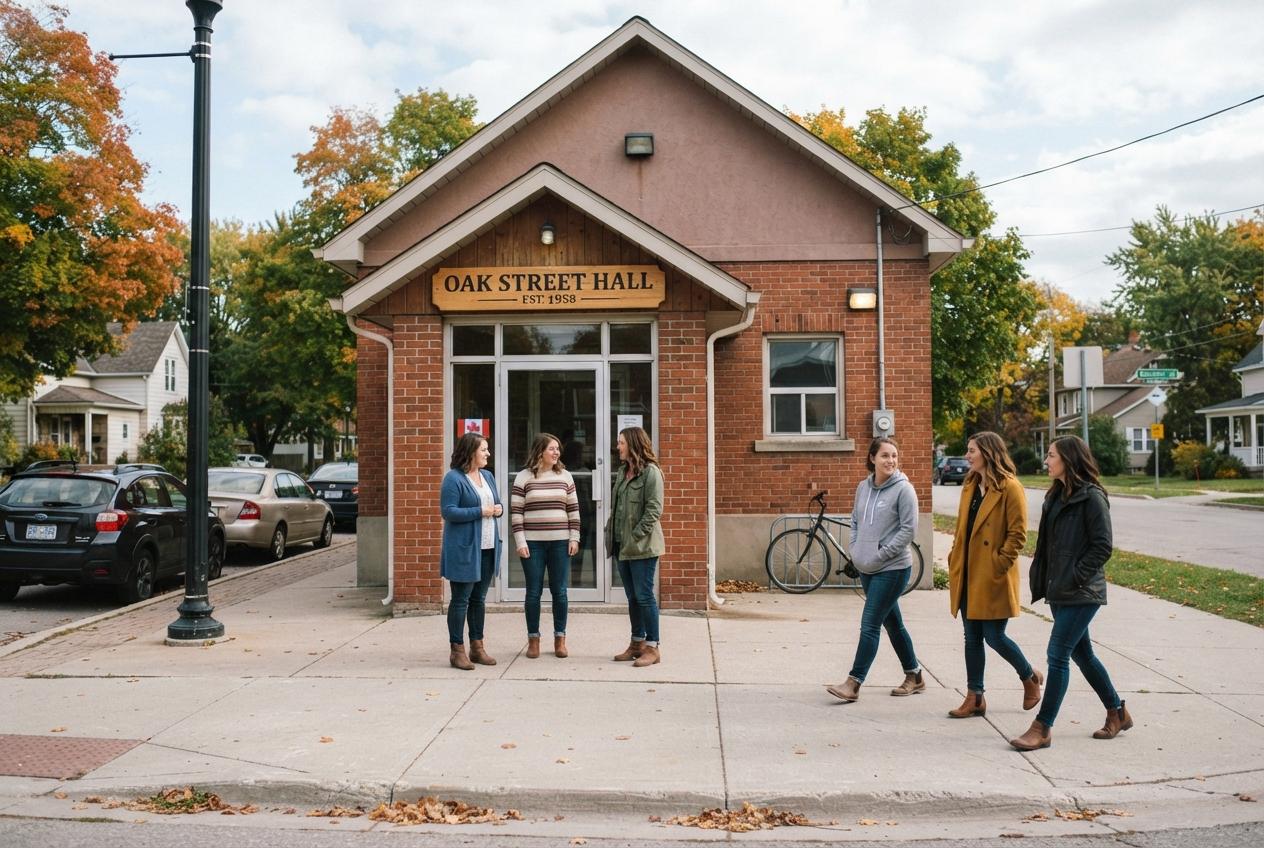
Shoppers and students might miss it, but Fredericton’s lesbian community carved out belonging in plain sight , on dance floors, softball diamonds, phone lines and in newsletters , showing how meaningful queer spaces can flourish outside big-city gay villages. Here’s how local women made room to be seen, safe and social from the 1970s to the 1990s.
Essential Takeaways
- Unexpected venues mattered: The Cosmopolitan Club’s Thursday dances became a quietly queer hotspot where women felt a sleek, nervous thrill on the dance floor.
- Organised networks sustained community: FLAG’s newsletters and the Gayline offered anonymity, info and a warm first contact for newcomers.
- Women-only spaces rose for safety: WOMYN and lesbian-only events provided a sturdier, more intentional sense of belonging when mixed groups felt exclusionary.
- The outdoors doubled as a venue: Softball, hiking and camping provided accessible, public spaces that felt freeing and practical.
- Imagined spaces were real: Phone networks, campus groups and publications knitted together a resilient community even when walls weren’t available.
How a straight dance hall became a queer haven
There’s something quietly cinematic about women slipping onto a Thursday-night dance floor and finding each other among swivel chairs and slow songs. In Fredericton the Cosmopolitan Club , a straight-owned venue on King Street , became exactly that in the late 1970s. It smelled faintly of polish and perfume, and for many, it was the first place they learned how to move in public together.
The city lacked a dedicated lesbian bar, so people made do. According to local accounts, lesbians and gay men used mixed pairs to appear heterosexual when necessary, and slowly those pragmatic manoeuvres became routines of safety and recognition. These borrowed venues mattered because they were visible, regular and somewhere you could test the waters.
If you’re looking for similar community today, think about where people naturally gather in your town and whether those sites can be gently reclaimed for queer meet-ups.
FLAG, newsletters and the Gayline: how print and phones built belonging
Formal organisations turned whispered introductions into a system. Fredericton Lesbians and Gays (FLAG), founded in 1979, didn’t always have a brick-and-mortar room, but it did publish Flag Mag and run the Gayline , a volunteer phone service that doubled as a lifeline for many.
Newsletters felt tactile and intimate; they smelled of ink and stapled paper, and they made distance feel negotiable. The Gayline offered anonymity and a human voice at the end of the line, which matters when coming out in a small city still carries risk. Institutional support from campus groups like GALA amplified messages through student papers and radio, widening the net substantially.
Practical tip: community-building doesn’t require expensive real estate , regular communications, a phone rota or a modest zine can do heavy lifting.
Why women-only spaces became essential in the 1980s and 1990s
By the 1980s many lesbians grew frustrated with male-dominated queer organisations and the misogyny that sometimes came with mixed groups. That tension pushed a shift toward women-only organising, and Fredericton’s WOMYN, founded in 1991, is a clear example.
WOMYN organised dances, potlucks, barbecues and a persistent softball culture that wasn’t just recreational , it was social infrastructure. The feel of a women-only dance was different: calmer, intentionally curated, and safer for people who’d been sidelined in mixed spaces. That matters for anyone trying to create inclusive community now , who’s being centred, and who’s being asked to adapt?
If you’re organising, set clear ground rules, invite feedback and prioritise accessibility so women-only spaces actually serve their intended communities.
Softball, parks and the landscape as queer space
New Brunswick’s wide-open parks and trails did something that buildings couldn’t: they offered an inexpensive, public canvas for regular gathering. Softball, in particular, became a signature activity , easy to join, low-cost and socially rich.
In Fredericton the Labour Day Lesbian Softball Tournament grew into a ritual that combined sport with dances and house parties. Public fields made participation less dependent on proprietors and more on community will. Outdoors also allowed queer life to be visible in a way that felt controlled by the participants themselves.
If you want to replicate that model, pick recurring dates, advertise through existing networks and don’t underestimate the social power of a shared, sweaty afternoon.
Imagined spaces and digital echoes: what lasts when venues disappear
Not every community foundation needs walls. Phone trees, newsletters, radio columns and campus networks created imagined spaces that made people feel connected even apart. In some ways these intangible ties were stronger because they were portable , you could move towns and still plug in.
By the 2000s, visible lesbian-specific venues faded, but presence didn’t vanish; it migrated into inclusive organisations and, later, online networks. That evolution shows a simple truth: community adapts. Today’s tools look different , social media, listservs, event platforms , but the principle is the same: consistent contact, clear signals and a welcoming entry point.
For organisers, that means documenting events, maintaining a reliable point of contact and keeping old networks alive in new formats.
It's a small change that can make every gathering feel like home.
Source Reference Map
Story idea inspired by: [1]
Sources by paragraph: