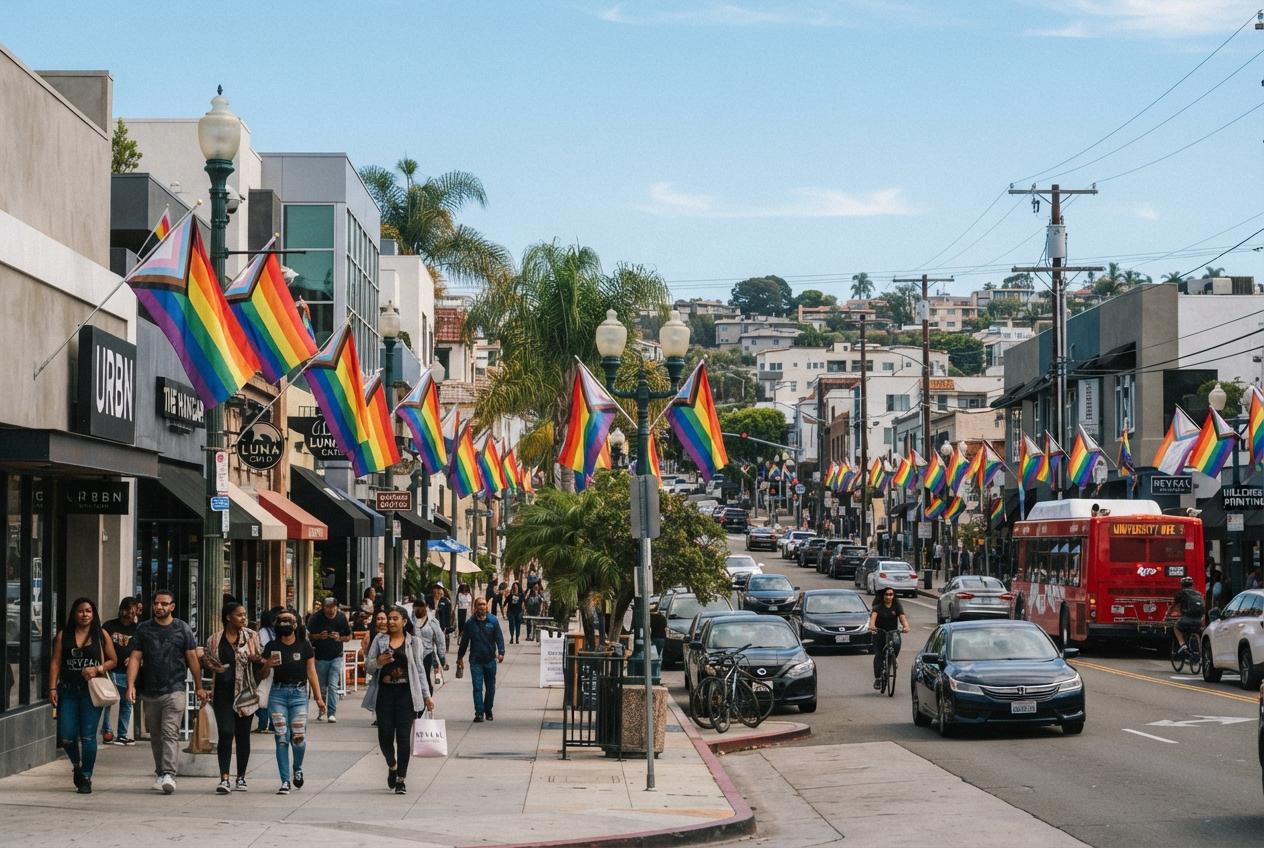
Shoppers and visitors are seeing rainbow stripes every day in Hillcrest, San Diego , a neighbourhood-wide push to fly 112 Pride and Progress Pride flags year-round that signals welcome, safety and ongoing activism for residents and businesses alike.
Essential Takeaways
- Visible commitment: 112 Rainbow and Progress Pride flags now line Hillcrest’s streets, creating a bold, daily visual statement.
- Dual symbolism: Both the original Rainbow and the newer Progress Pride flags are used, honouring history while signalling inclusion for trans and marginalised LGBTQ+ groups.
- Community-funded: Local bars, restaurants and businesses funded the project, showing grassroots support and investment.
- Emotional impact: Organisers measure success by how welcome people feel , the flags prompt warmth, memory and conversation.
- Civic role: The display reinforces Hillcrest’s status within San Diego’s LGBTQ+ Cultural District and attracts visitors year-round.
A simple sight with a powerful feel
When you walk down University Avenue now, the flags catch your eye , bright, rhythmic, almost musical in motion. According to Axios, the new array totals 112 flags and was installed to keep Pride visible beyond a single month. The visual effect is immediate: it softens the street, invites curiosity and makes a promise that this neighbourhood is for everyone.
This wasn’t a last-minute festive splash. Organisers and business leaders planned the placement and mix carefully. The choice to fly both classic rainbow flags and the Progress Pride variant , the latter adding chevrons to represent trans and marginalised communities , shows an attention to nuance as well as celebration.
How the project came together , and why funding mattered
Funding came from within Hillcrest itself. As reported by local outlets, bars, cafes and shops chip‑in to pay for poles and flags, which turned a civic idea into a cooperative project. That kind of grassroots underwriting keeps the initiative authentic: it’s local businesses saying, “We stand behind this.”
That practical civic buy‑in also matters for maintenance and longevity. If you’re thinking of doing something similar in your area, ask local merchants to commit to small, ongoing contributions rather than a one‑off donation. It spreads cost and creates shared ownership.
Picking flags: history, inclusion and a small design debate
There was one real debate worth noting , which flag to fly. The solution? Fly both. The rainbow flag honours decades of LGBTQ+ history; the Progress Pride flag adds explicit acknowledgement of trans people and communities of colour. Hillcrest leaders framed the dual approach as a way to respect past struggles while signalling present commitments.
For neighbourhoods considering their own displays, choose flags that tell your full story. Use the classic colours to celebrate legacy, and add newer designs when you want to signal ongoing work around equity and representation.
What residents and visitors actually notice
Local leaders say the measure of success isn’t the number of flags, it’s the reaction when someone first sees them. Reports from the community describe moments of recognition , visitors who stop to take photos, older residents who recall past Pride marches, young people who feel safer. The flags have become a public welcome mat.
That human effect is why these installations matter. They alter the everyday soundtrack: your walk to the shop feels a touch warmer, your sense of belonging is nudged into the open, and strangers have something gentle to comment on. These are small cultural shifts with outsized emotional returns.
What this means for Hillcrest’s future and other cultural districts
By embedding Pride into the year-round streetscape, Hillcrest is reinforcing its role within San Diego’s LGBTQ+ Cultural District. The move helps tourism, supports local businesses and keeps conversation about inclusion alive outside of calendar-bound events. San Diego’s promotional channels and local business associations are already noting the area’s strengthened identity.
If other districts want to replicate this, consider these practical tips: pick durable materials for outdoor flags, budget for replacement and upkeep, and secure a funding model that ties local businesses to long-term care. Engagement works best when it’s ongoing rather than symbolic.
It's a small change that makes a big difference to anyone who needs to see a reminder that they belong.
Source Reference Map
Story idea inspired by: [1]
Sources by paragraph: