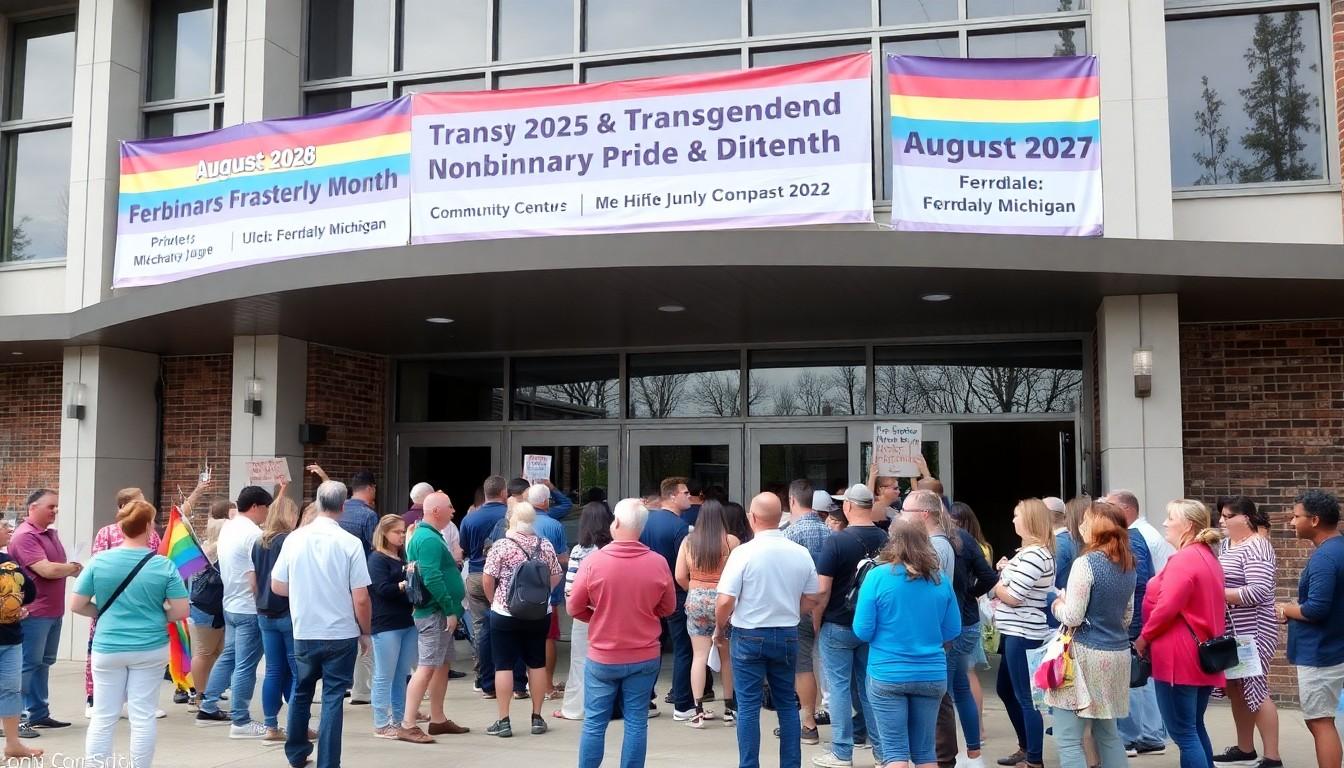
Celebrating something new and overdue, Michigan this August launched its first Transgender and Nonbinary Pride and History Month , a month-long slate of events in Ferndale uniting activists, artists and legal advocates to mark forgotten history, push back on attacks, and build community.
Essential takeaways
- New statewide recognition: Governor Gretchen Whitmer issued a proclamation naming August 2026 Transgender and Non-Binary Pride and History Month, giving official weight to local organising.
- Grassroots origin: The idea grew from years of advocacy by Michelle Fox-Phillips, who rallied partners after a Nine Mile and Woodward march last year.
- Historic focus: The programme foregrounds the 1966 Compton’s Cafeteria riot, a lesser-known uprising that predated Stonewall and resonates today.
- Events and tone: Activities at Affirmations in Ferndale include a march, a documentary screening, a legal briefing, and a one-person play , all designed to educate, mobilise and celebrate.
- Community warmth: Organisers describe a hopeful, determined atmosphere , events feel intimate, proud and ready to grow.
An idea that finally found its moment
The strongest image from the launch is simple: a rally moving down Nine Mile with neighbours cheering, a feel of warm defiance in the late-summer air. According to Pride Source, Michelle Fox-Phillips , who sits on the boards of MiGen and the Gender Identity Network Alliance , had been mulling a dedicated month for years, and a chance conversation with ACLU staffer Jay Kaplan and activist Tracy Hall turned that thought into plans. The result was a compact, intentional month of programming in Ferndale that’s equal parts commemoration and mobilisation.
The move to formalise August came as a response to both history and politics. Fox-Phillips and partners wanted to highlight the Compton’s Cafeteria riot and counter the anti-trans rhetoric circulating in state and national politics. The vision was to bring existing August events under a single, visible banner so the message lands louder.
Remembering Compton’s , a story often left out
Compton’s Cafeteria in San Francisco’s Tenderloin was the scene of a 1966 uprising when a trans woman fought back against police harassment; it was a flashpoint that rarely features on standard LGBT timelines. Historians and outlets like History and Time note that the riot came three years before Stonewall and is a crucial part of trans history that’s often overlooked.
This month’s screening of the documentary Screaming Queens and the framing of events around the 60th anniversary remind people that queer history is layered and local memory can be fragile. For anyone organising similar events, pairing a film screening with first-person stories or local histories is a good template: it’s educational, emotional and easy to stage.
Events that teach, protect and entertain
The month’s calendar blends practical and personal. A rally and march opened the month, and later events include Jay Kaplan discussing legal cases and policy fights that affect transgender people, and a closing performance by Julia Marsh, whose one-woman show mixes humour and hard-earned honesty. These are the kinds of programmes that educate while also knitting a community together.
Practical tip: if you plan to attend, check schedules and arrive early for talks , seats fill quickly at Affirmations, 290 W. Nine Mile Rd. in Ferndale. Bring water, a friend, and an openness to both learning and celebration.
Why this matters beyond Ferndale
The proclamation from Governor Whitmer gives the month a statewide lens and signals political recognition that matters when community groups seek funding, partnerships or legal visibility. Axios reporting on regional civic life suggests that visible, coordinated campaigns like this can feed into broader efforts , for instance, when local chambers and organisations expand statewide programming, momentum compounds.
This sort of recognition is also a counterweight to negative political narratives. Organisers framed the month as a proud response to being scapegoated, and the events intentionally open the door to allies and curious neighbours who might not otherwise attend a Pride-specific programme.
What’s next , growing a month into a movement
Fox-Phillips hopes this year is just the beginning, and the structure hints at how to scale: keep core partners like Affirmations, MiGen, GINA and the ACLU involved, rotate programming between education, legal resources and cultural events, and stitch in local history each year. Community leaders elsewhere can learn from this model , unite existing events, secure a proclamation if possible, and use anniversaries like Compton’s to anchor public attention.
A human note: people who’ve long worked in trans advocacy described seeing old friends at the launch and feeling renewed. That sense of reunion , quiet, fierce and a little triumphant , may be the most enduring effect of a month like this.
It's a small change that can make every celebration and defence of trans lives more visible.
Source Reference Map
Story idea inspired by: [1]
Sources by paragraph: