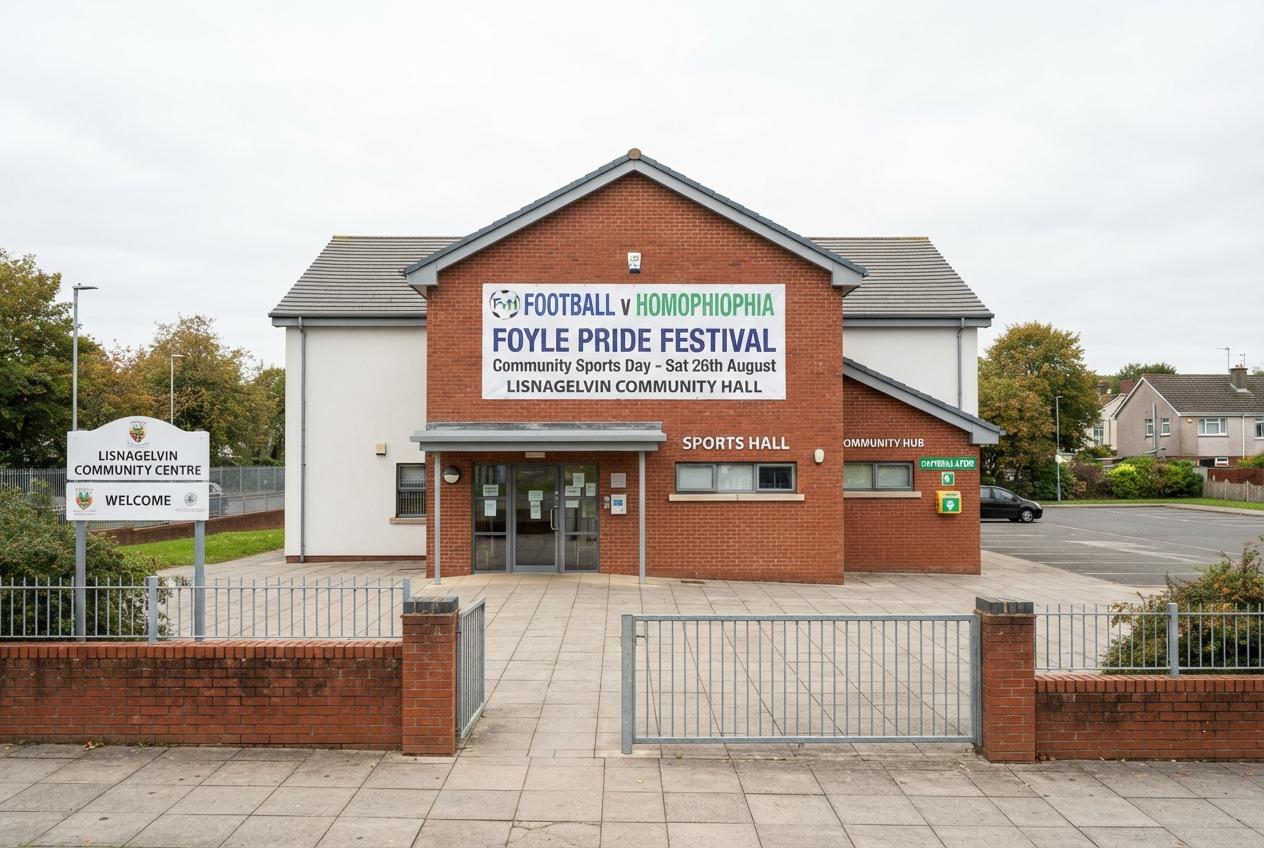
Watch teams, families and allies take to the pitch as Foyle Pride’s Football v Homophobia tournament kicks off tomorrow in the Waterside , a colourful, competitive start to a packed 33rd festival that spotlights LGBTQIA+ community, culture and welcome.
Essential Takeaways
- Annual celebration: The tournament is part of Foyle Pride’s 33rd festival and marks the 10th edition of Football v Homophobia locally.
- New venue, familiar buzz: Matches move to the Waterside Shared Village for the first time, with 16 teams competing.
- Prizes and guests: Teams will play for a Rainbow Cup and Rainbow Shield; Jackie McCarthy O’Brien will present the trophies.
- Parade and family events: The festival parade leaves Waterside Train Station on Saturday 29 August, following the original civil rights route to Guildhall Square.
- Community spirit: Events combine sport, arts and outreach, aiming to celebrate talent while highlighting ongoing equality struggles.
A colourful kick-off , why this tournament matters
There’s a satisfying thud as the ball meets boot and you know why people love grassroots football , it’s noisy, physical and inclusive. According to Foyle Pride’s schedule, the local Football v Homophobia event opens tomorrow in the Waterside Shared Village, bringing 16 teams together to compete for Rainbow Cup and Rainbow Shield honours. That mix of sport and celebration makes the tournament an immediate crowd-pleaser, and it’s a simple way to signal that sport belongs to everyone.
The competition has become a fixture on the festival calendar over the past decade. Organisers say it’s about more than silverware; it’s an accessible moment for young people, families and allies to meet, play and talk. If you’re wondering whether to turn up as a spectator, expect loud support, casual rivalry and the kind of on-pitch camaraderie that makes small events feel big.
Jackie McCarthy O’Brien brings star power and a story
A neat bit of theatre: former Ireland international Jackie McCarthy O’Brien will present the trophies this year. She’s noted for having represented Ireland in both soccer and rugby, and her presence underscores the event’s intersection of sporting achievement and LGBTQIA+ visibility. Jackie is also due in Derry to launch her memoir, We Made It Kid, which adds an extra human note to her visit.
Having a guest like Jackie does two things , it rewards players with a notable role model and it draws attention to the festival beyond the usual crowd. For anyone who remembers the old myths about who belongs in sport, seeing a proud lesbian, Black former international on the sidelines is quietly powerful.
New pitch, familiar aims , Waterside Shared Village hosts
This is the first time the tournament has been held in the Waterside Shared Village, and that shift matters. Shared community spaces are symbolic as well as practical , they invite people to cross historic divides and enjoy shared activity. Event listings from Foyle Pride show a packed programme this year, and moving the tournament here feels like a deliberate effort to be visible in a different part of the city.
If you’re entering a team, choose sizes and kit that are comfortable and easy to wash , community tournaments tend to be fast-paced and muddy. For parents and spectators, bring layers and a small folding chair; the Waterside spot is open and can get breezy.
Parade plans and the wider celebration
Sport is only the opening act. Festival organisers have confirmed the annual parade will start at Waterside Train Station at 2pm on Saturday 29 August, walking the original civil rights route to Guildhall Square for family-friendly music and activities. That route is both a practical parade line and a symbolic one, threading the festival back into local history.
Expect a mix of floats, community groups and performers. The parade gives the whole event its public heartbeat , it’s where visibility becomes a shared, celebratory statement. For families, the post-march music and activities at Guildhall Square are designed to be welcoming and accessible.
Why local sports events like this still matter
Organisers and community voices point out that Pride remains about culture and joy, but also about ongoing struggles for equality. Football v Homophobia-style events use a familiar social glue , sport , to open conversations that might otherwise feel difficult. That’s practical activism: meet people where they are, play together and let friendships soften prejudice.
If you want to show support but aren’t sure how, turning up is enough. Clap loudly, cheer fairly and consider signing up a workplace or friends’ team next year. Small gestures at events like this add up to cultural shifts over time.
It’s a small change that can make every kick a little more welcoming.
Source Reference Map
Story idea inspired by: [1]
Sources by paragraph: