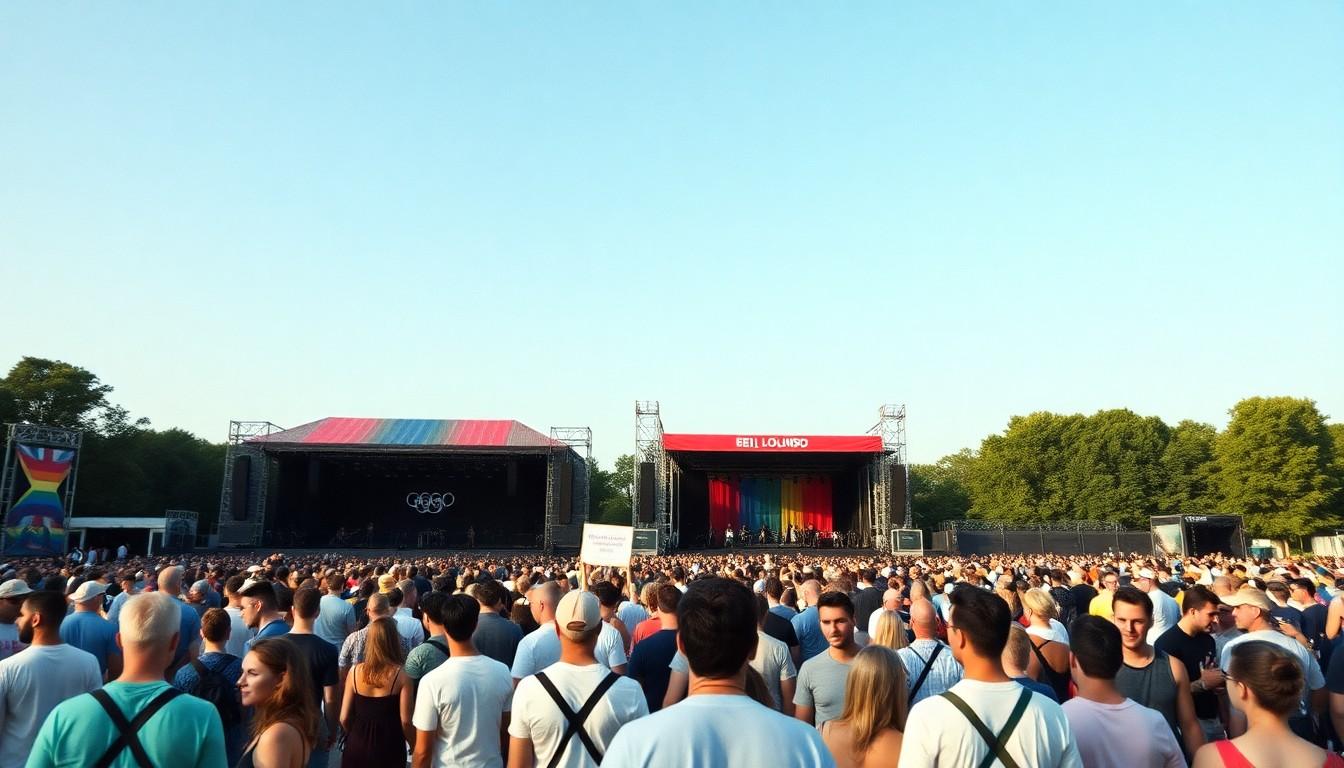
Shoppers and music-lovers are heading to Queen Elizabeth Olympic Park for Queer Frequencies, a free weekend festival celebrating Black British music and queer collectives on 22–23 August; expect two outdoor stages, a Sadler’s Wells East club night and chances to discover new DJs, live acts and community-minded programming.
Essential Takeaways
- Free and open: Queer Frequencies is a no-cost event across Queen Elizabeth Olympic Park, part of The Music Is Black Festival series.
- Curated line-ups: Sets and stages are curated by Shy One, Donnie Sunshine, Mark-Ashley Dupé, Joel Mignott and Zinzi Minott, offering DJ and live music variety.
- Two outdoor stages plus club night: Waterfront and Mid Terrace stages run daytime programming, while Sadler’s Wells East hosts family dance and a late club night with a bass-focused vibe.
- Plan travel: Organisers advise planning ahead because a West Ham match nearby may increase crowds and traffic between mid-afternoon and early evening.
- Friendly support on site: Park Champions and Safe Only stewards will be available across the park to help with directions and safety questions.
Why Queer Frequencies feels like a park takeover
This is a takeover that’s intentionally warm and noisy , think beats drifting across the grass and clusters of people discovering new favourites. According to organisers, the weekend is designed as a space for London’s queer collectives to redefine music, culture and community. The programming mixes DJ sets, live performance and conversation, so it’s as much about meeting people as it is about dancing.
The festival sits within a summer series that also includes The Music Is Ours, Power and Respect and a forthcoming Black to the Future weekend. That continuity means the organisers are building an ongoing cultural hub, not just a one-off. If you like stumbling on fresh artists in relaxed outdoor settings, this is for you.
Who’s curating and why it matters
Curators include household names in London’s queer and club scenes , Shy One, Donnie Sunshine, Mark-Ashley Dupé, Joel Mignott and Zinzi Minott , each bringing distinct tastes. Curated stages let organisers shape a coherent mood: Waterfront leans into broad live/dance programming, while Mid Terrace showcases club-facing selectors and collectives.
Curators highlight community as much as sound; expect line-ups that foreground emerging queer Black talent alongside seasoned DJs. If you follow London nights, you’ll recognise familiar collectives and might discover the next act you’ll see in a headline venue.
What to expect across the schedule
Saturday’s Waterfront , curated by Shy One , runs from noon to 7pm with a mix of talks, DJ sets and live acts. Meanwhile Donnie Sunshine’s Mid Terrace hosts sets from collectives like Jungle Kitty and Pride City, so there’s a steady rotation of energy and styles. Sadler’s Wells East turns the festival into a family-friendly daytime party and a hard-hitting club night from 7pm, billed as Together We Felt The Bass.
Sunday tightens the daytime window , slightly shorter stage hours , and keeps the focus on discovery, including vocal-led sets and collaborative showcases such as Jungle Kitty x ISSA. If you’re planning your day, aim for earlier arrivals to catch talks and quieter moments before the busier sets.
Practical travel tips and on-site essentials
Organisers flag a West Ham match at the London Stadium that could spike crowds and traffic, especially between about 2–3pm and 5–6pm, so leave extra time if you’re arriving or departing then. Public transport will be busiest, and cycling or walking to nearby entrances can save time.
Bring water, cashless payment cards, comfortable shoes and a small layer for breeze off the water , afternoons can be warm but evenings get cooler. Park Champions in pink and Safe Only stewards are stationed across the site for directions and safety queries, so don’t hesitate to ask if you need help.
Why this weekend matters for London's music scene
Queer Frequencies is more than a line-up; it’s part of a growing pattern of free, public festivals amplifying Black British and queer creative voices. It dovetails with broader moves to make cultural programming accessible and community-rooted. For first-timers, it’s a chance to sample curators’ tastes, meet like-minded people, and come away with a new playlist or a favourite producer.
If you want music that feels locally made and socially alive, mark the weekend in your diary.
It's a small change that can make every set feel a little more like home.
Source Reference Map
Story idea inspired by: [1]
Sources by paragraph: