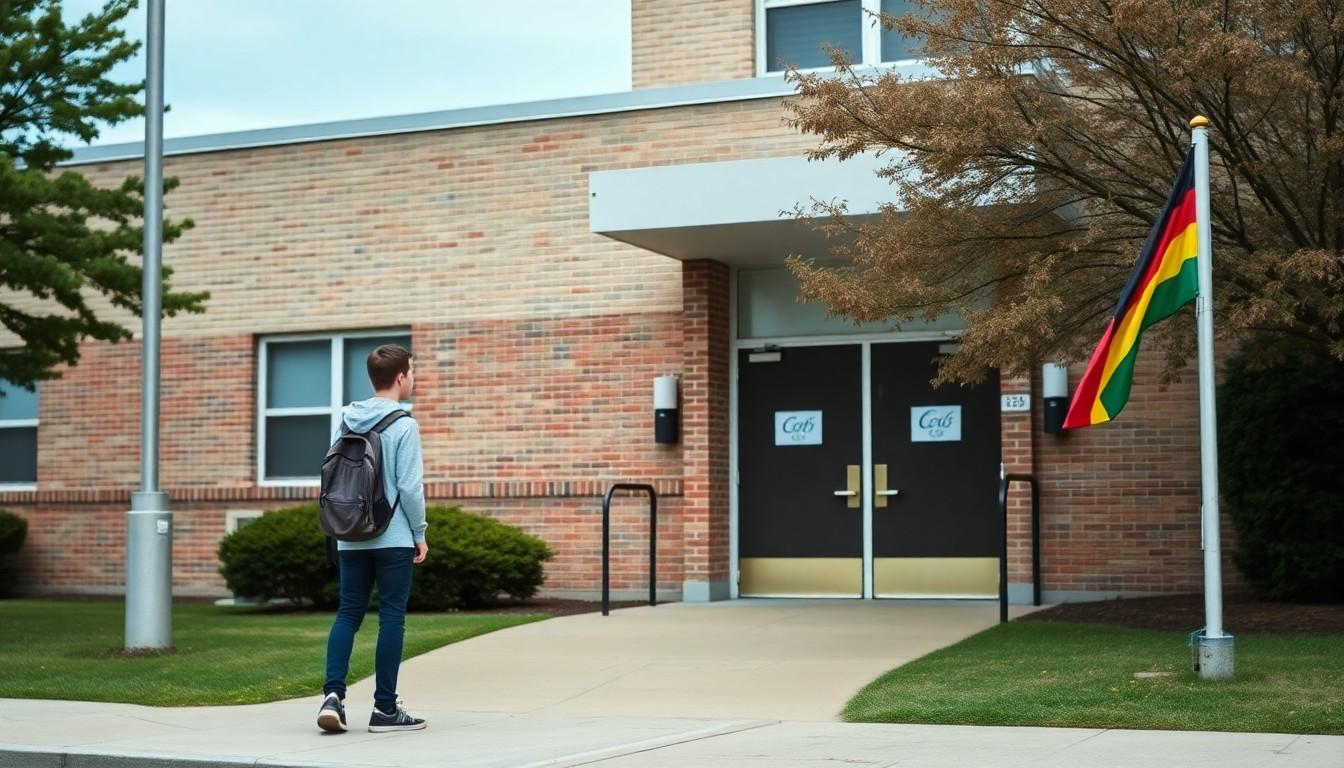
Watchful parents and students in King George County, Virginia, are pushing back after a middle school reversed course on allowing an LGBTQ+ student group , a fast-moving dispute that matters because it touches safety, school policy and the real risk of exclusion for queer kids.
Essential Takeaways
- Immediate legal action: A 13‑year‑old beginning eighth grade filed for a court order to let their Gay‑Straight Alliance meet the day after classes started.
- Policy flip: Internal school communications show administrators initially approved the club, then rescinded permission amid conservative backlash online.
- Wider context: Recent surveys find many transgender and nonbinary students attend schools with discriminatory policies and skip class out of safety fears.
- Human cost: Local disputes mirror national debates over trans rights that advocates say centre on fear rather than facts; family support remains a crucial protective factor.
Why one teenager went to federal court the day school resumed
A student identified in court filings as Z.J.W. asked a federal judge to force King George Middle School to allow their LGBTQ+ student organisation to meet as soon as the new term began. The image here is immediate: a teenager, first day back, already having to use the legal system to secure what many peers take for granted. According to reporting in The Advocate, the student spent much of last year trying to form the group, only to see it blocked after public opposition. For families and allies, that fast escalation from approval to reversal feels bewildering and upsetting.
Context matters: the student’s request isn’t just about a club meeting, it’s about the ability of queer young people to gather safely at school. If a judge orders the school to allow meetings, that would set a local precedent for how student‑led groups are treated in the face of community pressure.
How internal emails reveal the reversal unfolded
Internal communications filed in federal court reveal officials initially signed off on the club and then pulled back after conservative backlash online. Those emails give a rare, behind‑the‑scenes look at how decisions can be swayed by public sentiment and social media attention. It’s the sort of administrative drama that parents complain about: policies rewritten not through public process, but reactively.
For other districts this is a cautionary snapshot. School leaders juggling community input and legal obligations should document decisions and keep transparent procedures. If you’re a parent or student forming a group, get written approvals and keep records of correspondence , they can matter in court or at a board meeting.
This incident sits inside a broader national trend
Recent research from groups like Glisten and The Trevor Project shows more than half of transgender, nonbinary, and gender‑expansive students attend schools with at least one discriminatory policy. Nearly a third recently missed school because they feared for their safety. Those numbers aren’t abstract; they’re why a Gay‑Straight Alliance matters. Clubs often provide peer support, mental‑health check‑ins and a visible message that a school is committed to inclusion.
Nancy Pelosi, in an interview featured by The Advocate, argued that modern political attacks have shifted toward transgender people because broader gay and lesbian rights are less politically useful to opponents. That national political climate trickles down into these local battles over school clubs, bathrooms and sports.
Practical tips for students and parents organising inclusive clubs
If you’re trying to start an LGBTQ+ club at your child’s school, a few practical steps cut through confusion: get the school’s club policy in writing, follow the formal application process, gather signatures or faculty sponsorship as required, and document every approval or denial. When public opposition arrives, remain calm and rely on policy language rather than social media heat.
Local allies like PTAs and civil‑rights groups can provide support and legal referrals. Keep meeting plans flexible , sometimes an off‑site initial meetup or virtual session buys time. Above all, protect students’ privacy if they’re not ready to be publicly associated with the group.
What this means for the community going forward
This King George dispute is a small drama with big implications. It asks whether schools will protect student organising from political pressure, and whether young people can expect consistent, fair treatment when forming groups that address identity and safety. The outcome of the court filing will matter not just for Z.J.W., but for other students watching to see if their school is a place where they can belong.
It’s a reminder that local decisions are part of a national conversation , and that, in many cases, support from family, teachers and community allies makes the most tangible difference.
It's a small change that can make every meeting safer and every student feel seen.
Source Reference Map
Story idea inspired by: [1]
Sources by paragraph: