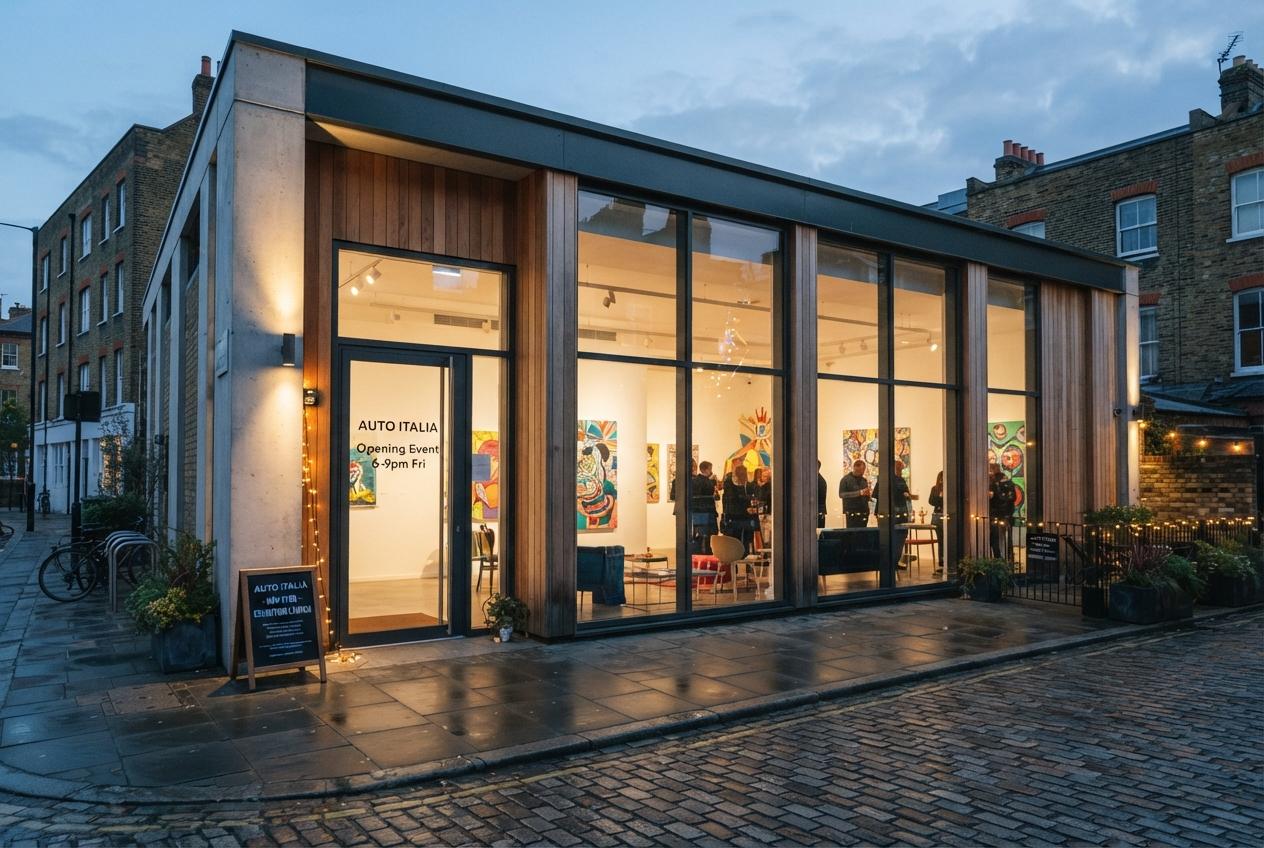
Shoppers of culture are flocking to Auto Italia in London to see Del LaGrace Volcano’s Sensual / Mutual, a vivid, intimate archive of queer life from San Francisco and Santa Fe; the show feels urgent and celebratory, tracing unseen moments from the AIDS era and reminding us why queer visibility still matters.
Essential Takeaways
- First UK institutional solo show: Del LaGrace Volcano’s most comprehensive UK display to date, bringing early work from San Francisco and Santa Fe to Auto Italia.
- Intimate, small prints: The photographs are largely small-format, drawing viewers close and creating a quiet, tactile feel.
- Wide social sweep: Photos range from Scott’s P.I.T. bar life to Lesbian and Gay Freedom Day parades, mixing leather subculture with family and politics.
- Diverse representation: People of different ages, races, bodies and genders appear together, offering an inclusive archive feel.
- Sensual, candid moments: Images shift between tender domesticity and frank eroticism, refusing a single story of queer life.
A show that pulls you in, quietly and insistently
Step into the gallery and the work feels personal, like someone’s private albums laid out with care; the small prints have a soft, immediate presence. According to the exhibition notes and listings, Sensual / Mutual fills Auto Italia with images Volcano made while embedded in queer communities in San Francisco and Santa Fe. The effect is intimate rather than monumental , you lean in to read faces, gestures and textures.
Volcano’s presence in the room only intensifies that intimacy. They’ve always mixed in with their subjects, and here the photographs read as collaborations rather than detached reportage. That embedded perspective is why the show’s quieter moments , a violin being played, a child curled near an older neighbour , feel so human and lived-in.
Scott’s P.I.T.: a bar that tells a larger story
One room focuses on Scott’s P.I.T., the historic lesbian biker bar that was active in San Francisco from 1970 to 1984. The photographs capture the place as a social hub: poetry nights, organising, people locking eyes over drinks and, yes, a rowdier, confrontational energy too. The archive reminds you how much queer spaces have doubled as political spaces.
There’s a useful historical thread here: the bar’s role in building community and the later pressures that closed many such venues. Viewing these images now, when LGBTQ+ spaces feel precarious in some places, is a reminder of what’s at stake and what was won, often against long odds.
Pride’s early joy and provocative playfulness
Volcano’s pictures of the San Francisco Lesbian and Gay Freedom Day parade show the origins of a festivities-turned-massive tradition, but the tone is playful and unruly rather than corporate. One snapshot , a woman flashing Volcano a single breast, smiling , captures the mixture of protest, performance and pure joy that powered early Pride.
The contrast with today’s mainstream Pride is striking. If you’re interested in festival histories or how public expressions of identity evolve, these images offer a compact visual essay on the shift from grassroots resistance to spectacle and back again.
Bodies, politics and the refusal of a single story
Across the rooms you see queer life in its plurality: people of colour, elders, wheelchair users, leather types and families share the frame. Del LaGrace Volcano doesn’t centre one identity over another; instead, the work insists on cohabitation and community. That inclusivity is quietly radical, especially now, when debates over who counts as queer can get divisive.
There are also images that push against stereotypes about women and desire. Nude and sexual scenes are sometimes tender and sometimes raw, but always framed with agency , the photographs make clear that desire has many faces, and that nudity can be political as much as erotic.
Why this matters now , and what to take away
Auto Italia’s staging gives each sequence room to breathe, so the show reads as both archive and argument. According to gallery materials and listings, Sensual / Mutual brings largely unseen work into public view, which is powerful in a moment when historical memory can be fragile. The exhibition doubles as celebration and as a corrective to erasure.
If you go, give yourself time: look closely at the small prints, notice who’s together in a frame, and let the mix of tenderness and provocation sink in. It’s easy to leave thinking about friendship, resistance and the everyday ways communities hold each other.
It’s a small change that can make every look feel more alive.
Source Reference Map
Story idea inspired by: [1]
Sources by paragraph: