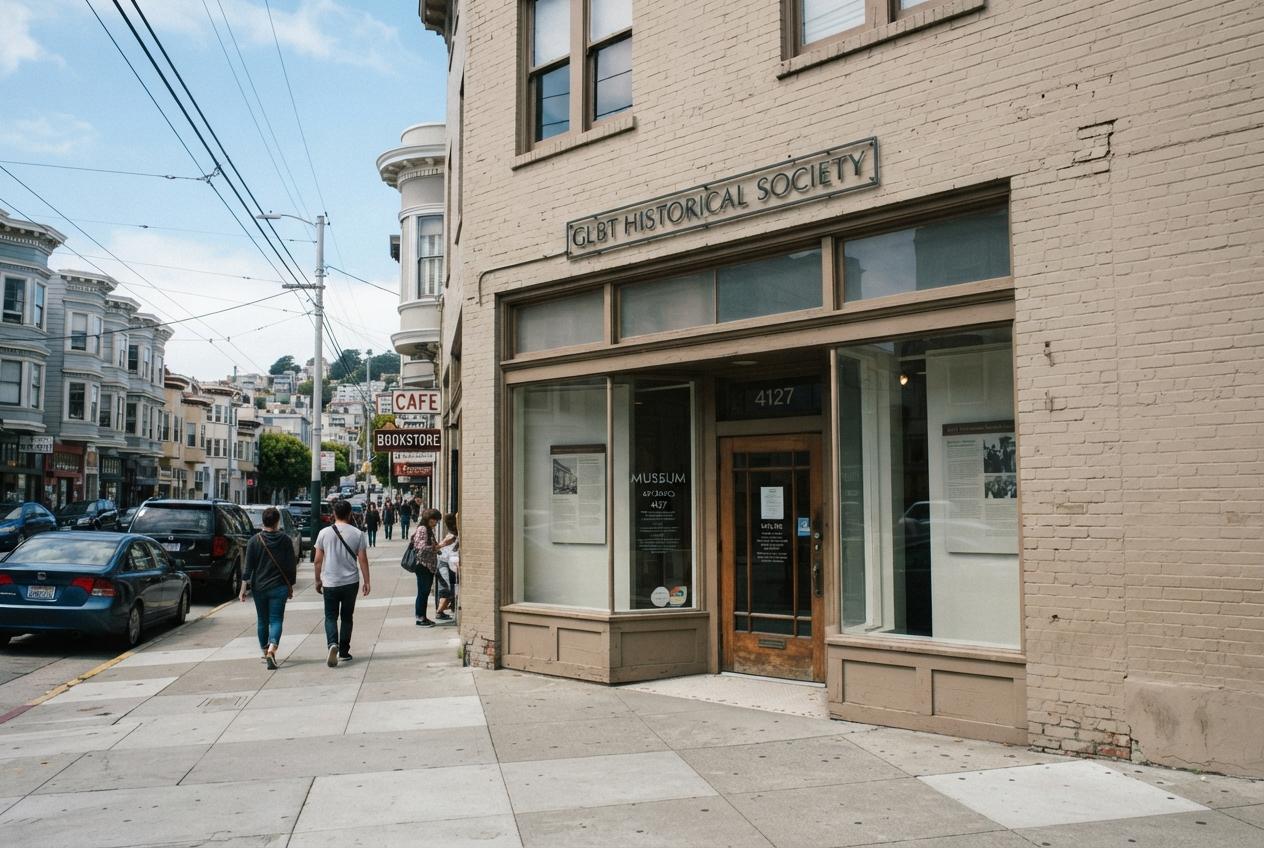
Discover a quiet, powerful show at the GLBT Historical Society Museum that stitches together memory, domestic life and resilience; visitors can see large cyanotypes, intimate drawings and even record their own stories to add to a growing living archive.
Essential Takeaways
- What it is: A solo exhibition by Aleo Landeta that centres queer and trans domestic spaces through cyanotype prints, drawings and archival photos.
- Where it’s shown: On view now at the GLBT Historical Society Museum in San Francisco, part of the museum’s rotating exhibitions.
- Hands-on element: A listening station invites visitors to record memories, making the show participatory and intergenerational.
- Tone and texture: The work feels tactile and soft, silk, hand-drawn interiors and faded photographs, so the displays read like pages from a private album.
- Why it matters: The exhibition treats the everyday home as historical terrain, preserving stories that might otherwise be overlooked.
A quiet, tactile show that feels like stepping inside someone’s living room
The opening image is domestic: sunlight on silk, the soft blue wash of cyanotype and a hand-drawn hearth or backyard table. That sensory detail, how the materials catch light and breathe, sets the tone for the whole exhibition. According to the museum, Aleo Landeta’s installation layers archival images with personal drawings to make interior spaces visible and felt. Visitors often describe the work as intimate, like a memory made physical.
How the project grew from archives to new work
This show was developed directly with the GLBT Historical Society’s collections, so the domestic scenes aren’t hypothetical. They’re based on homes of Bay Area queer and trans elders, people whose everyday objects and photos live in the museum’s holdings. The society’s exhibition programme has a history of turning archival material into fresh narratives, and this feels like the next chapter: archival images reimagined as present-tense art. It’s an approach that underlines how material culture, curtains, furniture, snapshots, carries political meaning.
The listening station: a living archive and a small act of care
One of the most compelling features is the listening station where visitors can leave oral histories, memories of home, or small anecdotes. That simple act turns the gallery from static display into an active repository of community memory. The museum’s public programmes have used participatory elements like this before, and here it becomes a form of communal care: adding your voice means your ordinary life might help someone else’s story be seen decades from now.
Why the domestic matters for queer and trans history
Ordinary rooms are where chosen families gather, identities are practised and safety is negotiated. The exhibition emphasises that those everyday moments are historical, too. By focusing on interiors and domestic photos, the show pushes back against the idea that history only happens in marches or courtrooms. Instead, it points to the small rituals, cooking together, letters tucked into drawers, bedsheets and photographs, as sites of resilience and joy. That perspective changes how you look at objects in your own home.
Practical visit tips and who will love it
Plan for a slow visit; the work rewards close looking and a quiet corner to listen. The museum’s website has visitor information, opening times and rotating exhibitions, so check before you go. This is ideal for folks interested in contemporary art, queer history, or oral-history projects, and for anyone who likes shows that let you participate. Expect a meditative, emotional experience rather than a blockbuster spectacle.
It’s a small, generous show that makes the everyday feel consequential.
Source Reference Map
Story idea inspired by: [1]
Sources by paragraph: