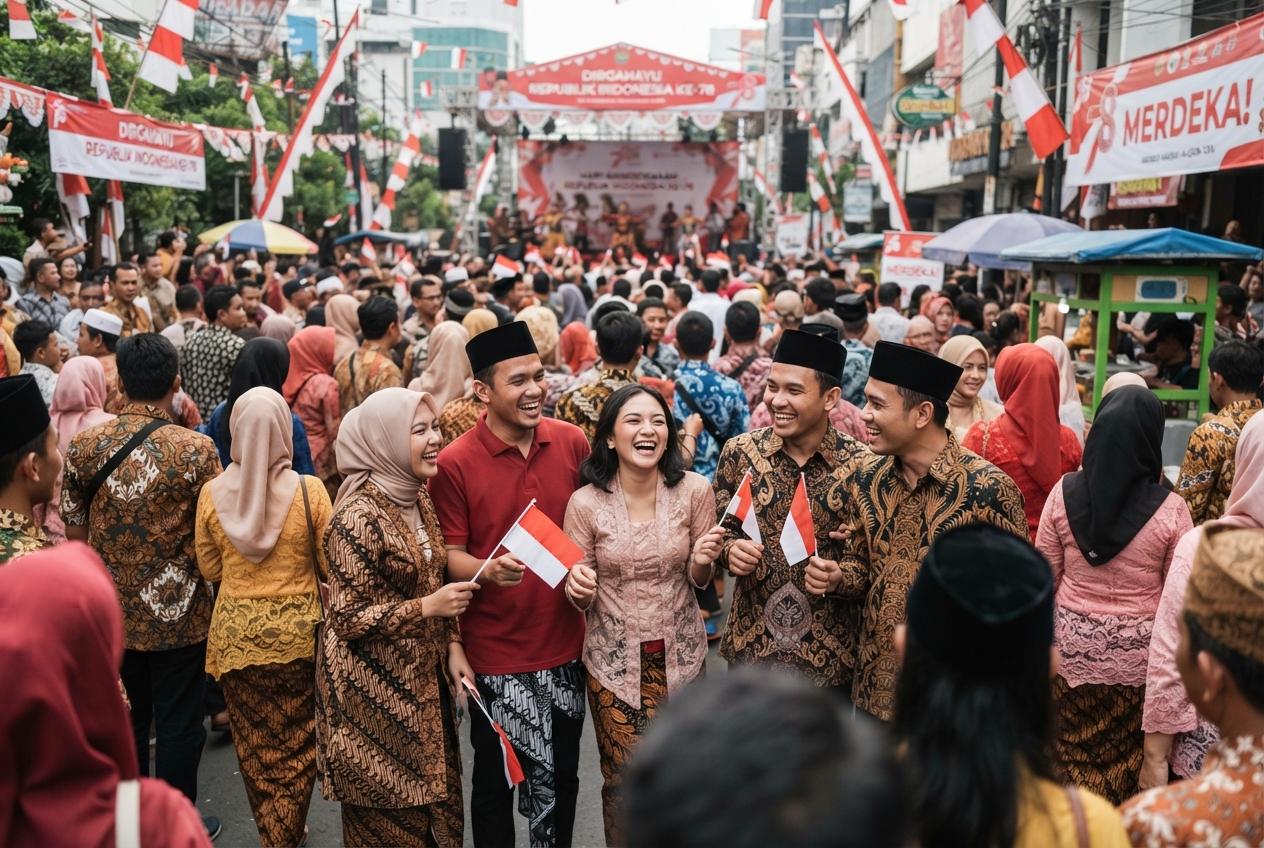
Watchful eyes are on Indonesia’s Independence Day celebrations after the Ulema Council warned against traditional cross-dressing games, saying they could promote LGBTQ+ identities; the guidance matters because it signals how festivities, culture and religion are being pulled into wider debates over queer visibility and legal change.
Essential Takeaways
- Official advisory: The Indonesian Ulema Council has labelled cross-dressing in Independence Day events as forbidden and linked it to an alleged LGBTQ+ “movement,” raising fresh concerns about public festivities.
- Traditional practices at risk: Games like sarong football, playful, physical and visually striking, have historically been cultural, not sexual, expressions but are now caught up in the controversy.
- Legal and social pressure: Indonesia’s changing legal landscape and local enforcement of conservative norms have increased risks for queer and trans people, including proposals for further restrictions.
- Community impact: The warning could chill participation, make organisers nervous, and push queer presence out of public rituals that once felt inclusive or harmless.
What the Ulema Council said and why people noticed
The Ulema Council’s advisory singled out cross-dressing at community events, calling it haram and suggesting it might be used to normalise LGBTQ+ identities. The language is blunt and carried weight because the council is a prominent religious authority. That combination makes a reminder about community games feel less like guidance and more like a directive, and organisers are already weighing how to respond.
According to reports, the council framed its warning as a defence against what it described as covert campaigning. For many Indonesians, this is a new layer on top of a tradition that’s long been about fun, challenge and local pride.
How Independence Day traditions became a flashpoint
Independence Day festivities typically brim with colour, noise and physical comedy. Events such as sarong football have men scrambling in women’s cloth for laughs and spectacle, not identity statements. But in a climate where authorities and conservative groups are scrutinising public life for perceived LGBTQ+ influence, even clearly apolitical customs can be reinterpreted.
This shift isn’t happening in isolation. Local regulations, conservative rhetoric and national legal changes are creating an environment where visibility is riskier. For communities that run these events, the question now is whether to adapt, sanitise or suspend certain competitions to avoid trouble.
The broader context: legal changes and community pressure
Indonesia’s legal landscape has recently become less reassuring for queer people. New criminal-code provisions and regional enforcement of conservative moral laws make informal accusations and policing more toxic. Rights groups have protested calls to criminalise LGBTQ+ people and warned that increased regulation often translates into harassment at the street level.
The council’s statements and continued advocacy for tighter rules reflect that broader push. For everyday people, the stakes are practical: being publicly associated with an activity deemed inappropriate could prompt social censure or worse. That worry shapes who shows up to the parade, who leads the events and how families talk about participation.
Practical choices for organisers and families
If you’re organising or planning to take part in Independence Day activities, a few simple considerations can help navigate the tension. Keep events clearly framed as cultural and family-friendly, provide choices so participation is voluntary, and communicate inclusivity without confrontation. Some communities may choose alternatives that preserve fun without the costumes that now attract scrutiny.
Parents and older relatives should also be mindful: speaking openly to kids about why a game exists and what it means can defuse rumours and prevent unnecessary anxiety. And for queer and trans people, discretion may feel safer for now, though the loss of public cultural space is its own harm.
What this means for the future of public culture in Indonesia
This advisory is part of a wider pattern where religious and political debate is reshaping everyday rituals. Traditions once taken for granted are now judged through new cultural lenses, and that will change how communities celebrate national identity. Some events may evolve to avoid controversy, while others could become sites of quiet resistance.
The human cost is real: when harmless, noisy games are labelled dangerous, the social fabric that binds neighbourhoods can fray. For many, keeping the spirit of independence, community, laughter and shared memory, will mean finding small, creative ways to hold on.
It's a small social shift that will have an outsized effect on what public joy looks like.
Source Reference Map
Story idea inspired by: [1]
Sources by paragraph: