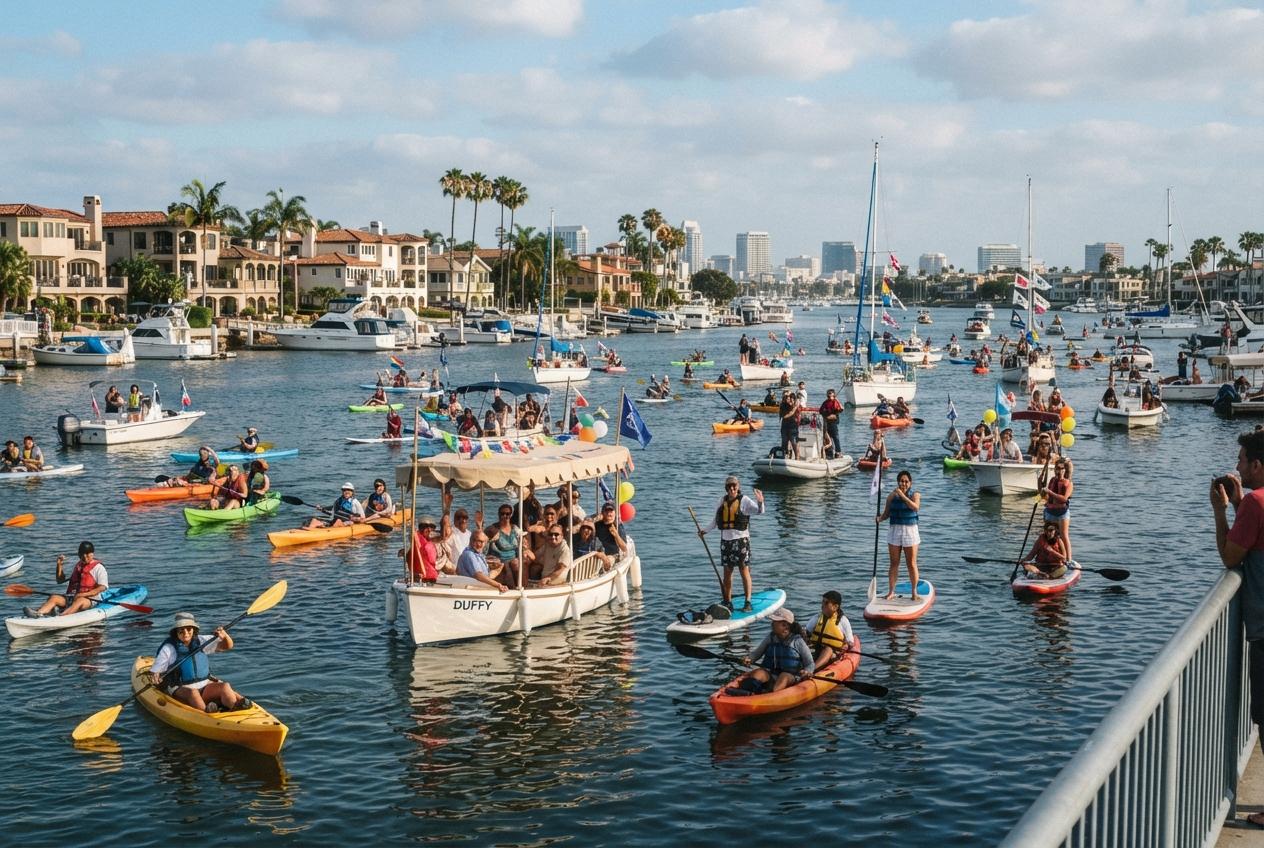
Shocking threats couldn’t stop a colourful show of community , Long Beach’s Big Gay Flotilla sailed on despite online hate, an arrest, and a tense week that left organisers relieved and attendees resolute. Here’s what happened, why it matters, and what the crowd taught us about public LGBTQ+ visibility.
Essential Takeaways
- Police intervention: Long Beach law enforcement arrested a suspect on criminal threat charges after violent online posts targeted the event, and officials treated the threats seriously.
- Smaller but spirited turnout: Organisers estimate attendance dipped to roughly 200 people across the day, down from about 300 at the prior meet-up, with many citing safety concerns.
- Community solidarity: Support poured in from across Southern California , people travelled from several towns to show up and back the event.
- Organisers undeterred: Promoter Sal Flores says the flotilla’s purpose , public, joyful belonging , stayed front and centre, with follow-up events already planned.
- Ongoing vigilance: The incident underlines how public gatherings require coordination with police and clear safety plans when organisers face online hostility.
Opening Hook: what actually happened on the beach
The Big Gay Flotilla went ahead on Saturday in an affluent stretch of Long Beach, and the vibe for many was defiant joy , sun, music, and bright inflatables against a background of recent threats. Organiser Sal Flores told LGBTQ Nation the mood swung between relief and resolve; people arrived determined to belong, not hide.
Backstory and law enforcement response
A week before the meet-up, an events post was flooded with homophobic comments and explicit death threats, some describing bombs or guns. Long Beach Police investigated, deemed at least one message a criminal threat, and arrested a 26-year-old on those charges days before the flotilla. Police chiefs publicly said they take such threats seriously, and Flores said both local officers and the FBI reached out during the week to assess risks.
Why turnout was lower , fear, caution, or both?
Attendance dropped compared with the previous get-together, with organisers estimating about 200 visitors rather than the earlier 300-plus. Some people simply stayed away because they felt unsafe, which is a frank consequence of online vitriol turning into perceived real-world danger. At the same time, others travelled from farther afield , a visible reminder that solidarity often outpaces intimidation.
What the community showed , solidarity in practice
Despite the scare, many people answered calls to support the event. Flores recounted messages offering help and promising to attend if the flotilla went ahead; that energy shifted the tone from risk to reclamation. For onlookers, it was a simple but potent scene: people laughing on the sand, colourful flags, and groups reminding each other this is their public space too.
Practical takeaways for organisers and attendees
If you’re planning an outdoor LGBTQ+ gathering, think like these flotilla organisers did: liaise early with police, monitor online chatter, and have clear communications for attendees about safety plans. Consider staggered arrival times, defined meeting points, and a small team tasked with crowd safety and first aid. And if you cancel, expect many allies will ask not to , sometimes showing up is the most powerful reply.
Reaction and what’s next
Flores isn’t backing down; he’s promoting a Big Gay Picnic at the Bluff in Long Beach next weekend, a quieter overlook-style event with the same aim: a space to belong. The flotilla episode shows a community that’s bruised but not beaten , and it underscores a modern reality: visibility still matters, and solidarity still works.
It’s a small change that can make every gathering safer and every celebration louder.
Source Reference Map
Story idea inspired by: [1]
Sources by paragraph: