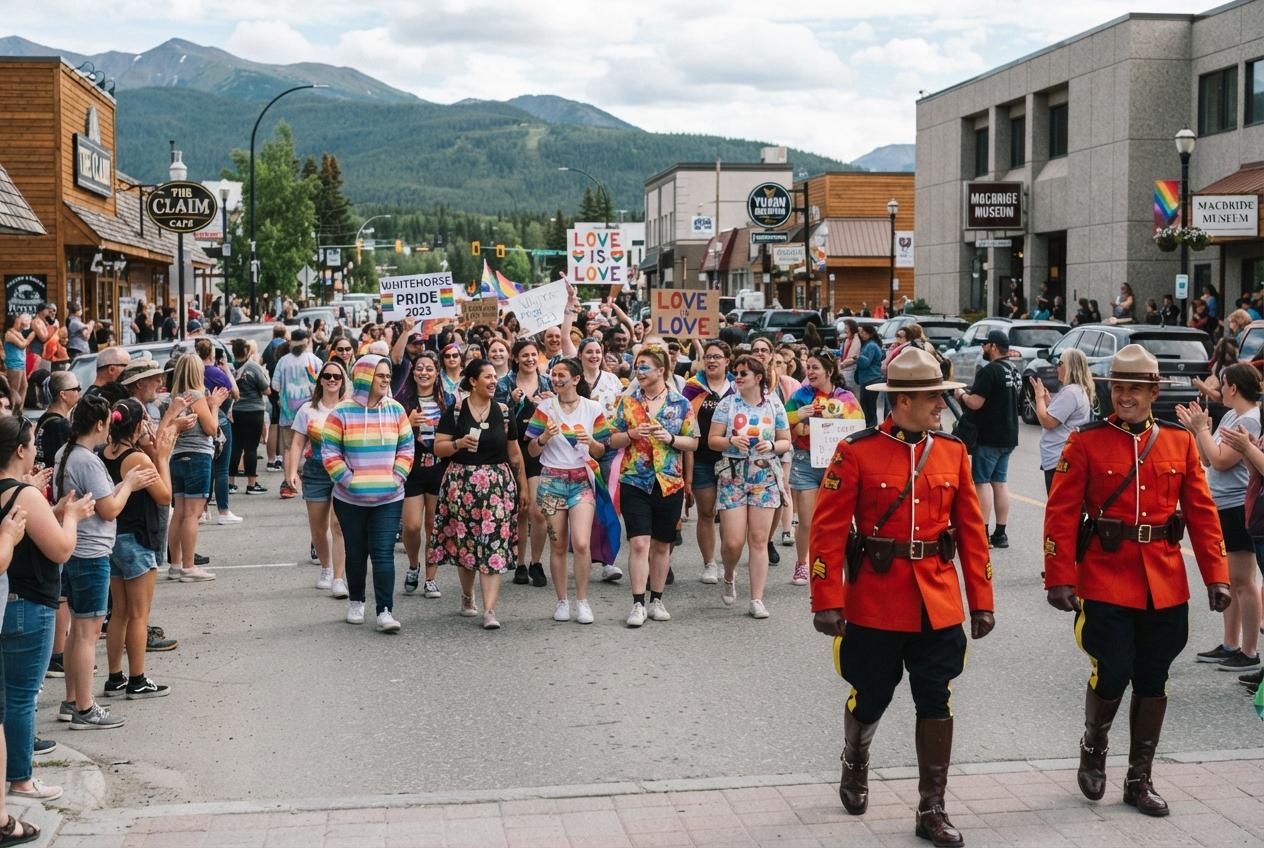
Shoppers, families and long‑time locals are turning out in record numbers as Yukon Pride returns Aug. 12–15, and organisers have expanded safety measures to match. The Queer Yukon Society says this year’s festival will be the biggest yet, with visible RCMP patrols, bystander training and layered supports aimed at keeping everyone safe and welcome.
Essential Takeaways
- Bigger crowd: Organisers expect the largest Yukon Pride to date after attendance jumped from dozens to hundreds in recent years.
- Visible police presence: Whitehorse RCMP will patrol the parade and picnic as part of a formal safety plan developed with QYS.
- Layered approach: Safety now includes outside consultants delivering bystander‑intervention and de‑escalation training for staff and volunteers.
- Community tension: Some community members expressed concern online about police involvement, citing historical harms and mistrust.
- Practical supports: Organisers say additional resources and clear reporting paths will be available on site for people who need help.
Why the safety plan has expanded , and what it feels like on the ground
Attendance has swollen from small picnics to events drawing hundreds, and that scale changes the atmosphere; it’s louder, busier and, for some, more public. Organisers told Yukon News the growth forced a rethink of how to manage crowds, communications and potential risks. Expect visible signage, staffed information points and a steadier flow of volunteers walking the site. If you like things organised and calm, you’ll appreciate those small, practical touches.
Police presence: a pragmatic choice that divides opinion
The Queer Yukon Society worked with the Whitehorse RCMP to craft a formal safety plan, which includes uniformed officers making regular patrols. Organisers stress the choice wasn’t made lightly, and that it’s one piece of a broader safety strategy. Still, critics in the community have pushed back publicly, recalling historical and ongoing harms that make police presence troubling for many. If you’re nervous about interacting with officers, the festival’s outreach team expects you and can point to alternative supports on site.
What “layered safety” actually means for attendees
Layered safety is more than a few officers in the crowd; it’s training, volunteers, clear reporting routes and partnerships with health and government services. QYS brought in external trainers for bystander and de‑escalation workshops so staff can step in early and safely. For parents, allies and newcomers, that means someone nearby who’s been briefed to spot trouble and act calmly. For organisers, the hope is that this mix deters bad actors while offering non‑police help where possible.
Practical tips: how to make the most of Pride and stay safe
Plan your meet‑ups at clearly marked locations and exchange phone numbers with friends before you arrive; crowds can split people up quickly. If you witness harassment, use the nearest volunteer or information point , they’ve had intervention training. If you’d rather avoid police contact, ask staff for alternatives; the festival intends to offer multiple ways to get help. And bring sun protection and water , a long parade and picnic can get surprisingly hot.
The bigger picture: visibility, growth and the work ahead
Festival growth reflects a thriving and increasingly visible LGBTQ+ community in the Yukon, with more groups and events producing connection and momentum. But visibility also invites scrutiny and, sometimes, hostility, which is why organisers say safety can’t be an afterthought. Looking forward, balancing security with inclusivity will remain a live conversation , one that organisers, government partners and community members will need to keep negotiating.
It's a small change in planning that can make every celebration feel safer and more inclusive.
Source Reference Map
Story idea inspired by: [1]
Sources by paragraph: