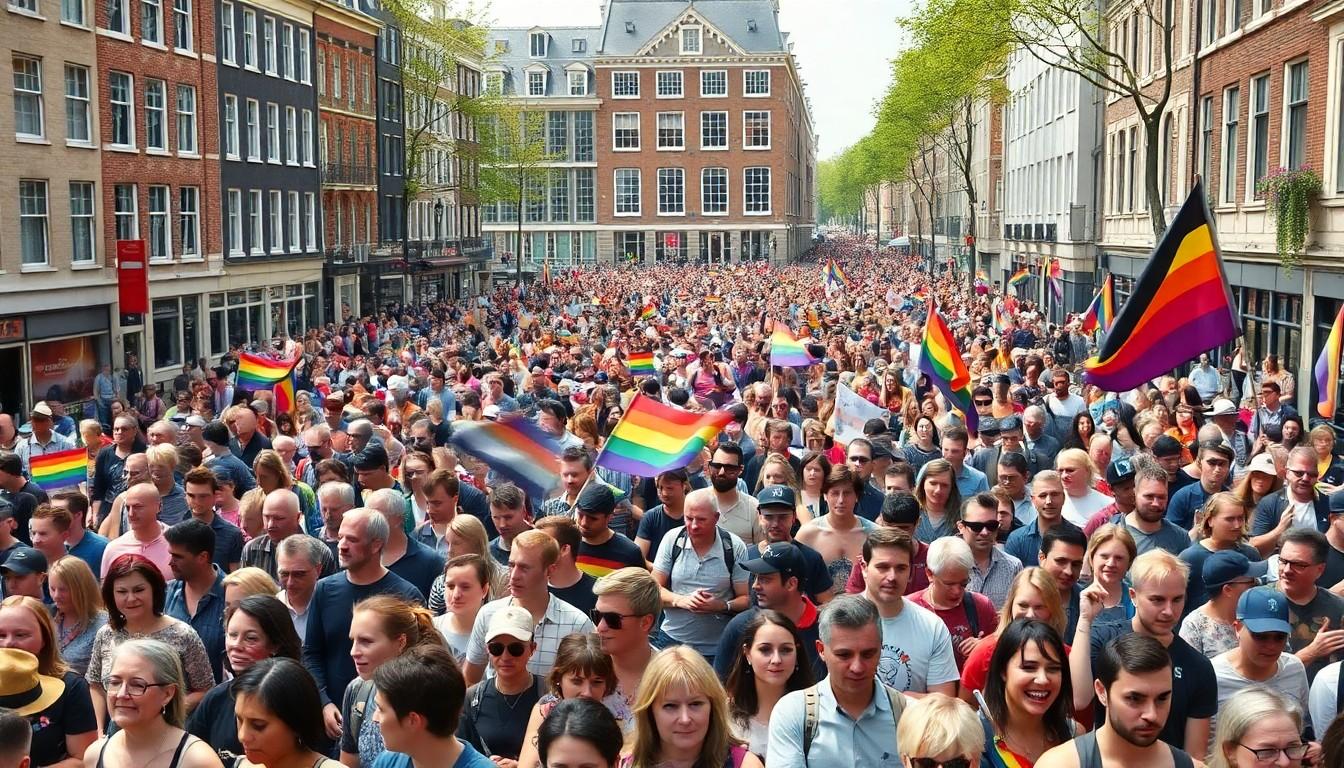
Shoppers and spectators alike noticed a surge of colour and calm as tens of thousands turned out for Amsterdam’s World Pride March, bringing global leaders, activists and local politicians together , and under tighter security measures that mattered after recent attacks. Here’s what happened, who showed up, and why it counts.
Essential Takeaways
- Huge turnout: Tens of thousands joined the World Pride March in Amsterdam, with participants from around the world and strong local presence.
- Notable faces: Activists and leaders such as Maria Sjödin, Paolo Rondelli and Massachusetts state Rep. Jack Lewis marched alongside Ukrainian advocate Olena Shevchenko.
- Political visibility: Members of D66 and remarks by Prime Minister Rob Jetten earlier in the week underlined political support.
- Security stepped up: Dutch authorities boosted safety after a nearby terror attack, and the event concluded without reported incidents.
- Community focus: The march followed Amsterdam’s Canal Parade and tied into a wider Pride programme that includes refugee and asylum-seeker participation.
Opening Hook: A march that felt both celebratory and deliberate
The scene on Amsterdam’s streets was vivid and purposeful, a parade of colour with a quiet, watchful edge. Tens of thousands of people took part in the World Pride March, and you could feel both the joy and the seriousness , people smiling, flags fluttering, but also a noticeable presence of security that made the atmosphere feel safer.
Backstory and who turned up
World Pride drew an international crowd. According to eyewitness reports and coverage, organisers welcomed activists and public figures from across the globe. Paolo Rondelli, who made history as San Marino’s openly gay Captain Regent in 2022, marched alongside Maria Sjödin of Outright International. Representatives from the US and Ukraine , including state Rep. Jack Lewis and Olena Shevchenko, chair of Insight , were visible among the crowd, giving the march a mixture of grassroots energy and diplomatic weight.
Why the timing mattered
The march came only a week after Amsterdam’s famous Canal Parade and followed a much more sobering incident in Berlin, where a terrorist attack at a Christopher Street Day event left people hurt and one person dead. That attack cast a long shadow over European Pride events and prompted organisers and authorities to re-evaluate security. The heightened precautions in Amsterdam were immediately noticeable and, by most accounts, effective.
Security moves that reassured participants
Dutch authorities increased checkpoints and reporting points, and organisers expanded visible safety measures around key events. Visitors and locals said the extra security felt thorough rather than intrusive , more of a protective backdrop than a barrier to enjoyment. If you’re planning to attend large Pride events in future, it’s worth checking organisers’ visitor information pages and noting recommended arrival times, bag rules and nearest reporting points for a smoother, calmer experience.
Politics on parade: why leaders showing up matters
Politics isn’t separate from Pride in Amsterdam this year. The participation of members of D66 and Prime Minister Rob Jetten’s earlier public appearance at the World Pride Human Rights Conference signalled governmental solidarity. For many marchers, seeing national and international leaders present adds legitimacy to calls for equal rights and protection, and it helps shift Pride from festival to civic statement.
Community threads: refugees, asylum seekers and local groups
Beyond the big names, the programme included community-oriented initiatives. UNHCR and local groups joined celebrations that specifically invited LGBTIQ refugees and asylum seekers, showing Pride’s role in offering visibility to groups who are often marginalised. That human touch , people who’ve sought refuge walking openly and proudly , was one of the march’s most powerful moments.
Trends and the outlook: what this march signals for future Prides
This edition of World Pride underlined two linked trends: Pride’s growing international reach and an increasing focus on security and inclusion. Larger reporting points and more guidance for attendees are likely to become standard as cities learn from recent events. For organisers and visitors alike, the balance is now about keeping Pride loud and radical while making sure people can celebrate without fear.
How to experience Pride next time: practical tips
- Check official visitor information before you go for security rules and recommended routes.
- Travel light and use secure pockets , it’s easier to navigate crowds that way.
- Look up reporting points on maps so you know where to go if you need help.
- If you’re attending with vulnerable friends or family, pick meeting points and times in advance.
- Consider joining community-led contingents if you want a more intimate, cause-driven experience.
It's a small change that can make every march feel safer and more inclusive.
Source Reference Map
Story idea inspired by: [1]
Sources by paragraph: