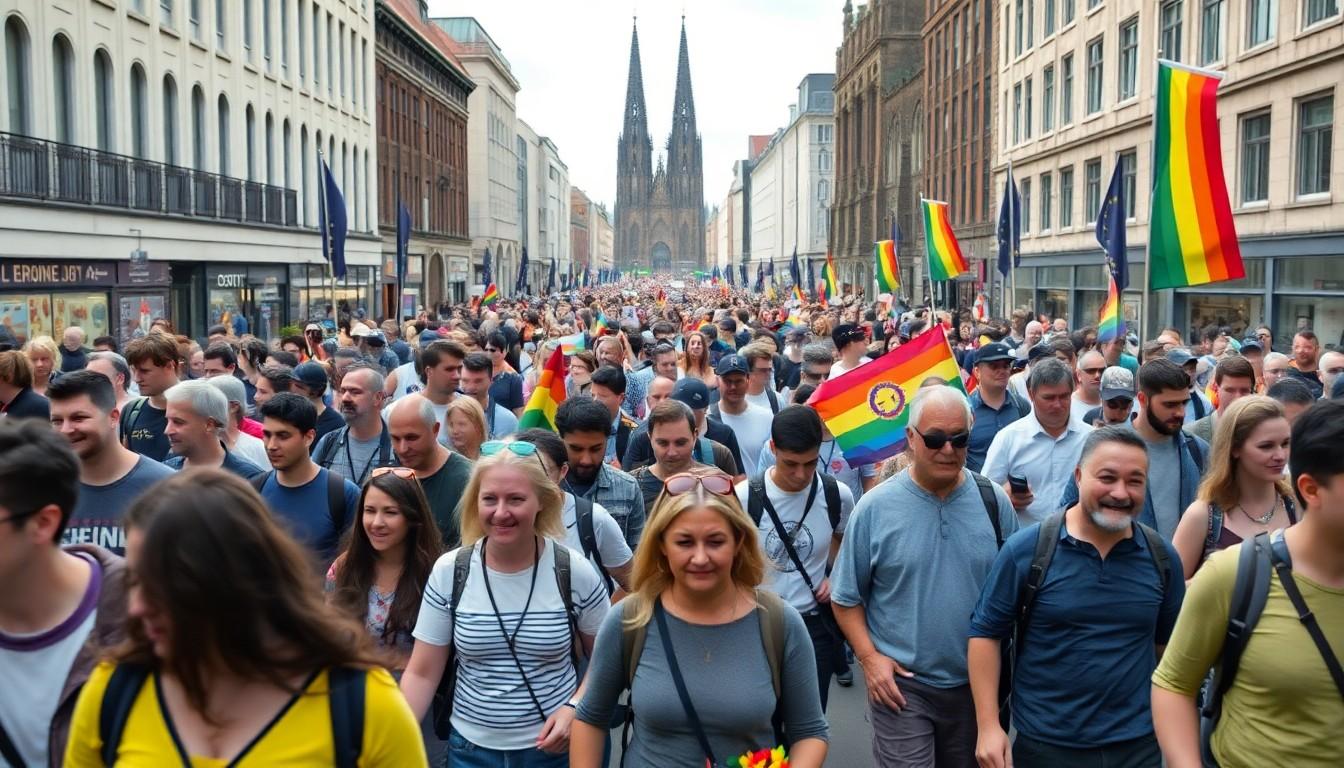
Shoppers and passers-by will have noticed heightened emotion on the streets: organisers and queer groups in Cologne have called a solidarity demonstration for Sunday at 14:00, drawing roughly 2,000 people from Deutz through the city to show support after the Berlin Christopher Street Day attack , and to demand better protection.
Essential Takeaways
- Solidarity turnout: About 2,000 participants are expected to march from Deutz through Cologne’s city centre, signalling a visible communal response.
- Clear message: Organisers say now is the time to show firm political and social stance against queer-hostile violence and intimidation.
- Policy asks: Demonstrators are calling on federal, state and local authorities to step up measures that protect and strengthen queer life and structures.
- Context of the attack: The Berlin incident on 25 July left one woman dead and 31 injured; the suspected attacker was shot by police after reportedly assaulting officers.
- Emotional tone: The march mixes grief, anger and resolve, with participants emphasising they won’t be cowed by queerphobia.
Why Cologne’s march matters now
Cologne has long been a visible hub for Pride and queer culture, and the decision to take to the streets so soon after the Berlin attack is both practical and symbolic. The march is a way to publicly grieve, but also to insist that queer people have a right to exist safely in public spaces. There’s a tangible sense of urgency in the air , people are fed up with feeling vulnerable and want concrete change.
According to organisers, the demonstration isn’t just a reaction of emotion; it’s a call for policy. They want clear commitments from politicians at every level to protect queer venues, events and communities. For many marchers, visible solidarity helps turn private fear into collective power.
How organisers frame the demand for protection
The groups behind the Cologne protest are asking for systemic safeguards: better policing at events, funding for queer organisations, and resilience measures for community spaces. That’s a practical ask rather than merely symbolic rhetoric. Activists argue that security and support aren’t mutually exclusive , you can defend civil liberties while taking targeted steps to reduce risk.
Municipal politicians will be watching; a strong, organised civic response tends to push public authorities to act. If officials want to show they take queer safety seriously, this is the moment to put resources on the table.
What people on the ground are feeling
Grief and anger have been common reactions across Germany’s queer communities, and Cologne is no exception. Reports from other cities describe stunned silence in some groups and vocal demonstrations in others. Many attendees say they’re marching to honour the victims and to refuse the normalisation of violence.
There’s also a practical, down-to-earth mood: people sharing information about safer routes, buddy systems for events, and ways to support local queer groups. It’s a reminder that community safety often begins with neighbours looking out for one another.
How to show up safely and effectively
If you plan to join the march, consider these simple tips: arrive with friends if you can, charge your phone, wear comfortable shoes, and carry a water bottle. Follow organiser guidance on meeting points and routes, and respect any requests from marshals or police. If you’re supporting from home, donate to local queer charities or volunteer time to community networks.
For event planners, now’s a moment to reassess risk plans: clearer communications, trained stewards and contingency procedures make a real difference. When public events feel safer, more people can take part without fear.
What comes next for Cologne and beyond
This demonstration is likely one of several public reactions across Germany and Europe; solidarity marches can spur policy debates and new protective measures. But lasting change will need follow-through: funding, legislation and ongoing community resilience. The mood in Cologne suggests people are ready to push for that follow-through, not just a single day of protest.
It’s a small but powerful act of civic defiance , and a prompt for politicians to match words with action.
It's a small change that can make every public gathering a bit safer.
Source Reference Map
Story idea inspired by: [1]
Sources by paragraph: