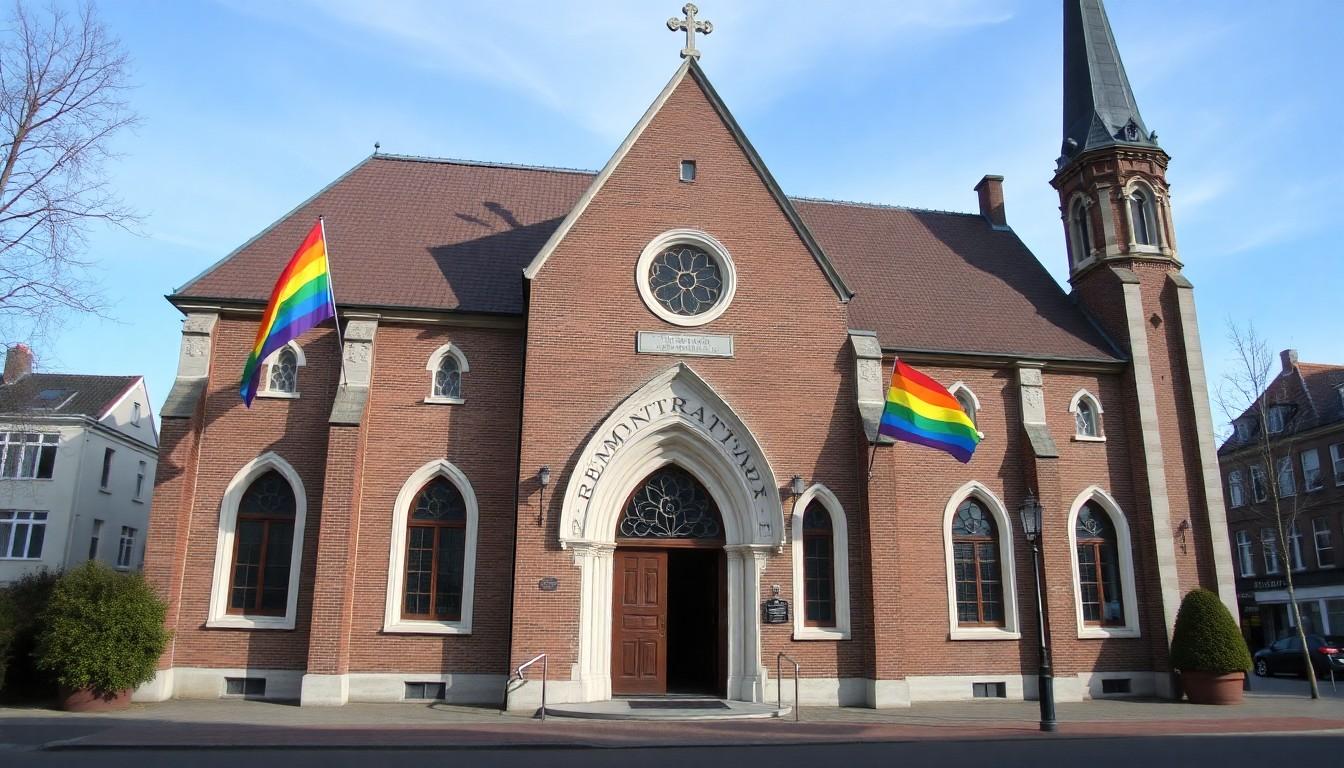
Shoppers of faith and curious churchgoers are turning to the Remonstrant tradition for a quietly radical approach to relationships , in Amsterdam and beyond , because it has allowed blessing same-sex unions for decades and keeps asking what love actually means. This matters for people seeking inclusive rites and churches wanting practical, open-hearted answers.
Essential Takeaways
- Historic decision: The Remonstrant Brotherhood approved blessing life partnerships regardless of who you love in 1986, decades before civil same-sex marriage in the Netherlands.
- Warm, lived practice: Services at Vrijburg in Amsterdam show the approach in action , rainbow stoles, full pews, a celebratory tone.
- Ongoing conversation: Leaders stress curiosity about new relationship forms , polyamory, non-binary and intersex realities , rather than bureaucratic closure.
- Difference within Protestantism: The larger Protestant Church in the Netherlands (PKN) allows blessings but keeps procedural limits; the Remonstrants have gone further in practice.
- Practical note: Couples seeking a blessing should ask about local church practice and the distinction between blessing and sacramental rites.
Why the Remonstrants’ choice still feels vivid
On a bright Sunday in Vrijburg, the light through narrow stained glass felt appropriate , gentle but insistently visible. The Remonstrant decision to permit blessing life bonds irrespective of gender has a soft, moral force that’s easy to experience in a packed service. According to Remonstrant sources, the language they use deliberately centres mutual promise and community recognition rather than fixed doctrinal formulas, which keeps the ritual accessible and warm.
The choice was driven by theological rethinking from the 1960s onward, when Remonstrant ministers began to revisit assumptions about sexuality and marriage. That re-evaluation culminated in a 1986 policy opening church blessing to same-sex couples. For people today, that history offers a practical alternative to churches that are still debating whether love fits their liturgy.
How this differs from broader Protestant practice
Not every mainstream Protestant body in the Netherlands has followed the same path. The PKN, for example, permits blessings of same-sex relationships but draws lines between blessing and “inzegenen” , an official form of consecration , leaving some couples in an awkward middle ground. Scholars point out there isn’t the same social momentum now for expanding rites again as there was around acceptance of homosexuality decades ago.
So if you’re comparing churches, the Remonstrant approach is notable for its earlier, clearer affirmation. Practically, that means couples who want an openly affirming ceremony tend to find fewer administrative hurdles and a more conversational preparation process within Remonstrant congregations.
What church leaders say about modern diversity
Ministers at Vrijburg speak plainly about the broader landscape: people identify as asexual, polyamorous, non-binary or intersex, and those identities are becoming visible because society feels safer for disclosure. That visibility, church leaders argue, is both progress and an invitation , Pride becomes not only celebration but also a prompt to rethink liturgy, marriage language and pastoral care.
The practical implication is simple: congregations that wish to stay relevant will need to keep asking what “relationship” means and whether their rites reflect the good intentions behind people’s commitments. That might mean conversations around ceremony wording, pastoral preparation and even legal advice in some cases.
Choosing a blessing: practical tips for couples
If you’re considering a church blessing, start local. Ask the minister how they define blessing versus formal consecration, what vows are customary, and whether the congregation has experience with same-sex or non-traditional unions. Bring a friend or adviser to early meetings if that helps you feel seen. Expect warm ritual options , symbolic stoles, music that matters to you, and space for personalised vows.
Also, check civil paperwork first. In the Netherlands civil marriage is still the legal mechanism; church rites are spiritual or communal recognitions. Knowing what you want from a ceremony , legal status, pastoral blessing, or both , saves awkwardness on the day.
What's next: quiet evolution rather than headline change
The Remonstrant model shows how doctrinal shifts can become ordinary practice: what was groundbreaking in the 1980s now reads as pastoral commonsense for many. The leaders we met were frank about the limits , there’s no room for complacency , and curious about future developments like polyamorous partnerships or collective households seeking ritual recognition.
So expect gradual conversations, local experiments, and continued pastoral reflection rather than sudden, national pronouncements. For people for whom ritual matters, that steady, human-centred approach is reassuring.
It's a small change that can make every blessing feel like an honest, public yes.
Source Reference Map
Story idea inspired by: [1]
Sources by paragraph: