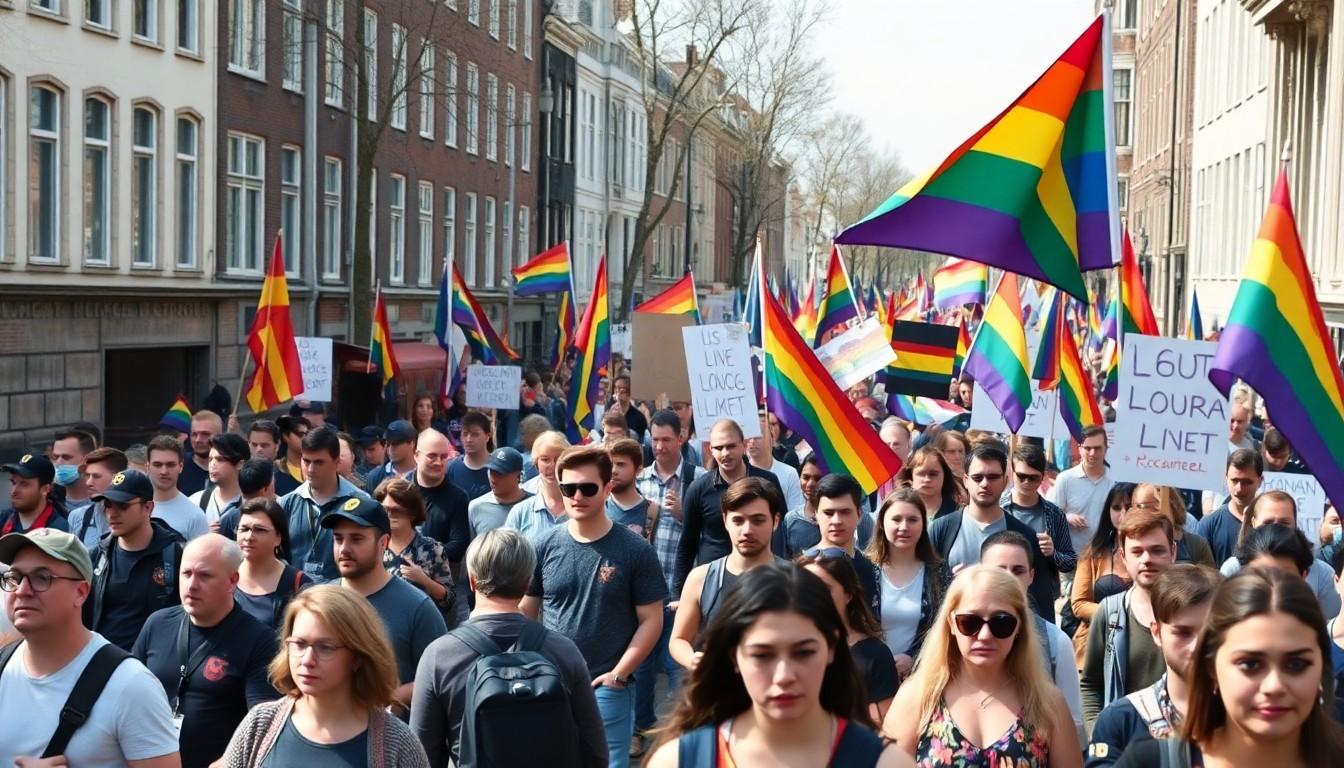
Shoppers and sightseers paused as thousands poured through Amsterdam for the WorldPride march, a vivid demonstration of solidarity, resistance and visibility that threaded city streets toward Museumplein , and reminded everyone why global queer rights still matter.
Essential Takeaways
- Mass turnout: Thousands marched through central Amsterdam along a route from President Kennedylaan to Museumplein, arriving ahead of the evening’s WorldPride concert.
- Visible solidarity: Participants carried rainbow flags and banners, plus flags from countries where homosexuality remains criminalised, creating a quietly powerful contrast.
- Clear messages: Signs ranged from earnest appeals like “Everyone has the right to be who they are” to defiant slogans such as “Kiss whoever the fuck you want.”
- Cultural moment: The march doubled as protest and celebration, ending with a scheduled slot concert that capped the day.
- Art and activism: Projects like Zero Flags were present, amplifying voices from persecuted communities with symbolic flags and storytelling.
A march that felt like a hug and a wake-up call
The atmosphere on the streets was both celebratory and solemn, a bright wash of colour with an undercurrent of urgency as people chanted and cheered. According to organisers, the event was framed as solidarity, resistance and visibility , words that match the mix of festivity and protest on display. For many, carrying flags from countries where queer lives are still criminalised felt like a living petition: joyful but impossible to ignore.
The route: a moving city-wide stage
Participants set off from President Kennedylaan and wound through Rijnstraat, Van Woustraat, Ceintuurbaan, Roelof Hartstraat and Van Baerlestraat before converging on Museumplein. The route turned Amsterdam itself into a backdrop for a global conversation, with curious onlookers lining tram stops and cafés. If you’re planning to join next time, aim to arrive early and pick a stretch that suits your pace , long marches can be tiring but also deeply communal.
Flags, slogans and the power of symbolism
Alongside classic rainbow banners, demonstrators carried flags of countries where homosexuality is still illegal. That visual choice gave the march an international edge and linked local celebration to worldwide struggles. Initiatives like the Zero Flags project use similar symbolism to spotlight persecuted communities, and their presence here helped shape the march as more than a parade , it was a political statement you could see in vivid colour.
From protest to party: Museumplein and the closing concert
The march culminated at Museumplein, where a slot concert was due to begin at 18:00. The transition from moving demonstration to staged celebration underlined a key WorldPride aim: visibility that leads to joy and to action. Events like this also help normalise queer presence in public space, while giving activists a platform to raise uncomfortable but necessary questions about laws and lives abroad.
Why it still matters , and what you can do
WorldPride’s message is simple and urgent: pride isn’t only about celebration where rights are secure, it’s about visibility for those who don’t yet have them. If you want to show support, consider donating to groups that help LGBTQ+ people in hostile countries, follow campaigns like Zero Flags, or use social media to amplify those stories. Even small acts , signing petitions, attending local events, starting conversations , keep momentum alive.
It's a small change that can make every march, every flag and every voice count.
Source Reference Map
Story idea inspired by: [1]
Sources by paragraph: