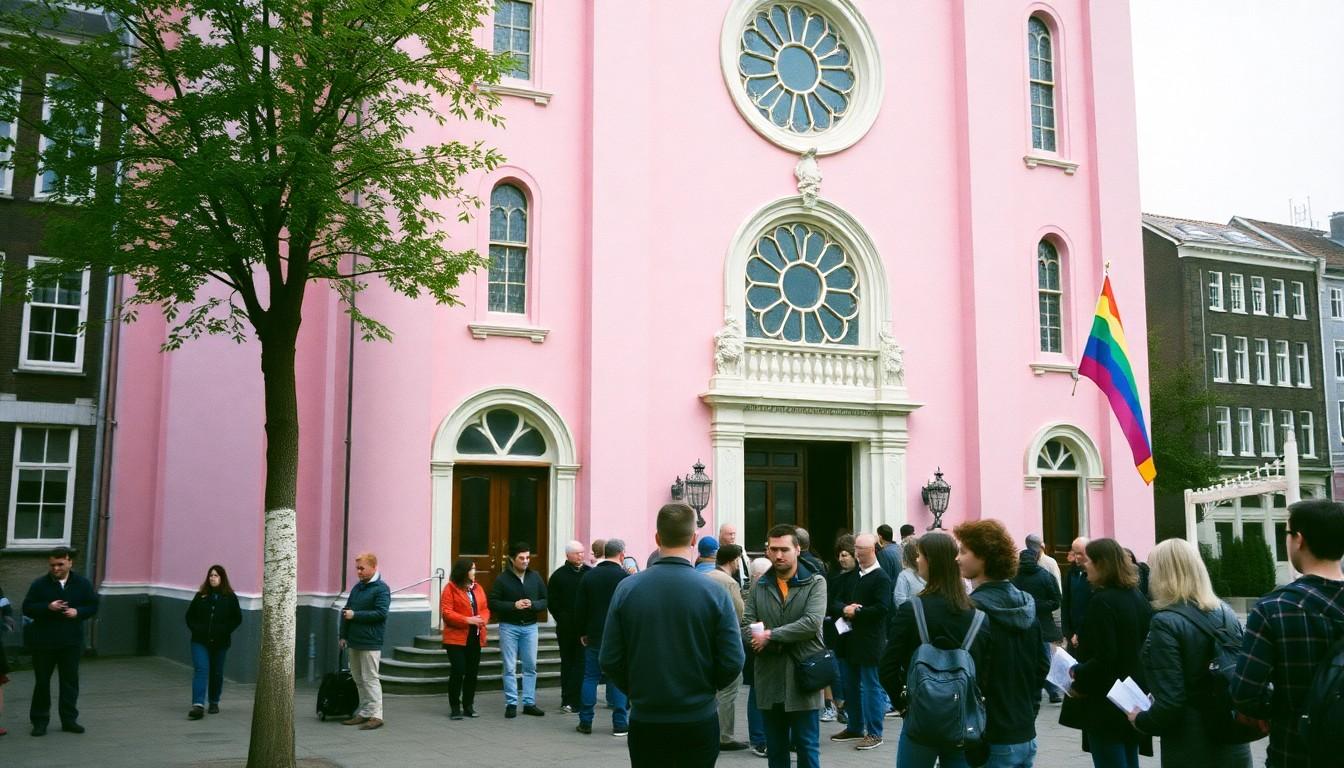
Buzzing with colour and laughter, Amsterdam’s Pride festival drew crowds to a pink church where dozens queued to be “Married For A Day,” a joyful nod to the city’s role in same‑sex union history and a reminder that celebration and activism still walk hand in hand.
Essential Takeaways
- Historic setting: The event took place near the canals where some of the first legal same‑sex unions were registered 25 years ago, giving ceremonies a poignant backdrop.
- Playful ritual: Dozens took part in the Married For A Day experience , brief, symbolic weddings that felt celebratory and theatrical.
- Festival atmosphere: The church and surrounding streets were alive with colour, music, and a festival crowd that felt both intimate and exuberant.
- Accessible fun: The setup encouraged participation from visitors and locals alike, with a light, communal feeling rather than formal legal proceedings.
A pink church, a long queue and a big grin
There’s something instantly human about a line of people waiting for joy. The Married For A Day installation drew couples and friends into a candy‑coloured space where vows were playful and ceremonial petals fell like confetti. Reporters noted the scene as visually striking and emotionally warm, mixing quiet moments with bursts of laughter.
The event is deliberately theatrical, part performance and part community ritual. Organisers wanted something accessible and visible , a way for visitors to take part in Pride without the legal paperwork, but with all the ceremony. It’s a clever invitation: you can feel married for an afternoon and leave with a photo, a memory and a story to tell.
Why the location matters: 25 years of change
Amsterdam’s Pride sits on top of a deep civic history. The ceremonies were staged not far from where the Netherlands registered some of the world’s earliest legal same‑sex unions. That proximity gives the pop‑up weddings texture , they’re not just a party, they’re a salute to legal and social milestones.
That historical link makes the playful ceremonies feel like part of a long arc of progress. For many attendees, the day is both celebration and a quiet acknowledgement of those who fought for recognition. It’s a reminder that Pride in Amsterdam mixes carnival with conscience.
How the festival blends spectacle with accessibility
Pride in Amsterdam has long been about bringing people together in public space, and this year’s Married For A Day continues that pattern. The event is compact and easy to join: visitors queue, step inside, go through a short ceremonial exchange and step back into the bustle. It’s low‑pressure, photo‑friendly and very social.
For festivalgoers who don’t want a long commitment but do want to mark the moment, this format works brilliantly. If you’re planning to join next time, bring a friend, wear something colourful and expect to smile , the atmosphere is light but genuinely touching.
Bigger picture: Pride as tourism, protest and party
Amsterdam’s Pride operates on several levels: it’s a major draw for visitors, an outlet for LGBTQ+ culture and still a platform for activism. The Married For A Day pop‑up shows how organisers balance those roles, creating moments that are Instagram‑ready without flattening the political roots of Pride.
City guides and local festival listings point to a packed programme of music, talks and street parties alongside these intimate offerings. That blend keeps Pride fresh: there’s room for loud floats and quiet ceremonies in the same weekend.
Practical tips if you want to join the fun
Plan for crowds and colourful chaos. Arrive early to avoid long queues, wear comfortable shoes for canal‑side strolls, and bring a waterproof layer , Dutch weather can surprise you. If you want a keepsake, bring a small camera or ask for a photo; organisers usually accommodate quick snapshots.
And feel free to lean into the joy. Whether you sign a symbolic certificate or simply clap from the church steps, the point is communal celebration.
It's a small, bright ritual that reminds you why public celebration still matters.
Source Reference Map
Story idea inspired by: [1]
Sources by paragraph: