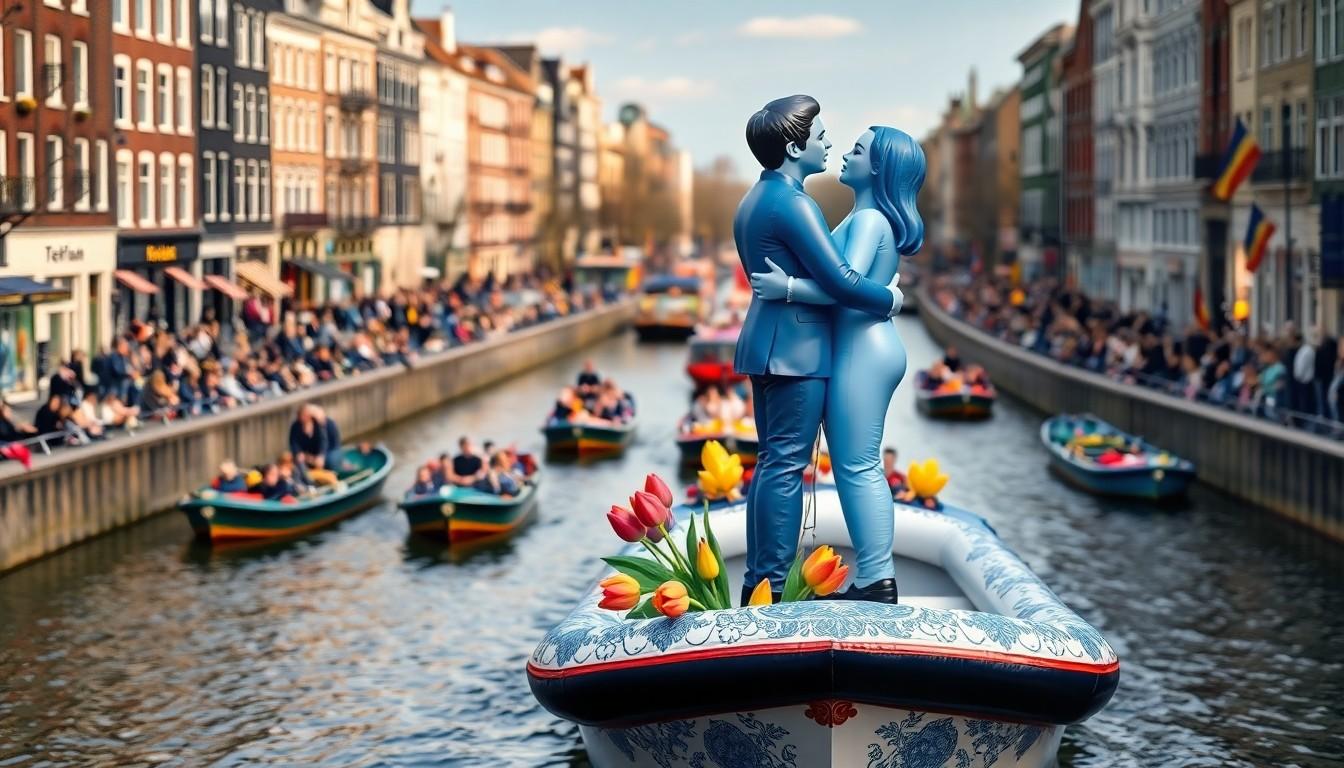
Shoppers and parade-goers turned and laughed as a giant inflatable kiss of two world leaders drifted through Amsterdam’s canals, becoming a trending image from WorldPride 2026; the installation mixed humour, protest and local references while hundreds of boats and thousands of people marked queer visibility amid tightened security.
Essential Takeaways
- Striking visual: A huge inflatable couple styled like Donald Trump and Vladimir Putin in Delft blue drew immediate attention and mixed reactions.
- Local twist: The figures wore Delftware-style clothing and held tulips, nodding to Dutch ceramics and souvenir culture.
- Scope of event: Around 80 decorated boats took part in Amsterdam’s Canal Parade, creating a colourful, noisy procession.
- Security backdrop: The parade happened under increased police patrols after a deadly attack on a Pride event in Berlin.
- Political edge: The artwork prompted reflection on leaders’ records and rising pressure on LGBTQ+ rights worldwide.
A single image that summed up a complicated weekend
The inflatable kiss cut through the chatter like a bright postcard, its oversized faces and Delft-blue outfits almost absurd against the barge-lined canals. Organisers called the piece The Kissing Couple and said they wanted to “pause power for a moment” and show something human, not simply provoke. That mix of satire and tenderness made the float one of the most photographed scenes of WorldPride, and it quickly popped up across social feeds and headlines.
How a Dutch souvenir style turned into political theatre
The installation leaned on a recognisably Dutch visual shorthand: Delftware’s blue-and-white patterns and the tulips you see in souvenir shops from Amsterdam to Marken. It’s a clever local wink that kept the artwork playful while underscoring the contrast between a lighthearted aesthetic and serious political subtext. According to Pride Amsterdam’s description, the design was deliberate , an approachable way to invite conversation about power, identity and the global state of queer rights.
Celebration and protest sailed side by side
Some 80 decorated boats made their way along the canal route, each one a moving statement , glitter and DJs next to banners demanding rights and safety. The Canal Parade has long been both party and protest, and this year’s procession felt particularly charged. Dutch Prime Minister Rob Jetten joined the parade, becoming the first sitting prime minister to attend, and he used the moment to say WorldPride carries “greater significance than ever” amid rising threats to LGBTQ+ communities.
Security concerns changed the mood, not the message
The upbeat spectacle took place under a notable security presence, with police monitoring canals and banks after a deadly attack at a Pride event in Berlin weeks earlier. That tightening was visible but didn’t swamp the atmosphere; people still danced, waved flags and cheered as floats passed. The extra patrols were a reminder that visibility can attract both celebration and hostility, and organisers stressed vigilance alongside the party.
Why the image matters beyond a viral moment
The choice of two polarising world leaders as a kissing couple was never just about a joke. It prompted questions about political rhetoric, foreign policy and how state actions affect queer lives , especially when one of the depicted leaders presides over legislation that limits LGBTQ+ organising and expression. The float made the point visually: culture, comedy and protest can co-exist to call attention to urgent human rights issues.
It's a small, surreal moment that captures how Pride keeps evolving , equal parts celebration, spectacle and serious conversation.
Source Reference Map
Story idea inspired by: [1]
Sources by paragraph: