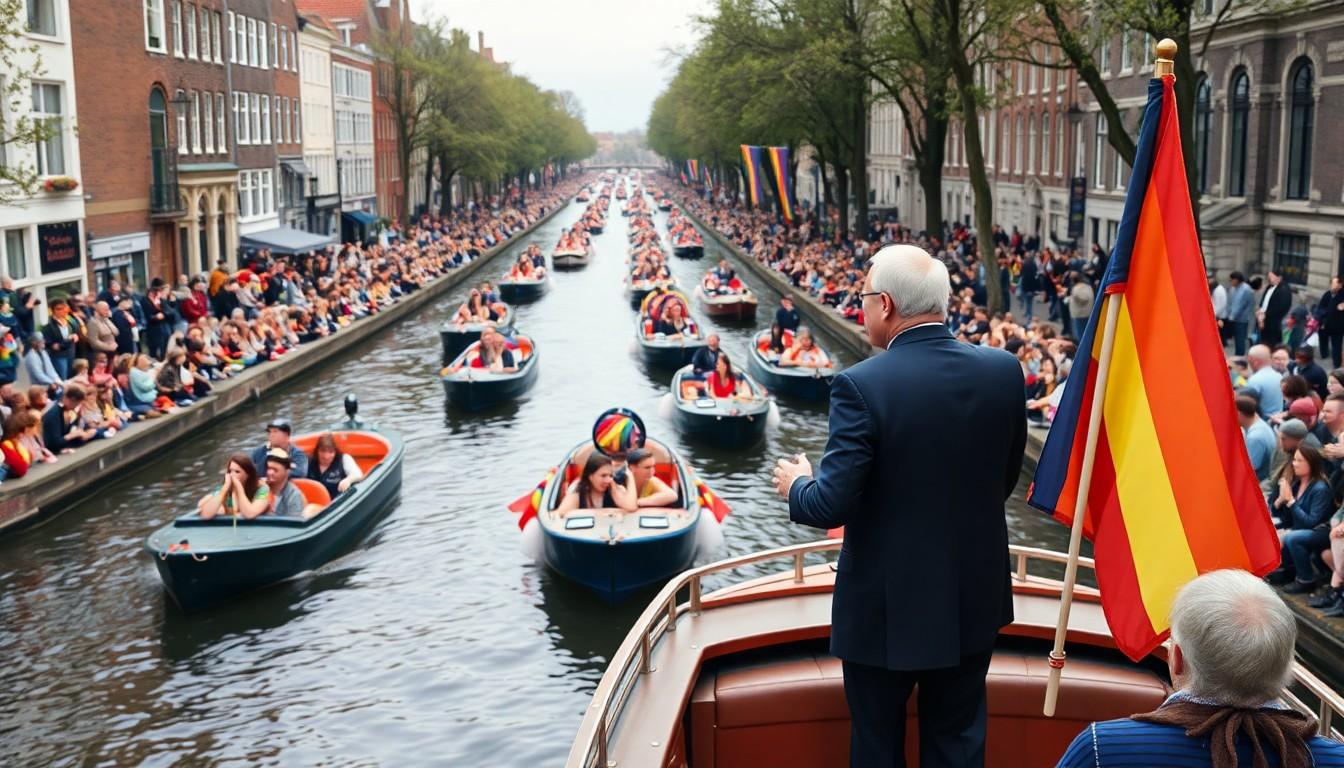
Shoppers and onlookers cheered as the Dutch prime minister stepped onto a Pride boat , a vivid, symbolic moment that saw Rob Jetten become the first serving PM to sail part of Amsterdam’s Pride canal parade, signalling fresh government promises and a big push on LGBTQI+ safety and rights.
- Historic first: Rob Jetten is the first serving Dutch prime minister to take part in the Pride canal parade, a striking visual for WorldPride and the city’s canal-lined streets.
- Concrete commitments: The cabinet plans to implement the Regenboog Stembusakkoord, with new laws promised and €35 million earmarked for safety and policing work.
- Practical safety steps: Security was tightened across the route, with 250 concrete blocks and other measures after recent attacks in Europe.
- On-the-ground feel: Around 80 boats sailed through the city centre; crowds were described as very busy and temporary stands were built for WorldPride events.
A Prime Minister on a Pride Boat , what changed the scene?
Rob Jetten stepping onto a boat at the Scheepvaartmuseum and sailing through central Amsterdam is more than a photo op; it’s a public, sensory moment , flags, music and boats cutting through summer light. According to reporting, his presence was timed to underline national policy moves rather than just festival solidarity. For many this will feel like a welcome affirmation from the very top of government.
The Regenboog Stembusakkoord , promises that now need delivery
The Regenboog Stembusakkoord was drawn up with the rights group COC and signed by multiple parties before the coalition took office. The cabinet has pledged to enact its measures, and Jetten used his Pride appearance to announce those intentions. That matters because the accord includes concrete targets , for instance, bolstering legal protections and addressing discrimination through policy changes.
Money and manpower , what the government is putting behind it
One of the clearer takeaways is the funding and policing focus. The government has set aside €35 million for safety measures and collaboration with police and large cities. Among the operational promises is a major increase in police discrimination detectives, moving from a very small team to a force of at least 40. If implemented, that would change how complaints and hate incidents are investigated across the country.
Safety in a tense moment , how the parade responded to threats
This year’s parade took place in a Europe where Pride events faced new, violent threats , and the Amsterdam event reflected that reality. Security was noticeably tighter; reports mentioned 250 concrete blocks positioned along the canals and other precautions. Organisers and the city stressed heavy preparation, and the presence of the prime minister felt partly intended to reassure participants and visitors.
Why this matters for LGBTQI+ people and ordinary observers
For LGBTQI+ citizens, a prime minister openly joining such a public celebration is both symbolic and political. Jetten, who is openly gay and has spoken about threats he receives, encouraged young people to be open about their identities while acknowledging that life remains difficult for many. Seeing national leaders make visible commitments can shift atmosphere and expectations, though the real test will be in the follow-through on laws, resources and protections.
It's a small, public gesture with big implications , and the coming months will show whether policy catches up to the symbolism.
Source Reference Map
Story idea inspired by: [1]
Sources by paragraph: