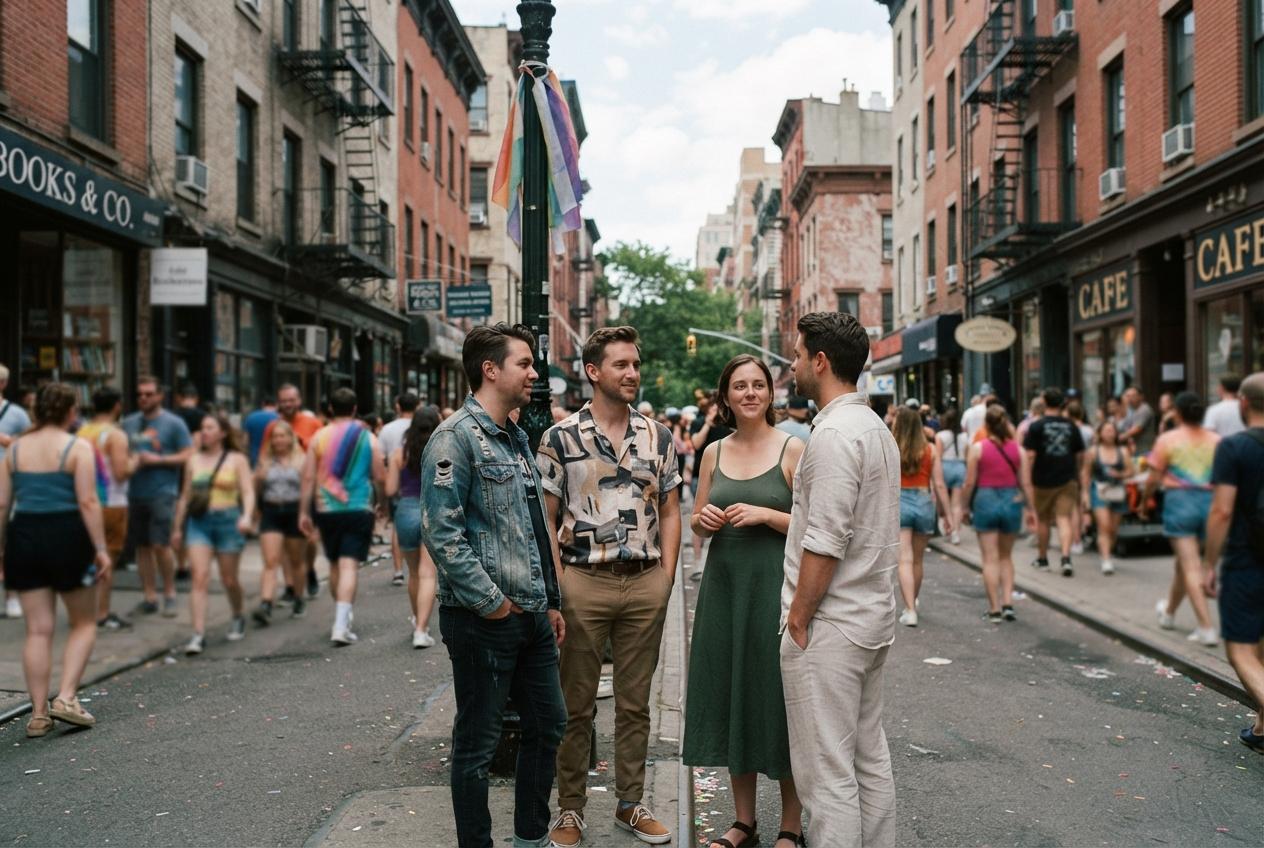
Celebrate the colour, the calm and the chaos, photographer-filmmakers and paradegoers converged in Greenwich Village for NYC Pride, capturing still, honest portraits that tell a larger story about history, liberation and why Pride still matters.
Essential Takeaways
- Historic roots: Pride traces back to the 1969 Stonewall uprising in New York City, the spark for the modern gay liberation movement.
- Personal perspective: A straight photographer from Pittsburgh returned to the Village with film cameras, balancing handheld parade shots and posed Hasselblad portraits.
- Visual contrast: The images feel surprisingly composed and calm despite the lively, crowded atmosphere, soft Tri-X grain, shallow Zeiss focus.
- Progress and work ahead: Legal and medical victories coexist with ongoing struggles; Pride remains both celebration and protest.
- Practical note: Shooting Pride on film rewards patience, pose when you can, embrace motion for energy, and expect surprises from the lab.
Why Greenwich Village still matters for Pride photography
The West Village is both birthplace and living stage for Pride, and you can feel that history underfoot as you walk the parade route. The Stonewall uprising of June 1969 changed everything, making these streets more than a backdrop, owners of a long fight still come to mark victories and mourn losses. According to National Geographic and history records, the uprising shifted a community from fear to collective action, and photographers naturally track that arc from riot to celebration. For anyone photographing Pride, that context changes your approach: you look for gestures that nod to resilience as well as joy.
Film vs digital: Why shooting on 35mm and medium format still works here
There’s a tactile pleasure shooting film in a digital age, and a certain discipline that forces you to slow down. The photographer used a Leica M3 with 35mm for the official parade and a Hasselblad 503CW with an 80mm Planar for portraits, favouring Kodak Tri-X for its grain and tonal range. Film asks you to pick your moments, pose when the chaos settles, let motion blur tell the rest of the story. For festival shoots where light and movement are unpredictable, that restraint can produce images that feel deliberate and intimate rather than frenetic.
Portraits in a party: Finding calm inside the chaos
A big street party is noisy, sweaty and colourful, yet portraits from Pride often read as composed and quiet. That contrast is part of the charm, the loud, free-flowing energy frames still, human faces. As History and NYC Pride timelines show, the event’s evolution from protest to parade to city-wide festival creates pockets where you can stop, talk and shoot. Practical tip: ask for a few posed frames in a quieter moment; the Hasselblad’s waist-level viewfinder invites connection and makes subjects feel seen, not gawked at.
Pride’s progress: victories, medicine and lingering fights
The arc from the Stonewall riots to today includes big legal wins, anti-discrimination laws, marriage equality, and monumental medical advances driven by activism around HIV. History articles outline how community organising sped research and shifted care practices, changing countless lives. Still, activists remind us Pride isn’t just retrospective celebration; it’s a living movement pushing on current issues. That mix of celebration and accountability is what makes street portraits from Pride quietly powerful: they’re snapshots of people who live the movement’s results and its work.
How to shoot Pride respectfully and effectively
Start with curiosity and consent. Introduce yourself, say why you’re shooting and offer to share a contact or printed shot later, small courtesies go a long way. Use longer lenses for candid moments, medium format for posed portraits that feel respectful and fine-grained. Be mindful of accessibility and privacy: some attendees are there to protest, some to parade, some to grieve; read the scene. Finally, expect surprises when the film returns from the lab, those unexpected frames often become the most honest.
It's a small change that can make every portrait more meaningful.
Source Reference Map
Story idea inspired by: [1]
Sources by paragraph: