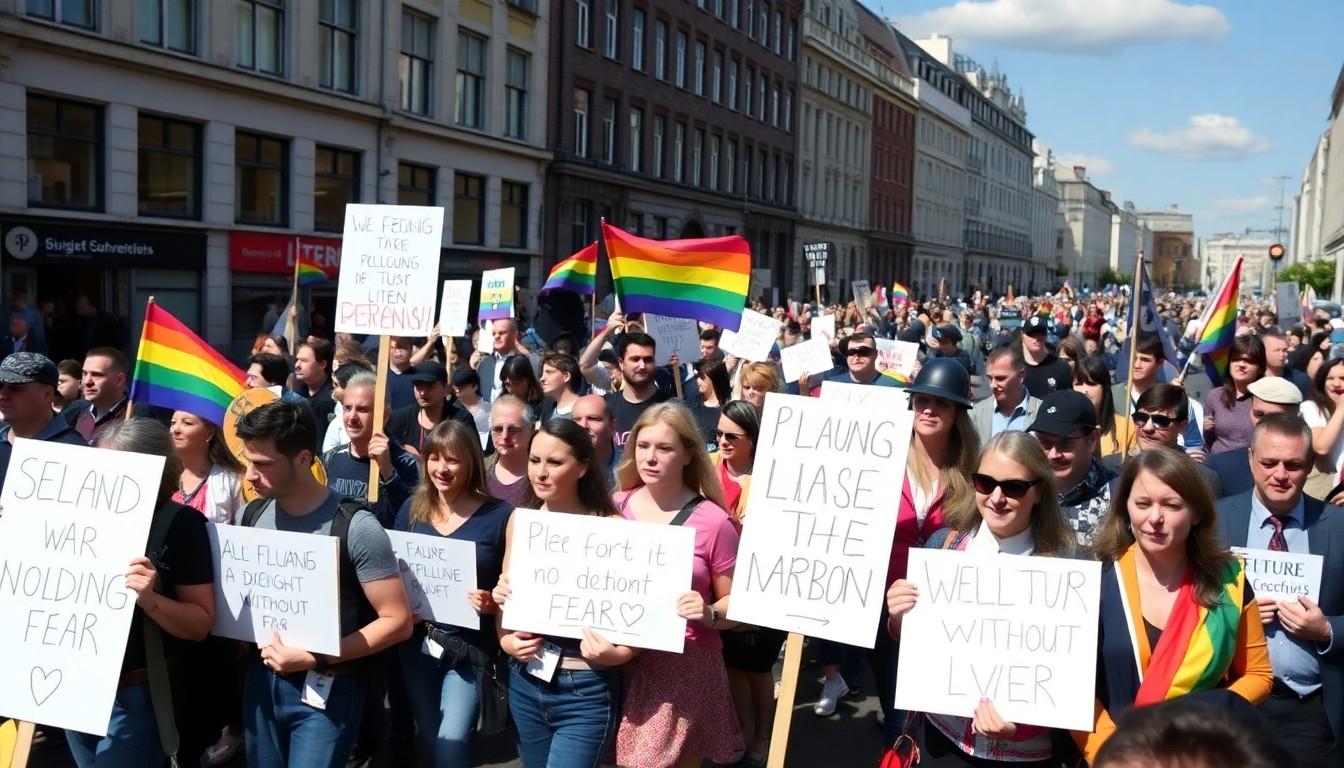
Shoppers and residents watched as hundreds of thousands took to Hamburg’s streets in a vivid show of solidarity after last week’s deadly Berlin Pride attack; organisers and police estimated about 300,000 people marched, a visual reminder that public celebrations can also be powerful public defiance.
Essential Takeaways
- Huge turnout: Organisers and police put the crowd at roughly 300,000, a large and visible presence across central Hamburg.
- Visible solidarity: Rainbow flags, placards and floats filled the route; many signs called for a future without fear and for continued LGBT+ rights.
- Heightened security: Police were notably visible after the Berlin attack, with preventive measures and a strong on-the-ground response.
- Context of violence: The march followed a vehicular and knife attack in Berlin that left one person dead and dozens hurt, underlining safety concerns.
- Community resilience: Local LGBT+ groups and allies framed the event as both celebration and protest, emphasising unity and resolve.
A massive, colourful answer to violence
Under a clear summer sky, Hamburg’s Pride felt big in the chest , colourful, noisy and a little defiant. According to AFP coverage, people of all ages walked, danced and rode floats while waving flags and pressing messages about solidarity. The scale mattered: when 300,000 people gather, it’s not just a parade, it’s a statement about belonging and safety.
The event came a week after a deadly attack at a Berlin Pride-related gathering, and the mood mixed joy with nervousness. Police presence was heavier than in typical years, and that visible protection seemed to reassure many marchers. For participants, the sensory mix , music, banners, the slap of feet on pavement , turned fear into a collective show of resilience.
Why the Berlin attack changed the pace
The Berlin incident , a man driving a van into a crowd and then allegedly lunging at officers with a knife , killed a 65-year-old woman and injured dozens, according to multiple reports. Reuters and AP provided immediate accounts of the suspect’s background and the fast-moving police response, and those details sharpened organisers’ security plans in Hamburg.
Organisers said safety was the priority without wanting to cancel the event. The message was clear: mourning and caution do not cancel the right to be seen. For many attendees, showing up was the practical response to terror , a way to insist the community will not be cowed.
How security looked on the ground
If you were there, you’d have noticed officers and barriers along the route, more checkpoints and a calmer, watchful atmosphere than a typical Pride. Local groups and police coordinated closely, balancing celebratory elements with crowd control and rapid-response readiness. That coordination was drawn from lessons in Berlin and from broader European policing practices after public attacks, as described in follow-ups by major outlets.
For anyone planning to attend future large events: arrive early, travel light, agree on meet-up spots with friends, and follow organisers’ guidance. Practical steps like these help keep the mood safe and social.
Community reaction: grief, anger, and determination
Speakers and placards at the march often mixed grief for victims with anger at the attack and calls for protection and acceptance. Local LGBT+ groups framed the day as both a celebration of identity and a civic act. Authorities and activists alike emphasised that solidarity must translate into safer public spaces and continued support services.
There’s a civic lesson here: collective presence can be both comforting and politically potent. When families, allies and younger people join in such numbers, the message to policymakers and to those who would intimidate minorities is amplified.
What this means next for Pride events in Germany
Expect higher security profiles at Pride events around the country, coupled with determined participation from LGBT+ communities and allies. Cities will keep refining plans, and organisers will keep urging people to come out , safely. The long-tail keyword “Hamburg Pride turnout 2026” speaks to how this particular march will be referenced in discussions about resilience and public safety.
And while the photos and banners make the headlines, the quieter work continues: support services, community talks and local politics must keep pace if Pride is to be both joyful and safe.
It's a small change that can make every march feel a little more secure and a lot more united.
Source Reference Map
Story idea inspired by: [1]
Sources by paragraph: