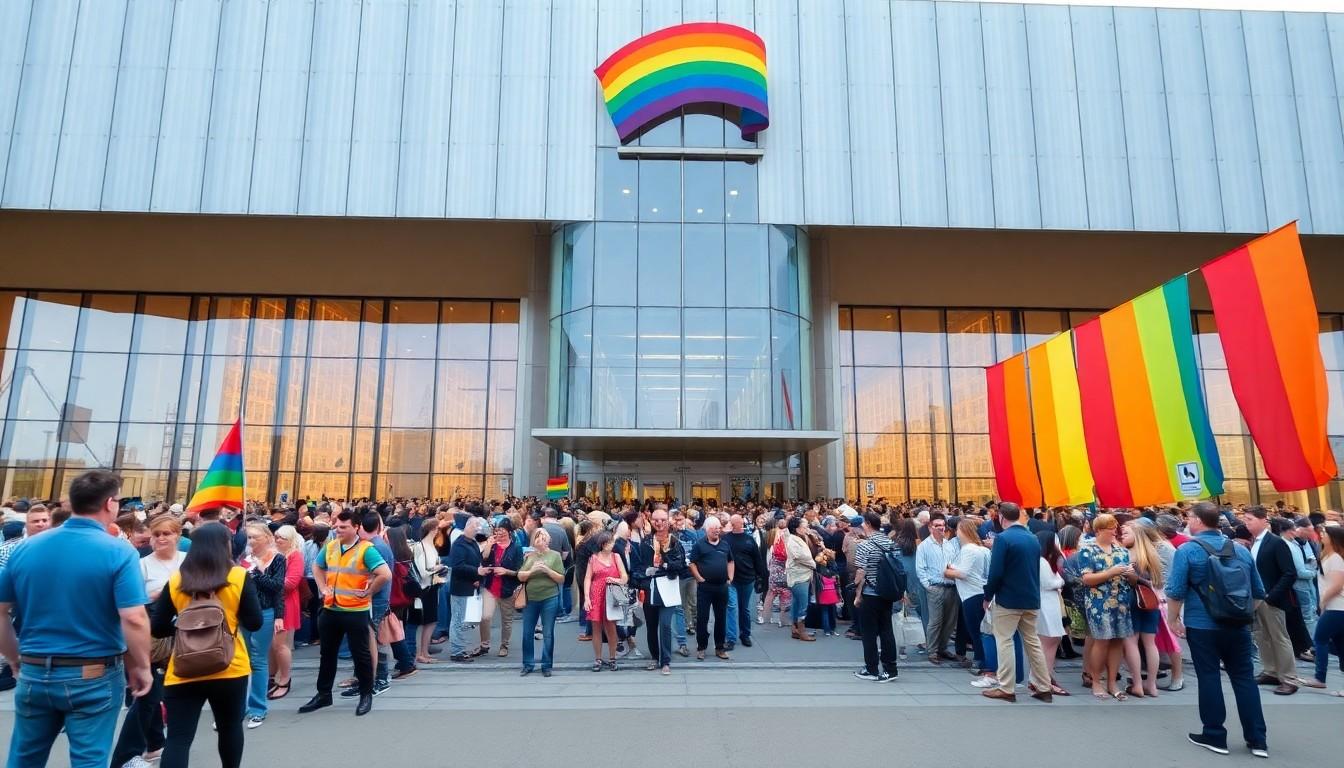
Witness the resilience: organisers and crowds packed Hamburg’s streets for the Christopher Street Day parade, a week after the Berlin attack, turning a sombre moment into a show of solidarity that mattered , loud, proud and organised with tighter security.
- Huge turnout: Organisers reported about 300,000 people, far above the 250,000 expected, giving the march a festival-like energy.
- Clear message: The parade carried the slogan “Jetzt erst recht!” and public figures, including Olivia Jones, marched in first rows with visible solidarity.
- Heightened safety: Police doubled planned deployment, added concrete barriers and other measures; authorities stressed there was no doubt about going ahead.
- Wide political presence: Senior politicians and Groen/SPD figures walked up front, underlining cross-party support for queer communities.
- Festival feel, cautious edge: Pink confetti and cheers mixed with the reality of recent events, producing a hopeful but guarded atmosphere.
Olivia Jones led the front , and it felt personal
Olivia Jones, a Reeperbahn fixture, strode at the head of the parade wearing a sash reading “Jetzt erst recht,” and her Instagram clip , confetti falling, crowds cheering , captured the mood: defiant and tender at once. According to regional broadcasters, Jones added hashtags like “lovewins” to underline the tone. It was a striking image: a familiar personality giving literal and symbolic leadership, and people responded with warmth.
The backdrop was grim. Just days earlier a deadly attack had shocked Berlin’s Pride community, so Hamburg’s march carried extra weight. That contrast made the sight of thousands singing and waving rainbow flags feel like both a celebration and a collective refusal to be silenced.
Record numbers turned up , what that tells us
Organisers said around 300,000 people took part, beating expectations and registering as the largest CSD turnout in Hamburg’s history. Fifty to one hundred extra groups were mentioned, and the parade route , from Lübecker Straße down Mönckebergstraße to Lombardsbrücke , swelled with colour and music.
This surge speaks to a broader trend: Pride events are becoming mass civic rituals, not just community parades. For anyone planning to attend future events, arrive early, pick meeting points and expect heavy foot traffic and long waits for refreshments and transport.
Politics was visible in the front rows
High-profile politicians marched alongside activists, signalling unified political backing. Hamburg’s second mayor and several SPD leaders were present, and national ministers were expected, showing Pride’s place on mainstream political calendars.
That presence matters: it sends a message that queer rights are a public concern, not a niche issue. For activists, the visibility of office-holders can be a double-edged sword , useful for pressure and recognition, but also a reminder to keep grassroots voices central.
Security was ramped up , practical and visible steps
After the Berlin incident, authorities reworked safety plans, doubling deployment numbers and adding physical protections such as concrete barriers and strategically placed vehicles. Police said route checks were intensified and the parade’s logistics re-examined to reduce vulnerability.
For attendees, that meant clear checkpoints and a more controlled environment. If you’re heading to a large event now, expect bag checks, restricted areas and instructions from stewards. It’s a trade-off: a slightly sober feel to what’s otherwise a joyful day, but most agreed the extra measures were necessary.
How the vibe managed to stay hopeful
Despite the heavy policing and recent tragedy, the day kept an upbeat pulse , confetti cannons went off at noon, music played along the route, and people cheered, chanted and hugged. Organisers had framed the event as showing courage and solidarity, and the crowd answered loudly.
That mix , celebration with a cautious edge , felt fitting. Pride has always been partly about joy and partly about endurance. Walking through that tension together is what turned a march into a statement.
It's a small change that can make every march safer and stronger.
Source Reference Map
Story idea inspired by: [1]
Sources by paragraph: