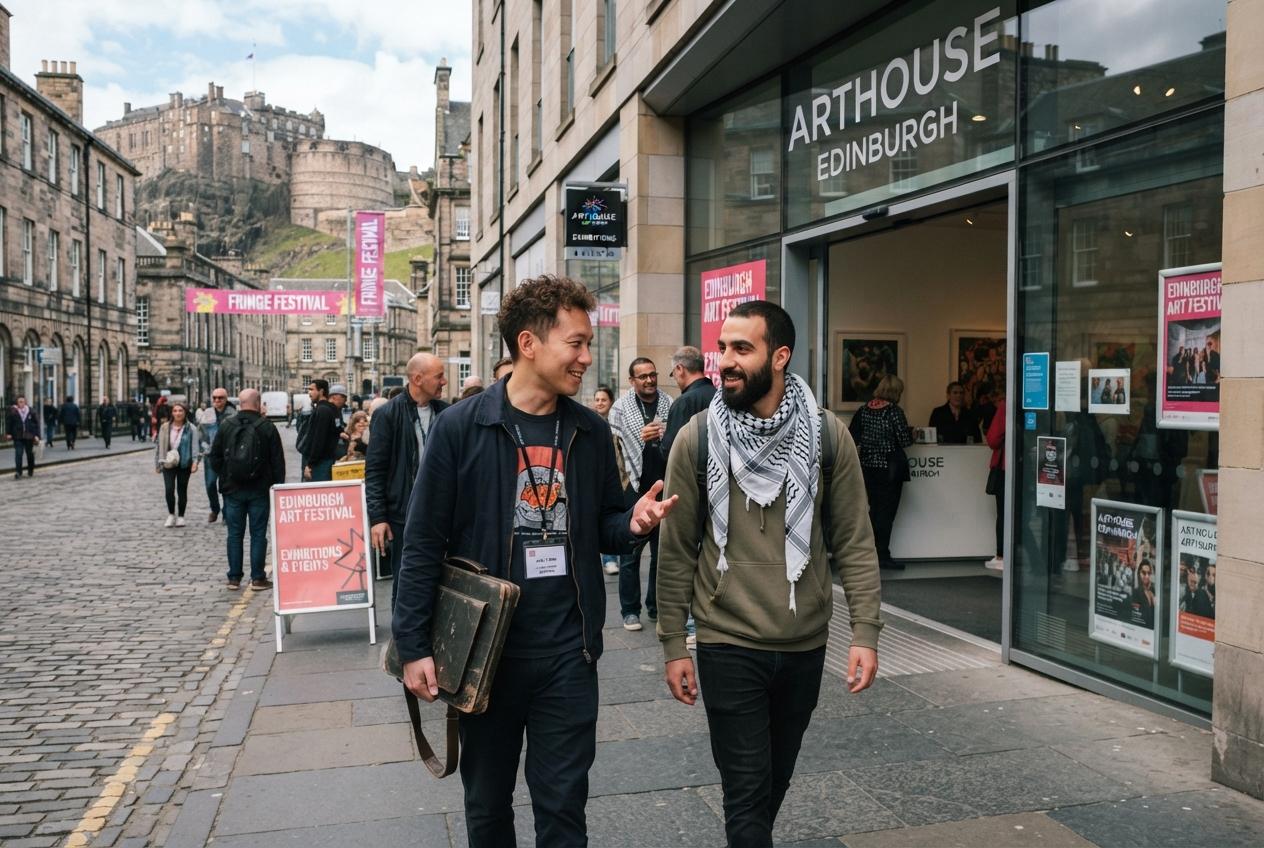
Shoppers of culture are flocking to Edinburgh this August as the Edinburgh Art Festival returns, with over 250 artists across the city, a Leith hub and a programme that foregrounds queer voices, Palestinian archives and ambitious new commissions , here’s what to see and why it matters.
Essential Takeaways
- Big and local: Over 250 artists spread across venues citywide, with a major hub in Leith offering a concentrated schedule and late-night energy.
- Rare discoveries: Works by Japanese artist Sadao Hasegawa and Del LaGrace Volcano appear in Scotland for the first time, with an erotic, hypermasculine visual style that’s visually striking and historically significant.
- Sound and story: A dedicated Palestinian strand includes screenings, a music and spoken-word archive installation and performances that use sound as political testimony.
- Sculpture and site-specific: New commissions on Calton Hill and installations at Fruitmarket and Talbot Rice bring huge, tactile works , expect colour, concrete and a physical sense of monumentality.
- Climate and care: Pieces like Katie Paterson’s amulets reflect environmental fragility and long-term thinking, while garden and body metaphors crop up across exhibitions.
Why this year feels different , a festival with a sharper political ear
This edition reads louder and more purposeful, with programming that leans into contested histories and lived experience. The Palestinian-focused strand, developed with Falastin Film Festival, brings films, in-conversations and a festival-long installation of records that smell faintly of vinyl and memory. Audiences will hear field recordings of weddings next to revolutionary albums; it’s intimate, occasionally raw, and quietly insistive. For visitors, that means art that doesn’t only look beautiful , it asks you to listen and reckon.
Rare treasures: Sadao Hasegawa and Del LaGrace Volcano on UK soil
One of the festival’s headline surprises is a show of Sadao Hasegawa, whose paintings of chiselled, mythic bodies combine eroticism with folklore and sci‑fi. Much of his work has been hard to see outside Japan until now, so this is a proper reveal: bold, textured and a little scandalous in the best way. Nearby, Del LaGrace Volcano’s Love Bites Back revisits a controversial 1991 monograph era and will be punctuated by a conversation with Catherine Opie , a chance to see queer histories reframed with contemporary care. If you’re looking for photographic portraits that linger, the National Galleries’ Catherine Opie exhibition is also a must.
Sound as witness: archives, performances and the weaponisation of noise
Sound crops up as a political medium this year. Projects such as the Palestinian Sound Archive curated by Mo’min Swaitat layer field recordings, spoken word and album art into an installation that feels like stepping into someone else’s living room across time. Meanwhile, performances exploring the Golan Heights use sonic pressure as an artistic device , reminding visitors that sound can be oppressive as well as expressive. If you’re sensitive to loud or abrasive work, check programme notes for content warnings and times.
Monumental works and fragile amulets , scale is part of the point
Expect contrasts in scale: Emii Alrai’s new Calton Hill commission presents colossal, fragmented relics that look both archaeological and newly political, while Katie Paterson’s nearly 200 amulets, made from materials sourced from endangered environments, are small, tactile and contemplative. Together they offer a neat lesson , the festival is arguing that both monumentality and intimacy matter when we think about cultural memory and environmental crisis.
Practical tips for making the most of your visit
Buy tickets for headline talks and screenings early , talks such as Volcano’s conversation with Catherine Opie will fill up. Plan travel between clusters; Leith is buzzing but other venues like Fruitmarket and Talbot Rice are close enough for a sensible walking route. Carry cashless payment and a lightweight raincoat , August in Edinburgh is famously changeable , and give yourself time for sit-down listening pieces, especially the sound archive, which rewards slow attention. If you’re bringing children, look out for family-friendly events or daytime slots where installations are quieter.
It’s a festival that asks you to look, listen and sometimes disagree , but mostly it invites you to be surprised.
Source Reference Map
Story idea inspired by: [1]
Sources by paragraph: