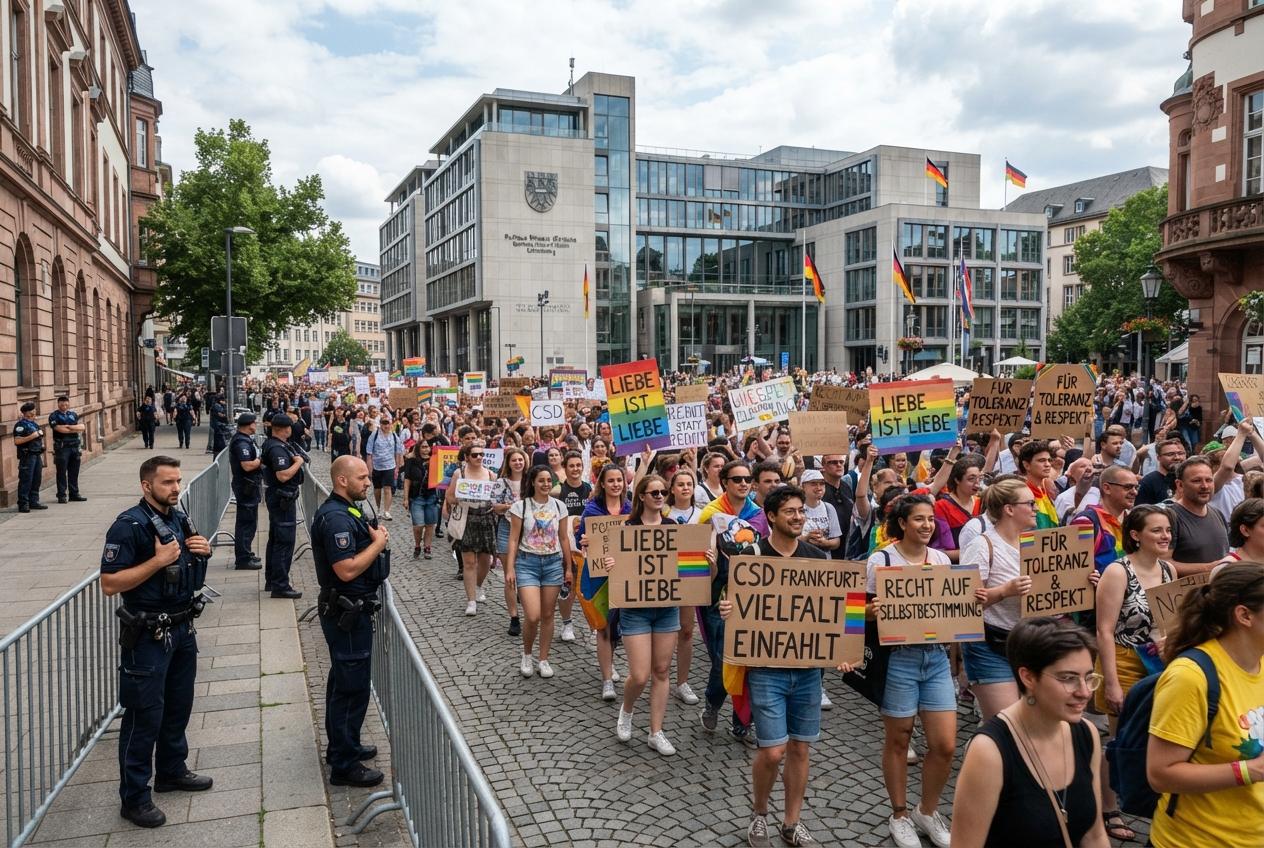
Shoppers, students and families turned out in colour as hundreds marked Christopher Street Day in Bonn, Moers and Ahaus, showing why local Pride marches matter , and how quick police planning and calm crowds helped keep events peaceful and safe in the wake of the Berlin attack.
Essential Takeaways
- Peaceful turnout: Hundreds attended CSD parades in Bonn, Moers and Ahaus, celebrating with colourful costumes and rainbow flags.
- Heightened security: Police in North Rhine-Westphalia used sharpened deployment concepts after the Berlin attack; organisers reported no incidents.
- Public reassurance: Authorities and attendees alike said people felt safe and supported throughout the events.
- Visible solidarity: Demonstrators used posters and outfits to express mourning, defiance and queer pride all at once.
Why these small- and mid-sized CSDs mattered this summer
The strongest image from the weekend was a simple one: crowds in bright colours, smiling despite a sombre backdrop. After the recent terror attack in Berlin, many came not only to celebrate Pride but to show solidarity and defiance, and that mix of emotion was visible and human.
Organisers in Bonn, Moers and Ahaus deliberately framed their parades as both celebrations and statements. According to local reports, floats passed by with rainbow flags and banners, while people touched on grief and remembrance as well as joy. That combination made the parades feel grounded and significant rather than merely festive.
If you’re wondering whether smaller CSDs still pack a punch, they do. They bring community warmth, local creativity and the chance to participate without the scale and stress of a huge city march. For many attendees, that felt reassuring after a week of national shock.
How police planning changed , and why it calmed people
Police said they came with updated plans and stepped-up awareness following the Berlin incident. Officers were visible but not overwhelming, and that balance seemed to help: participants reported feeling protected rather than policed.
Interior Minister Herbert Reul’s comments about reinforced sensitivity around potential dangers set the tone for local forces. The result was a neat illustration of risk management done with care; authorities prepared for contingencies while letting the parade remain a community event.
Practical tip: if you’re attending a Pride event after an incident, check organiser and police guidance in advance , bag rules, meeting points and simple safety protocols can make things easier and calmer on the day.
Signs, costumes and the messaging of solidarity
The imagery at these parades mattered. People wore colourful outfits and carried handmade signs that mixed slogans of resistance with messages of grief. That visual language is powerful: it says the community will carry on, while remembering those affected by violence.
Local media coverage emphasised this blend of emotion. For many on the route, the tangible warmth , hand-painted banners, the scent of street food, the murmur of conversation , made the marches feel human-scale and inclusive.
If you’re planning to join a future parade, bring a small, weather-appropriate sign and a water bottle. Little contributions like that help the atmosphere and keep practical comfort in mind.
What trends around CSDs tell us about safety and freedom
Across North Rhine-Westphalia, the pattern is clear: organisers and police can work together to protect both safety and expression. From Cologne’s larger festival atmosphere to these smaller towns’ intimate gatherings, the emphasis has shifted to sensible precautions rather than restriction for its own sake.
According to regional reporting, this approach echoes a wider trend: Pride events are resilient, adaptable and community-led. They’re learning to hold space for mourning and vigilance without losing their core purpose , celebration of LGBTQ+ life and rights.
For readers watching from home, the takeaway is straightforward: robust planning plus community cooperation keeps public celebration possible even in uneasy times.
Looking ahead , how communities keep Pride vibrant and secure
Organisers and participants left these parades with a renewed sense that Pride can be both joyful and responsible. Local leaders said they’ll continue to refine safety plans and keep communication open between police, volunteers and community groups.
That kind of iterative planning matters. It means future events can be welcoming, colourful and prepared, allowing people to show their pride without fear.
It’s a small change in routine, but it keeps the parade moving forward , and the colours bright.
Source Reference Map
Story idea inspired by: [1]
Sources by paragraph: