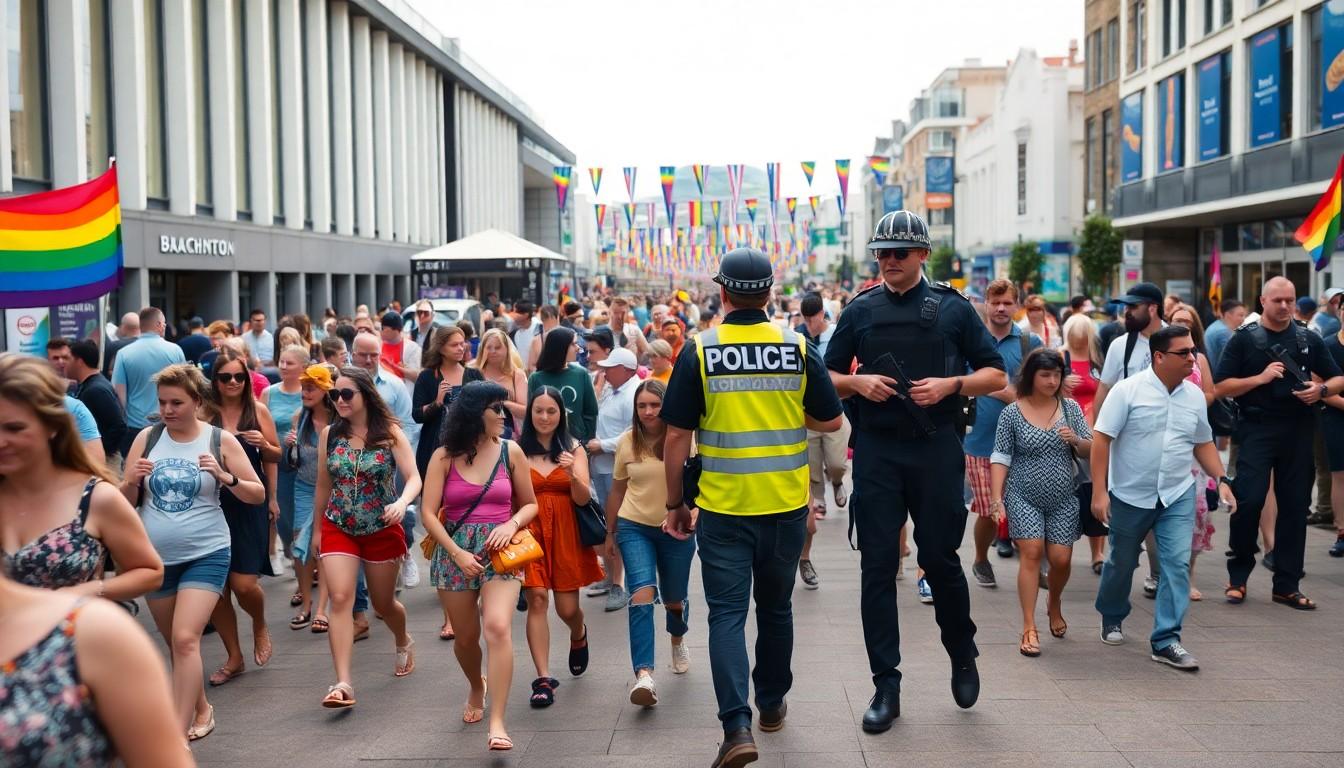
Shoppers and parade-goers are turning out to Brighton and Hove Pride this weekend with purpose and pride, following the shooting at Berlin Pride; organisers have balanced celebration with reassurance by stepping up security and programming to honour victims and defend LGBTQ+ visibility.
Essential Takeaways
- Solidarity first: Brighton Pride weekend centres messages of support for Berlin, with organisers speaking about the attack during events.
- Heightened security: Sussex Police will deploy armed officers in uniform and plain clothes as part of a months-long plan to keep crowds safe.
- Anniversary mood: This year marks the 35th Brighton parade anniversary, mixing nostalgia and defiance , a quiet, resolute celebration.
- Big-line entertainment: More than 150 LGBT+ artists will perform, with headline shows from Raye and Diana Ross at Pride on the Park.
- Community feeling: Older campaigners and newcomers alike are expected to show up, remembering past struggles while enjoying a colourful, musical weekend.
Why Brighton Pride feels different this year
There’s a softer, more reflective hum under the usual drumbeat of music and colour, and you can feel it as soon as you arrive. Organisers have framed the weekend as both celebration and response, using the platform to show solidarity with Berlin after its Pride attack and to reinforce why public visibility still matters.
Paul Kemp, managing director of Brighton and Hove Pride, has been clear that this year's events are about remembering and reaffirming. According to local reporting, the parade's 35th anniversary adds emotional weight, especially for older community members who recall far less welcoming times. Expect speeches and moments during the weekend that acknowledge loss while insisting on joy.
How organisers are balancing celebration with security
Safety isn’t an afterthought. Sussex Police confirmed a visible security plan, including armed officers in uniform and plain clothes, as part of a larger policing operation planned months in advance. Organisers, echoed in local coverage, stress this isn’t a knee-jerk reaction but a reassurance measure so people can relax and enjoy the festivities.
If you’re going, take the usual festival-smart steps: travel light, arrive early, note the locations of first-aid and information points, and agree a meeting spot with friends. Those small steps make a big difference in crowded spaces and help organisers keep the day running smoothly.
The parade: memory, defiance and a 35-year milestone
Brighton Pride traces its modern lineage to 1991, but the parade's roots go back to 1973. That history lends the weekend a particular tone , part defiant blast of colour, part reflective remembrance. Older activists are expected to lead chants or simply stand and watch, while younger attendees bring fresh energy and expectation.
Organisers have signalled they’ll directly address the Berlin attack during the weekend, and you’ll notice moments of silence, banners, and conversations across stalls and stages. It’s a reminder that Pride remains political as well as celebratory, asserting rights and safety at a time when many feel those things are under pressure.
What to expect on the line-up and community stages
If you’re in it for the music, Brighton hasn’t skimped: more than 150 LGBT+ artists are on the bill, with headline performances by Raye and Diana Ross at Pride on the Park. The programming deliberately mixes established acts with community stages, offering both big moments and intimate, local showcases.
For families and first-timers, there’s an approachable rhythm to the weekend: daytime community events, kid-friendly spaces, and evening headline sets. Bring ear protection for little ones, pace yourselves between stages, and use the community zones as quieter refuges when you need a breather.
Looking ahead: what this weekend signals for Pride in the UK
Brighton’s response will be watched by other events across the UK. By combining visible security with a clear message of solidarity and a programme that centres LGBT+ artists and voices, organisers have modelled one way to sustain Pride under pressure. Industry observers and community leaders will likely draw lessons about contingency planning and the role of public ceremonies in times of grief.
There’s a human note to it, too , attendees keep turning up because Pride is where they find each other, laugh, dance and remember. That combination of defiance and tenderness is what keeps these parades alive.
It's a small change that can make every celebration feel both safer and more meaningful.
Source Reference Map
Story idea inspired by: [1]
Sources by paragraph: