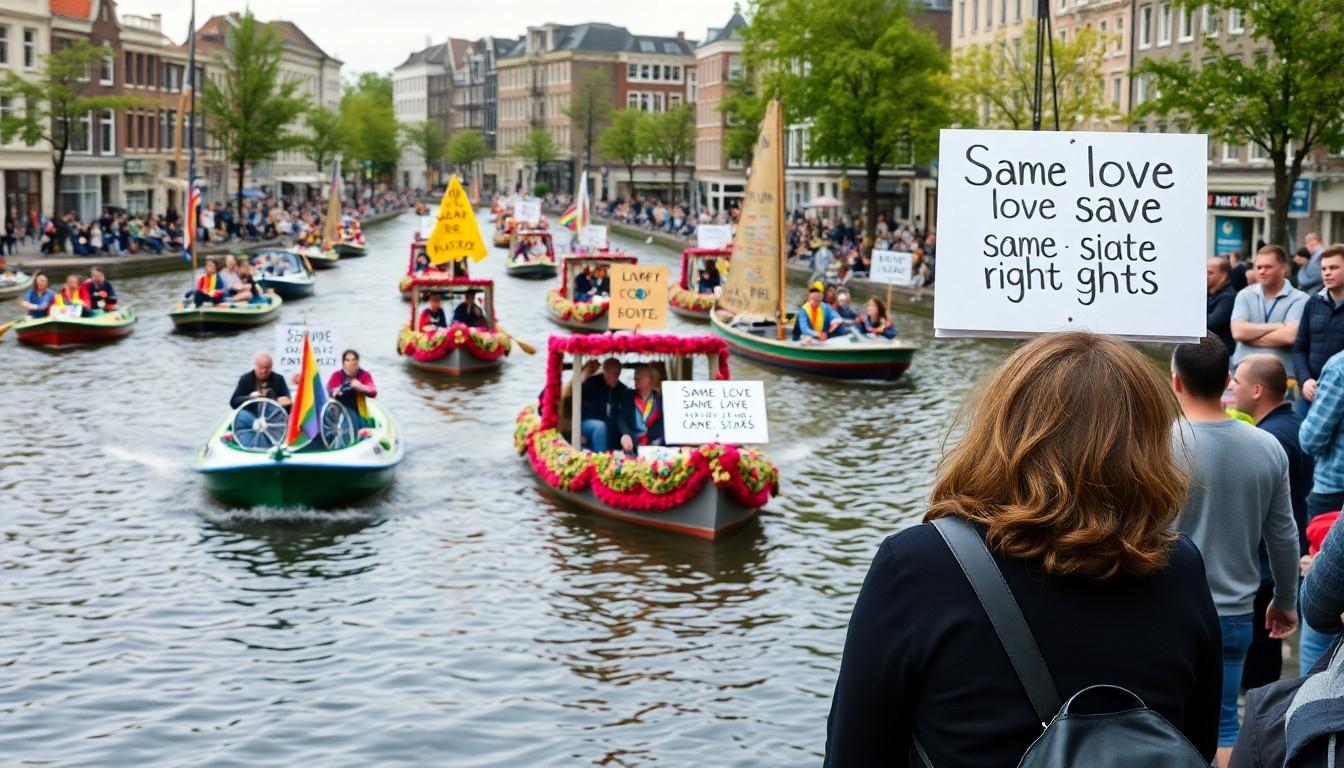
Shoppers and sightseers swarmed the canals as WorldPride Amsterdam lit up the city; colourful boats, pulsing hits and a clear human-rights message made the Canal Parade feel both festive and fiercely political, showing who’s celebrating , and who the celebration still excludes.
Essential Takeaways
- Wide turnout: 81 decorated boats cruised the canals, drawing large crowds and a lively playlist that mixed party anthems with serious messaging.
- Visible protest: Float participants held signs naming countries where same-sex relationships remain illegal, creating contrasted moments of joy and reflection.
- Local engagement: Residents and volunteers from women’s and human-rights groups watched and reacted emotionally, saying the mix of celebration and question felt potent.
- Practicalities: Organisers staged a carefully managed fleet and crowd plan so processions could run smoothly along the Amstel and main canals.
A party that pauses for thought
The Canal Parade felt like a soundtrack: pulsating tunes one moment, a solemn message the next. From the banks, people cheered as Bruno Mars and David Guetta filled the air, and then watched as banners were raised naming places where love is criminalised. It’s a contrast that lands; you laugh, then you remember there are still laws , and people , paying a heavy price elsewhere. According to event organisers, mixing celebration with advocacy has been a deliberate approach to make the parade both joyful and meaningful.
Why organisers named countries on the floats
Floats held up placards listing nations where homosexuality remains illegal, a deliberate act of solidarity and warning. The move underscores that WorldPride is not just a local festival but an international statement, calling attention to those who can't celebrate openly. Activists at the event said this humanises distant struggles: seeing a country's name makes the abstract painfully real. It’s a reminder that visibility in Amsterdam doesn’t erase danger elsewhere.
How Amsterdam staged 81 boats without chaos
Running 81 boats through narrow canals takes planning, and organisers leaned on experience and clear routing to keep the parade flowing. Volunteers and the city’s public-safety teams coordinated crowd control along the Amstel and key bridges, while staging areas ensured boats embarked in order. For visitors, the takeaway is simple: arrive early, pick a favourite bridge or quay, and expect pockets of intense crowding but excellent photo opportunities.
Local reactions: love, pride and hard questions
Watching from a houseboat, a woman who works in a women’s emancipation centre summed up the mood: first comes love, then a pang of disbelief that loving someone can be illegal in many places. That reaction was echoed along the route, where the mix of upbeat music and sobering signs made for sharp emotional swings. Community groups say those swings are valuable , they spark conversation and keep international human-rights issues in public view.
What it means for visitors and activists
For visitors, WorldPride offers both spectacle and a civic moment: enjoy the floats, but be ready to engage with the politics behind them. Activists used the parade to spotlight travel risks and legal penalties still facing LGBT+ people in some countries, urging global solidarity and policy change. If you plan to attend future parades, bring noise-cancelling earplugs for the music, water for long waits, and an open mind for the messages between the songs.
It's a bright, noisy reminder that celebration and change often travel on the same boat.
Source Reference Map
Story idea inspired by: [1]
Sources by paragraph: