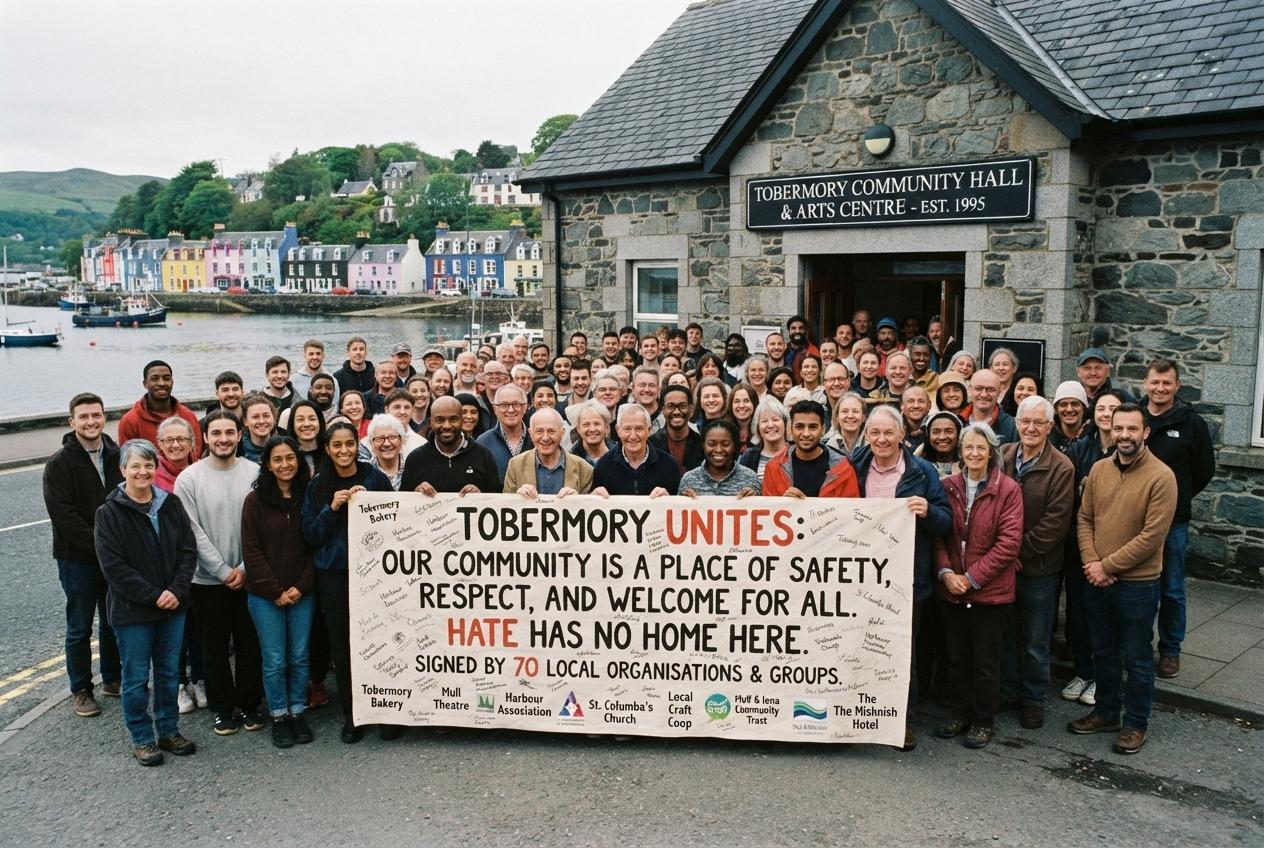
Shoppers are rallying around Mull Pride after a small but vicious online backlash; local shops, hotels, arts groups and churches have publicly rejected hate to reassure residents and visitors that “everyone is welcome” on the islands. This piece explains what happened, who organised the response, and why it matters for rural LGBTQI+ life.
Essential Takeaways
- Strong local turnout: More than 100 people attended Mull and Iona Pride in Tobermory, a notable crowd for island life and a joyful, family-friendly atmosphere.
- Online abuse crossed a line: A handful of hostile posts included extremist imagery that left people feeling unsafe and upset.
- Broad coalition: Roughly 70 businesses and organisations across Mull signed a statement affirming inclusion, safety and diversity.
- Community-led action: The initiative was driven by local arts and cultural leaders who canvassed Main Street to gather support.
- Why it matters: Public solidarity helps young queer people on islands feel visible and rooted, reducing pressure to leave.
What actually happened on Tobermory beach , and why people were unnerved
The Pride event itself was warm and unshowy: families on the sand, a community disco at night, and people laughing together. But a small number of online posts , some using Nazi imagery , changed the mood, making parts of the island feel exposed and unsafe. Rebecca Atkinson-Lord of An Tobar and Mull Theatre told The National the imagery crossed a clear line, and that transformed the response from a shrug to a stand. The contrast between a gentle seaside celebration and anonymous, violent symbolism made the issue feel immediate and personal.
How a grassroots protest turned into a united statement
Rather than leaving the hurt to smoulder, local culture leaders went out and connected with shops, cafés and organisations face-to-face. Atkinson-Lord walked Tobermory’s Main Street asking for signatures; by lunchtime dozens had offered support. That hands-on approach meant the final list ran to about 70 signatories , hospitality firms, community trusts, churches and arts groups , and the statement reads as a collective refusal to be defined by a few online bullies. It’s a classic community response: calm, purposeful and human.
Why island Pride matters more than you might think
Pride in a city is one thing; in a small island community it’s another. There’s no queer youth club, no nearby gay pub to slip into and test the water. Public celebrations give visibility to people who might otherwise feel alone, and they signal to younger residents that staying and building a life locally is possible. The organisers framed their statement as an extension of island hospitality , “this might be the contemporary version” of welcome , and that matters for the long-term health of the community.
The wider picture: solidarity, safety and rural LGBTQI+ life
This response links to a broader effort across Scotland where Pride organisers and local groups are increasingly visible and organised. Regional Pride networks, event guides and community resources help connect scattered initiatives and offer practical support for small events. A public, collective statement does more than comfort; it creates a documented promise of safety that can be referred to by visitors, residents and young people weighing whether to stay.
Practical takeaways for organisers and visitors
If you’re organising or attending a rural Pride: plan for visible allies, brief venues on safety procedures, and make sure a clear, calm message of inclusion is ready to share if things go sideways. For visitors, showing up matters , numbers on the beach or at a local disco change the tone and give organisers confidence. And for businesses, a quick face-to-face ask, like the one in Tobermory, can be all it takes to turn worry into an act of solidarity.
It's a small change that can make every celebration feel safer and more welcoming.
Source Reference Map
Story idea inspired by: [1]
Sources by paragraph: