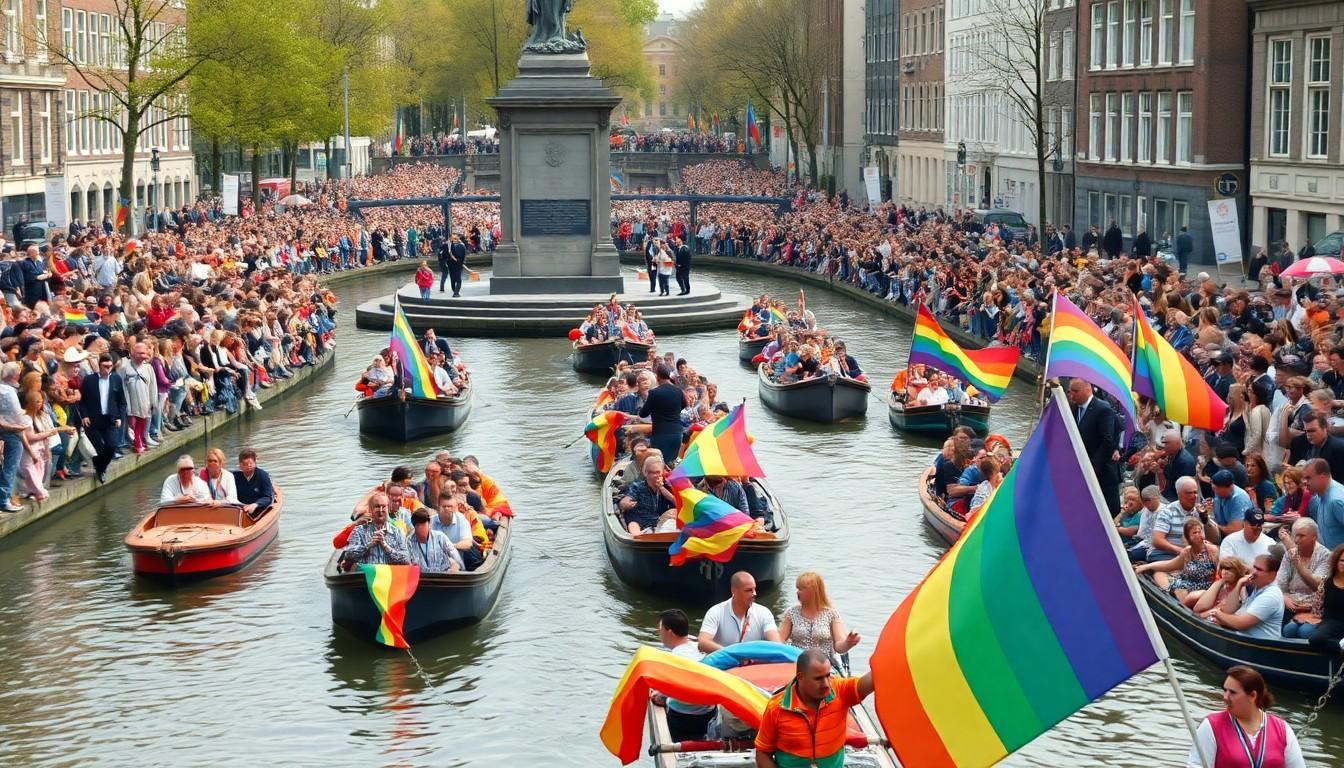
Shoppers and locals, tourists and activists packed Amsterdam’s watery heart for the Canal Parade during World Pride , a colourful, loud and sometimes political procession that drew hundreds of thousands, honoured victims of recent attacks and laid out why Pride in 2026 feels both celebratory and urgent.
Essential Takeaways
- Mass turnout: Hundreds of thousands lined the canals for the annual Canal Parade, part of World Pride in Amsterdam, creating a dense, festive atmosphere.
- High-profile participation: Dutch Prime Minister Rob Jetten, an openly gay leader, joined the procession, adding national visibility and gravitas.
- More than floats: Over 80 decorated boats took part, carrying banners from intersex pride to pro-Palestine solidarity and sharp political messages.
- Tonal shift: The parade occurred a week after a terror attack at Berlin’s Christopher Street Day, tempering celebration with memorials and caution.
- Memorial presence: The Homomonument served as a focal point for remembrance, transformed into a makeshift tribute to recent victims.
A vivid, crowded canal full of colour and message
The opening image was immediate: canals rimmed with people, flags snapping, the smell of street food and sunscreen in the air. According to event organisers and press coverage, more than 80 boats drifted past the Homomonument, each a little stage for costume, choreography and political placards. It felt festive and a touch edgy at once, because attendees were determined to both celebrate and be heard.
Event pages and local tourism notes explain that Amsterdam’s Canal Parade has grown into one of Europe’s largest Pride spectacles, and this year’s World Pride brought even more visitors. If you go, arrive early and pick a spot near a bridge for a great view; the riverbanks fill fast and the crowd is compact.
Leaders marched , and it mattered
Seeing Rob Jetten aboard one of the boats made a statement beyond photo ops. Elected leaders joining Pride gives the parade a diplomatic, domestic-political dimension; it signals protection and inclusion at the highest level. That visibility can reassure vulnerable communities while also drawing criticism from those who want politics kept separate from celebration.
For visitors weighing whether to attend, a presence like this can mean better security and mainstream media attention, but it also shifts some moments toward messaging rather than just party.
Protest and party, side by side
The Canal Parade this year blended celebration with explicit protest. Observers noted signs reading “proud to be intersex” and a boat displaying a banner reading “lesbians love you and a free Palestine,” while some attendees carried profanity-laden fans aimed at international politicians. One float even depicted a satirical “kissing couple” comparison of Presidents Trump and Putin.
That mix reflects a wider trend at Pride events: grassroots activism sharing space with corporate sponsorship and official participation. If you’re navigating the crowd, expect both glitter and serious slogans , and for debates to unfold in real time along the canal.
Memory and security in a fraught week
The parade occurred only a week after the terrorist attack at Berlin’s Christopher Street Day, which left people dead and many injured. That shadow was visible: the Homomonument, already a powerful place of remembrance for queer persecution, carried fresh tributes to the Berlin victims. Organisers and local authorities were frank about the need for vigilance without overshadowing the event.
Attendees told reporters they appreciated the balance , public ceremonies to honour victims, alongside reassuring security measures. If you plan to attend future Prides, check local guidance on bag rules and transport changes; it’s become a standard part of the experience in recent years.
What World Pride brings to Amsterdam , and what’s next
World Pride, which runs through to Aug. 9 in Amsterdam, amplifies the city’s role as a global meeting place for queer culture, politics and tourism. Event listings and the official World Pride site show a packed programme beyond the parade: talks, performances and community gatherings that stretch the conversation beyond a single afternoon on the water.
Looking ahead, expect more hybrid moments at Pride events: spectacle plus political messaging, international solidarity plus local memory. For visitors, that means choosing experiences that suit you , a front-row canal view, a memorial moment at the Homomonument, or an indoor panel on rights and safety.
It's a small change that can make every march and memorial safer and more meaningful.
Source Reference Map
Story idea inspired by: [1]
Sources by paragraph: