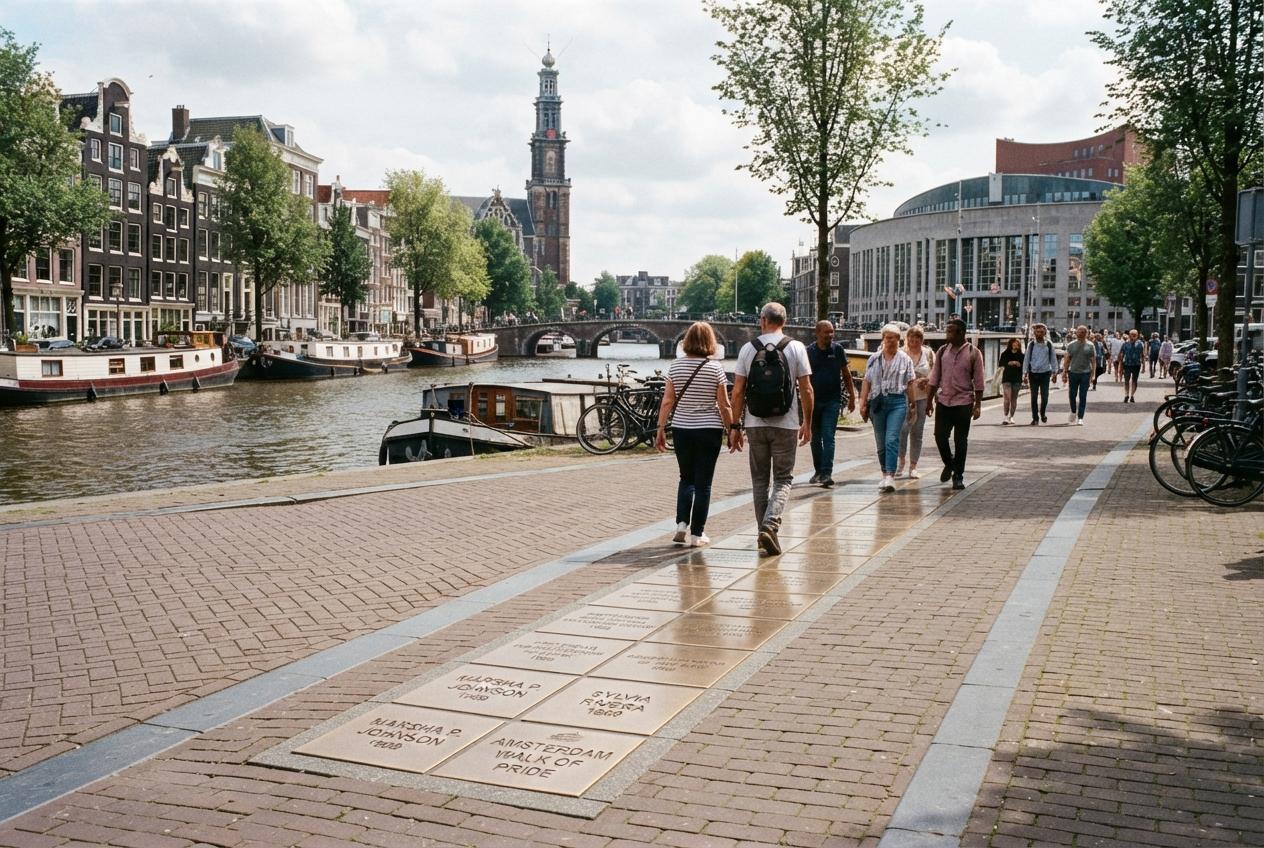
Shoppers and tourists are stopping to read bronze tiles on Amsterdam’s new Walk of Pride, a WorldPride-linked route celebrating 52 queer heroes whose stories sit between triumph and tragedy , a visual reminder of gains made and the battles still being fought.
Essential Takeaways
- Permanent tribute: Bronze tiles along a route from the Dam to the Homomonument spotlight 52 international and Dutch queer figures, many honoured posthumously.
- Emotional impact: Visitors react to personal stories , some names are unfamiliar but their tiles feel intimate and affecting.
- Broad support: The City of Amsterdam contributed funding and WorldPride highlighted the unveiling as part of its programme.
- Expanding project: Organisers plan to add more names and stories, reflecting an evolving history and ongoing activism.
- Practical visit tips: The route is central and busy during Pride; wear comfortable shoes and pause for the plaques, which reward slow, reflective reading.
Opening hook: why a walk now and why it matters The Walk of Pride lays out small bronze tiles like memories underfoot, and people pause, read and sometimes weep. According to organisers, the installation was timed with WorldPride to create a permanent, walkable monument that connects the Dam with the Homomonument, turning familiar streets into an education in queer history and courage. It’s tactile, quiet and public , a way to make stories visible in the city’s busiest spaces.
Backstory: how the project came together Initiatives from community members and cultural organisations brought the idea to life, with municipal support and a modest grant to cover initial costs. The concept nods to the Hollywood Walk of Fame but swaps celebrity glamour for lives of activism, culture and survival. Organisers purposely included international figures and those from underrepresented communities, explaining they wanted the route to reflect diversity across genders, sexualities and histories.
Who’s on the tiles and what you’ll feel reading them Many names will be new to visitors, and that’s part of the point. Plaques tell compact stories , of persecution, art, resistance and sometimes murder , so even a glimpse can land hard. For instance, one tile remembers historic legal persecution; another recalls a young person victimised for their sexuality. Visitors have described a mixture of pride and sadness, and for some tourists it’s a sobering education about rights that aren’t universal.
How the route links to broader trends in Pride and memorial culture Public memorials are shifting away from statues to immersive, accessible installations, and the Walk of Pride follows that trend by being deliberately legible and discoverable on foot. WorldPride and local groups framed the unveiling as timely, especially after recent attacks and anti-LGBTQ rhetoric in parts of Europe. The route is both celebration and protest: a visible city-centre reminder that rights can be fragile.
Practical advice for visiting and why to go slowly The route runs through central Amsterdam and is easy to reach by foot or public transport. Expect crowds during Pride weekend; go early or midweek for quieter reading time. Bring water, wear comfy shoes and resist photographing everything , the tiles reward lingering. If you’re part of a group, pause and share what you learn; the walk is designed to prompt conversation as much as commemoration.
What’s next: expansion and public conversation Organisers say the Walk of Pride is a starting point, not a finished memorial. Plans are already brewing to add more names and make the route an ongoing archive of queer achievement and struggle. The city and volunteers will need to steward the plaques, and community input will shape future selections, keeping the walk responsive to new voices and histories.
It's a simple route with serious purpose , a small change underfoot that helps keep these stories in the public gaze.
Source Reference Map
Story idea inspired by: [1]
Sources by paragraph: