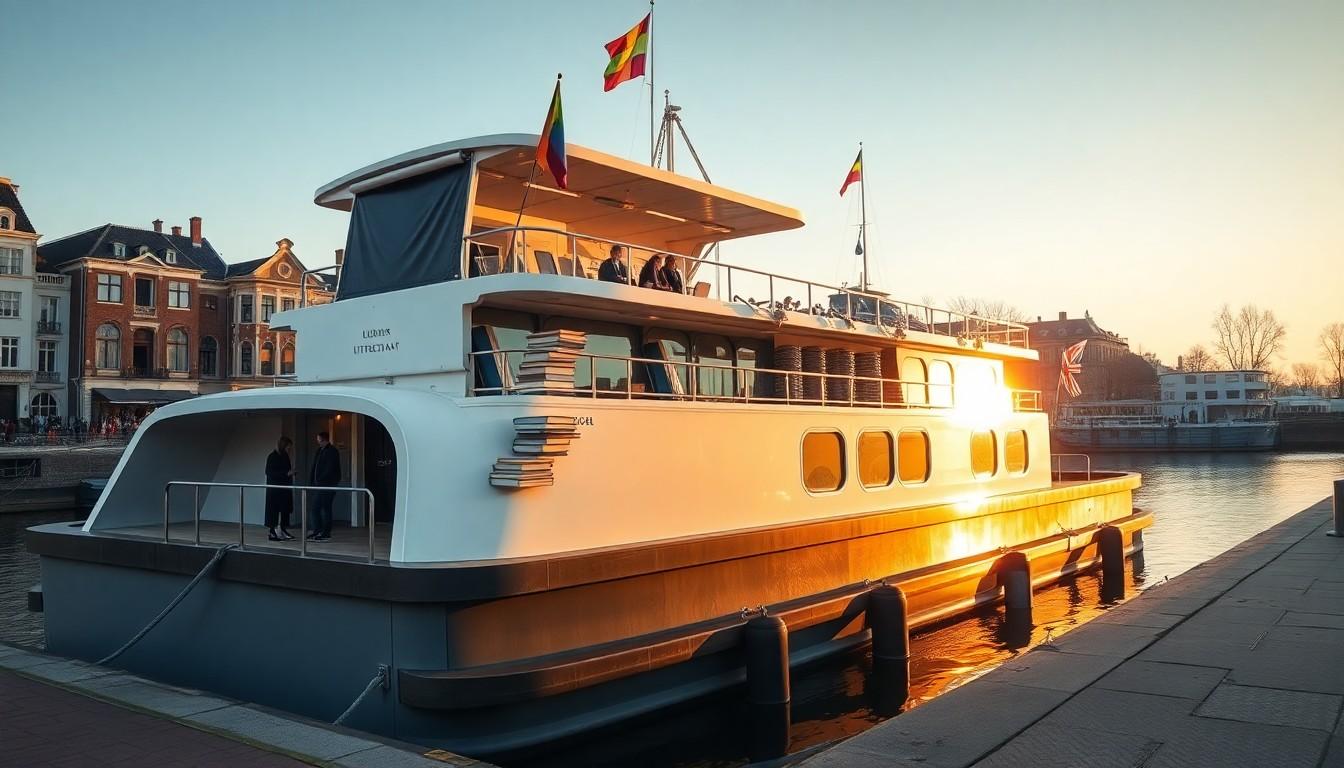
Shoppers, readers and writers are lining up for a very literal page-turner , Amsterdam’s first Pride boekenboot will sail on 1 August, with about a hundred authors and book‑world folk aboard to spotlight growing pressure on queer literature and celebrate visibility. It’s colourful, choreographed and oddly moving.
Essential Takeaways
- What it is: A floating, open‑book stage on the Canal Pride featuring writers, publishers and book people holding message boards that reveal censored texts.
- Who’s involved: Around 100 participants including Pim Lammers, Maartje Wortel, Haroon Ali and organisers like Stichting Lezen and the Openbare Bibliotheek Amsterdam.
- Why it matters: The stunt protests rising censorship and hostility toward queer books, a trend organisers say echoes book bans abroad.
- The feel: Rehearsals are theatrical and slightly awkward , a slow, emotional choreographed reveal set to a slowed Unwritten remix , but earnest and communal.
- Practical note: The boat will look like a giant open book; participants wear black and the texts on placards flip from redacted to readable.
Why a boekenboot now? A theatrical answer to censorship
The idea landed as a direct response to an uptick in hostility towards queer literature, both here and overseas, and it reads like theatre made urgent. Organisers want to dramatise what censorship actually does: hide stories. The boat’s design , an open book with participants holding boards that reveal full sentences after a pause , visualises removal and recovery in a single gesture. It’s clever and a little theatrical, which suits a city that stages its politics on the water.
Who’s on board , and why their presence counts
Writers such as Pim Lammers and Maartje Wortel signed up in large numbers, turning what could’ve been a niche stunt into a broad cultural statement. Lammers, whose children’s work has drawn threats, and Wortel, who feared the “gay writer” label, give the boat personal weight. Their participation signals that this isn’t just about headlines; it’s about lives, readers and the small rituals , school visits, bedtime stories , that shape belonging.
The rehearsal room: awkward, earnest, human
Rehearsals in the Openbare Bibliotheek Amsterdam mixed nerves with laughter. Writers who spend their days at desks were learning choreography under pink lights, practising a slower version of Unwritten before attempting a fast remix. The scene sounds charmingly human: someone worrying about a Volendamse rok, another fretting over whether there’ll be alcohol. It underlines the point , activism can be playful and communal without losing seriousness.
What the placards say , and why text matters here
Participants wrote the board messages themselves: confessions, recollections and lines about being seen. For a few seconds the words are blacked out, then flipped to full view. It’s a literal reveal, and a simple one: remove access to stories and you remove recognition, community and consolation. The stunt is also political; organisers welcome criticisms of Pride sponsors and aim to start conversations about wider responsibilities.
How this fits the bigger Pride picture in Amsterdam
This boekenboot joins a growing roster of themed boats and parties during Pride, but it’s distinct because it’s driven by the book world and backed by cultural institutions. It’s less a queer‑only initiative and more a cross‑sector call for allies , libraries, publishers and bookshops visibly taking a stand. That broadened ownership could matter, because when institutions speak up, censorship and erasure meet more resistance.
It’s a small theatrical intervention with a blunt aim: make sure queer stories stay visible and available.
Source Reference Map
Story idea inspired by: [1]
Sources by paragraph: