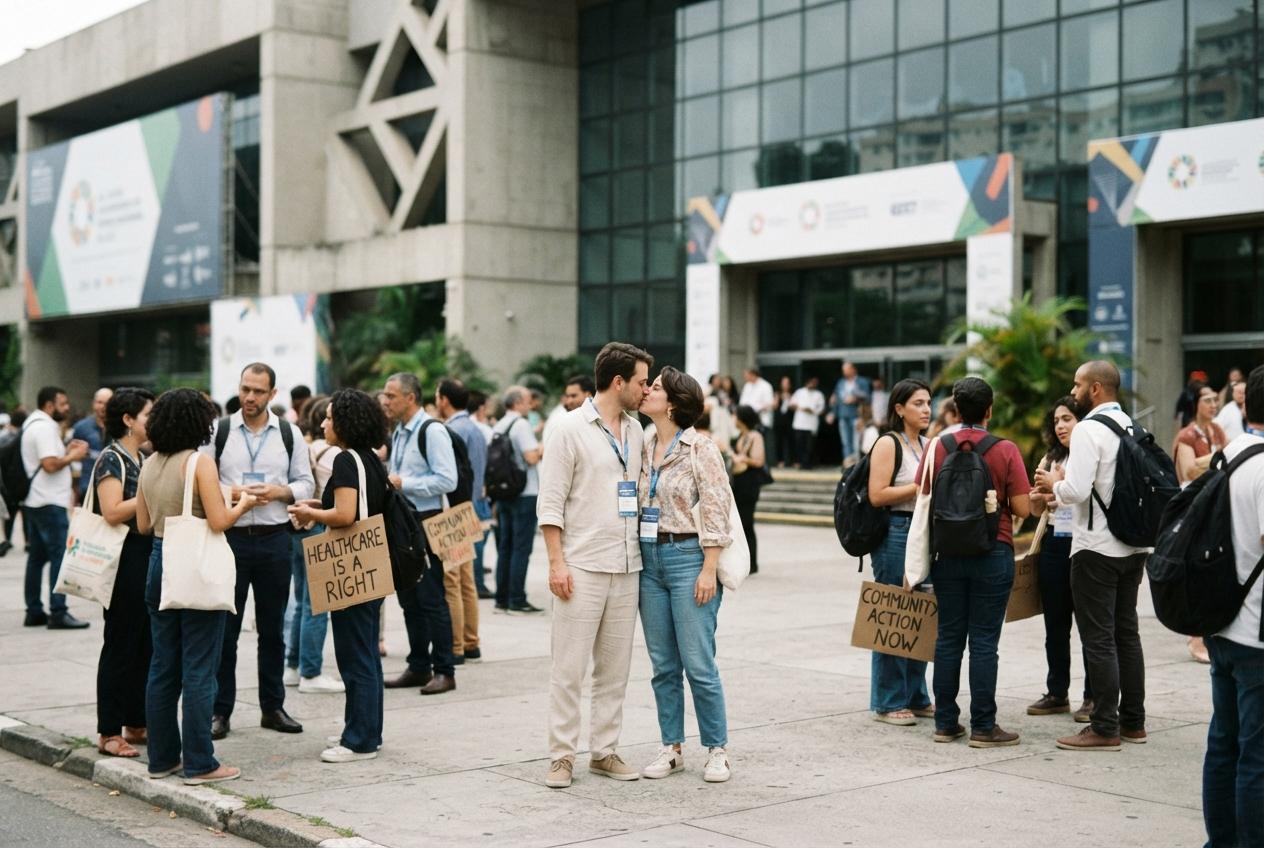
Shoppers and conference-goers noticed something different at the International AIDS Conference in Rio: campaigners staged a bold, public kiss-in bringing people living with HIV, allies and supporters together to confront stigma, demand decriminalisation and insist on the right to pleasure and affection.
Essential Takeaways
- Public gesture: Mpact Global organised a kiss-in at AIDS 2026, drawing activists, people with HIV and allies to the Rio Centro Convention & Event Center. It felt joyous and unapologetic.
- Sponsorship & reach: The event was sponsored by Scruff and clips shared online quickly, prompting thousands of views and mixed reactions.
- Message: The kiss-in aimed to combat homophobia, HIV stigma and criminalisation of gay sex in many countries.
- Context: The conference combined celebration of scientific advances with warnings about severe funding cuts and political threats to progress.
- Tone: Participants described the moment as both intimate and political , a reminder that stigma can undermine science.
A powerful, human moment in the middle of a major conference
The kiss-in cut through the usual conference fuss with something warm and visual: people locking lips, smiling and holding space together. According to attendees, it was a deliberately public act of resistance that foregrounded intimacy as political. Participants say it was both a celebration and a demand , for the right to love openly and for people living with HIV to be afforded dignity.
Mpact Global took a simple stunt and turned it into protest
Mpact Global has staged similar events before, and at AIDS 2026 they brought the idea to Brazil for the first time. The group framed the kiss-in as a way to showcase queer sexuality among people with HIV while highlighting that, in too many places, gay relations remain criminalised. Organisers described the action as community-led and meant to be loud, proud and unashamed.
How social media amplified a private act into a public conversation
A content creator who filmed the event found himself pulled from observer to participant, sharing a spontaneous kiss and then going back to document the scene. His footage spread quickly, drawing praise and some negative commentary , a reminder that stigma persists even in 2026. For many viewers, the split reaction underlined why such visual acts still matter: they shift perception and start conversations.
Science is advancing , but politics and funding are threatening progress
The conference highlighted major scientific strides in prevention, long-acting treatments and diagnostics, yet experts warned those gains are fragile. Delegates discussed severe funding cuts to key programmes and the political headwinds that can stall implementation. Activists at the kiss-in argued that without addressing stigma and criminalisation, scientific breakthroughs won’t reach everyone who needs them.
Why an affectionate protest matters for policy and practice
There’s a practical case for this kind of visibility: stigma discourages testing, deters people from seeking treatment and weakens uptake of prevention tools. Making queer intimacy visible , especially when led by people living with HIV , challenges the idea that disclosure or desire should carry shame. Organisers called the action a reminder that human rights, funding and community-led approaches are all part of ending the epidemic.
It's a small action with a big message: public affection can be protest, and protest can change how we treat people living with HIV.
Source Reference Map
Story idea inspired by: [1]
Sources by paragraph: