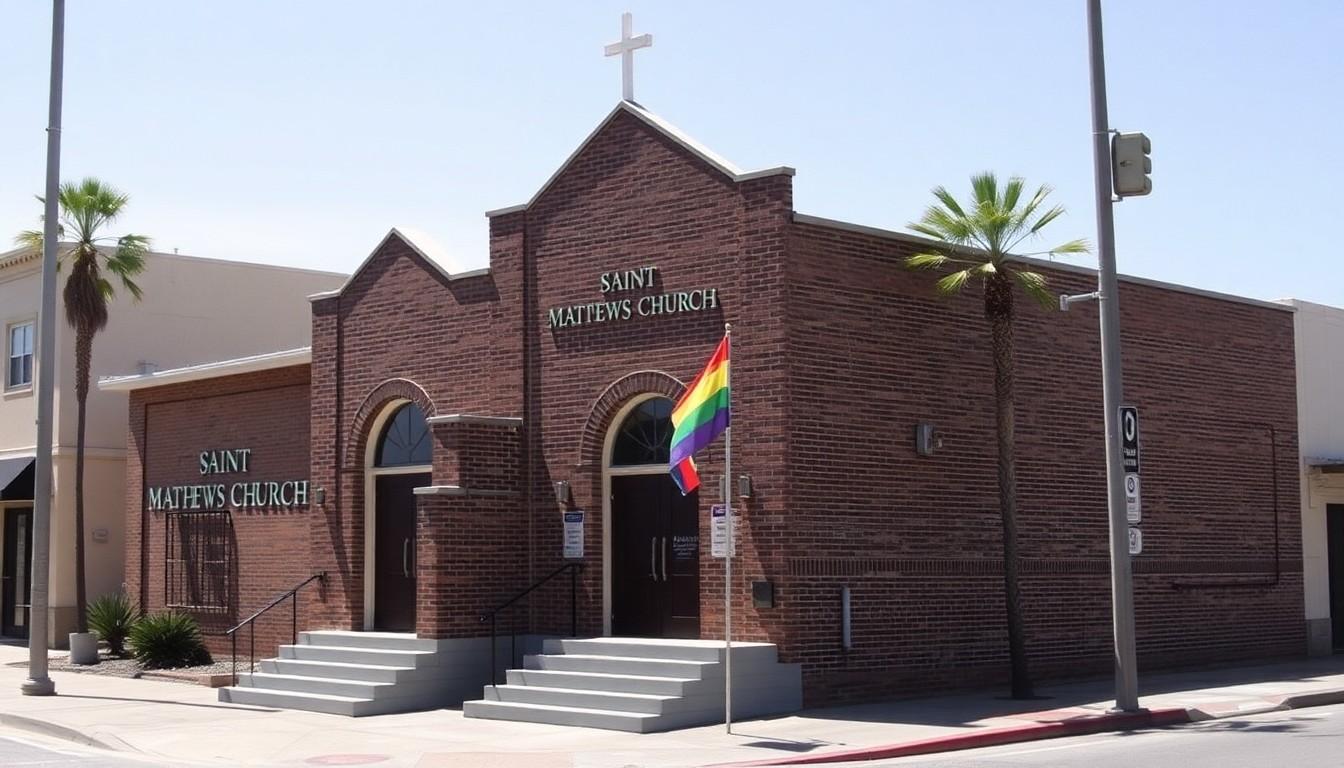
Celebrate the small, steady joys: Congregants and allies in Long Beach are marking 40 years of Comunidad, a grassroots ministry that’s helped LGBTQ+ Catholics feel seen, supported and spiritually at home , and the milestone matters for anyone wondering how faith and queer identity can coexist.
Essential Takeaways
- Forty years strong: Comunidad at Saint Matthew’s in Long Beach has been serving LGBTQ+ Catholics and their families for four decades, offering worship, pastoral support and community.
- Archdiocesan roots: The county-wide Catholic Ministry for Lesbian and Gay People traces a key moment to Archbishop Roger Mahony’s 1986 call for lesbians and gays to form supportive faith communities.
- Visible liturgy: Anniversary masses and rainbow-proud services offer a sensory, emotional experience , singing together, processions, and visible symbols that signal welcome.
- Plural spiritual life: Many participants hold multiple spiritual identities; involvement with Comunidad doesn’t require exclusive allegiance to one tradition.
- Practical path in parish life: The ministry operates through parish-level outreach, connecting people to regular Mass, pastoral care and wider LA-area ministries.
A quiet revolution in a sunlit nave
Walk into Saint Matthew’s on a Sunday when Comunidad is gathered and you’ll feel it first in the sound: full voices, communal hymns, a nervous laugh here, a tear there. That mix of ritual and real feeling is what makes this ministry so powerful. According to the group’s website, Comunidad forms part of a broader Catholic outreach in Los Angeles that intentionally supports LGBTQ+ people, their families and allies.
The ministry’s anniversary Masses are not just ceremonies; they’re moments of recognition. Parishioners describe the sight of rainbow banners hanging beside altar linens as small but profound: a public acknowledgement that faith needn’t erase who you are. For queer Catholics who’ve drifted away or been pushed out, those services can feel like coming home.
How a single sermon grew into a network
The ministry’s genealogy matters. In February 1986, then-Archbishop Roger Mahony reportedly invited lesbians and gays to form a supportive community, and that call eventually helped spawn the Catholic Ministry for Lesbian and Gay People across the archdiocese. From that seed, more than twenty welcoming ministries now operate across greater Los Angeles, each anchored at parish level.
That backstory explains why Comunidad has grassroots credibility: it began as a pastoral response, not a top-down programme. Communities like this tend to be nimble , they borrow from psychology and pastoral practice, pay attention to lived experience, and adapt liturgically. For anyone wondering whether institutional religion can change, Comunidad is a live example of slow, local evolution.
Faith with fingernail marks and incense
Many people in Comunidad describe holding multiple spiritual identities. Some are devout Catholics who also practise other faith traditions, while others show up only on Christmas and Easter but still claim church as part of who they are. That plural approach is normal here: people draw comfort from ritual and the cultural memory of Catholicism while also exploring other spiritual paths.
Practically, that means Comunidad’s events are welcoming to a range of believers: contemplative prayer, vocal hymns, and even moments framed in social justice language. If you’re deciding whether to join, start with a service or a social event , you’ll get a sense quickly whether the group’s tone and pace fit you.
Why visibility in worship still matters
It’s tempting to treat rainbow decor as mere symbolism. In reality, visible welcome in liturgy changes how people feel about participating. For many queer Catholics, being recognised during Mass , a singer’s faltering voice, the congregation joining in “And I will raise you up” , is confirmation that their spiritual life counts. That feeling matters as much as any policy statement.
This kind of pastoral presence also offers practical benefits: support networks, pastoral counselling, and connection to broader diocesan resources. For parents and allies, parish-based ministries make it easier to have faith-centred conversations about identity and acceptance within an already familiar cultural framework.
What Comunidad’s next 40 years could look like
Groups like Comunidad rarely make headlines, but they accumulate change through regular care: weekly meetings, outreach, sacramental hospitality. Looking ahead, expect continued local growth, deeper ties with other welcoming parishes, and perhaps more visibility in archdiocesan conversations about LGBTQ+ pastoral care.
If you’re curious to get involved, check the parish schedule for services or outreach events and bring a friend. You don’t need to have all the answers , you only need to show up, sing, and be present.
It's a small change that can make every worshipper feel recognised and at home.
Source Reference Map
Story idea inspired by: [1]
Sources by paragraph: