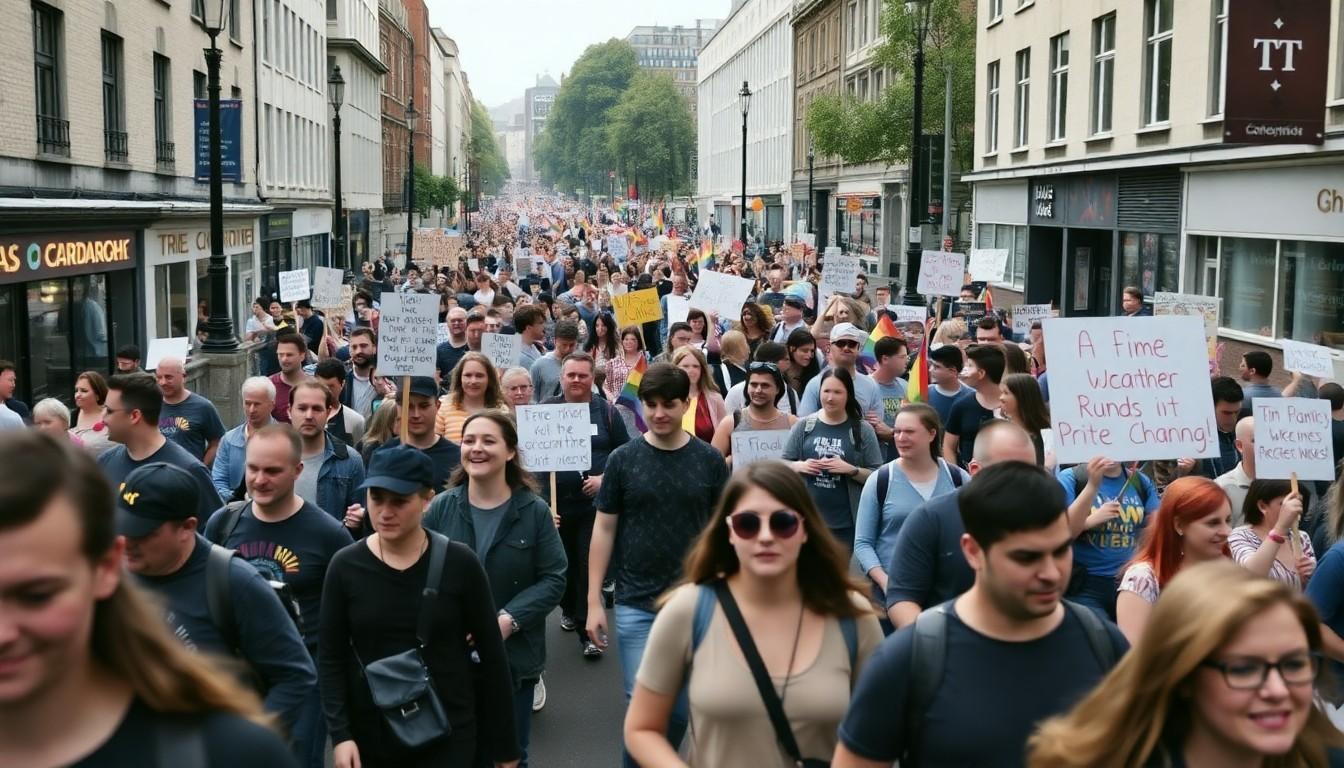
Shoppers and Londoners noticed something big: tens of thousands marched through the capital for London Trans Pride, a lively, controversial and deeply visible event that organisers say set a new attendance record , and which has provoked strong reactions across the city. Here’s what happened, why it mattered, and how to read the headlines.
Essential Takeaways
- Record turnout: Organisers reported around 150,000 people marched, making this one of the largest Trans Pride gatherings in the world and the biggest yet for London.
- High-profile route: The march finished in Trafalgar Square for the first time, creating a very public, central finish with a festival atmosphere.
- Speakers and programme: The line-up included prominent activists and community voices; speeches and performances were a major draw.
- Mixed public reaction: Coverage and commentary ranged from celebratory to highly critical, reflecting wider cultural debates about gender, protest and public space.
- Practical note: Events like this bring crowds, noise and road closures , plan travel, expect a busy atmosphere and respect diverse perspectives.
What organisers say: a triumph of visibility and joy
Organisers hailed the day as a milestone in visibility and safety for trans people, celebrating a colourful procession and community hub in central London. According to organisers, the march drew roughly 150,000 people and culminated in Trafalgar Square, a symbolic and high-profile finish that amplified the event’s presence. The atmosphere, they said, was joyous, loud and proud , full of banners, music and speeches that aimed to centre trans lives and demands.
This is also part of a wider trend in which Pride days reclaim and reframe public space. For people thinking of attending future events, expect a festival feel, long queues at stages and a strong community presence, along with the usual safety stewards and first-aid points.
What critics and commentators noticed
Not everyone saw the event in the same light. Media and commentary outlets reflected sharply different takes, from celebration of record attendance to pointed critique over specific speeches or placards. These disputes tap into broader cultural conversations about free speech, protest tactics and the intensity of contemporary debates around gender and women’s rights.
If you follow coverage of public protests, this is familiar territory: a single event becomes shorthand for broader social anxieties. For readers trying to weigh reports, look for multiple sources and on-the-ground accounts rather than a single hot take.
Logistics and the city impact: roads, crowds and travel tips
Closing central routes to accommodate a large march into Trafalgar Square inevitably disrupted traffic and public transport for parts of the day. For locals and visitors, that meant rerouted buses, busy Tube stations and the kind of crowding you get at any big central London event.
If you’re heading to future Pride events: leave extra time, consider walking or cycling where possible, and check transport updates. Bring water, wear comfortable shoes and be prepared for noise and packed public spaces , the experience can be brilliant but a bit exhausting.
Why the route and scale matter politically and culturally
Bringing a march to the heart of the capital changes a protest’s tone. Finishing in Trafalgar Square puts demands and messages directly in a national civic space, and that was an intentional choice by organisers. It signals confidence and a desire to normalise trans visibility on a grand stage.
At the same time, large, central events tend to amplify dissenting voices as much as supportive ones. That means coverage often focuses on flashpoints rather than the day’s quieter moments of solidarity. Expect continued debate about how best to balance visibility, safety and respectful disagreement.
How to read the images and headlines
Pictures from the day , vibrant banners, people in expressive outfits and packed crowds , tell half the story and stir strong emotion. Headlines will often emphasise either the size and joy of the gathering or the most contentious moments, depending on the outlet’s angle. For a rounded view, sample reporting from community outlets, mainstream broadcasters and on-the-ground reporting.
If you’re trying to form an opinion, consider what different sources prioritise: human stories and logistics, or controversy and confrontation? Both matter, but they don’t always make the same piece of the picture.
It's a small change that can make every future Pride gathering safer, clearer and more inclusive.
Source Reference Map
Story idea inspired by: [1]
Sources by paragraph: