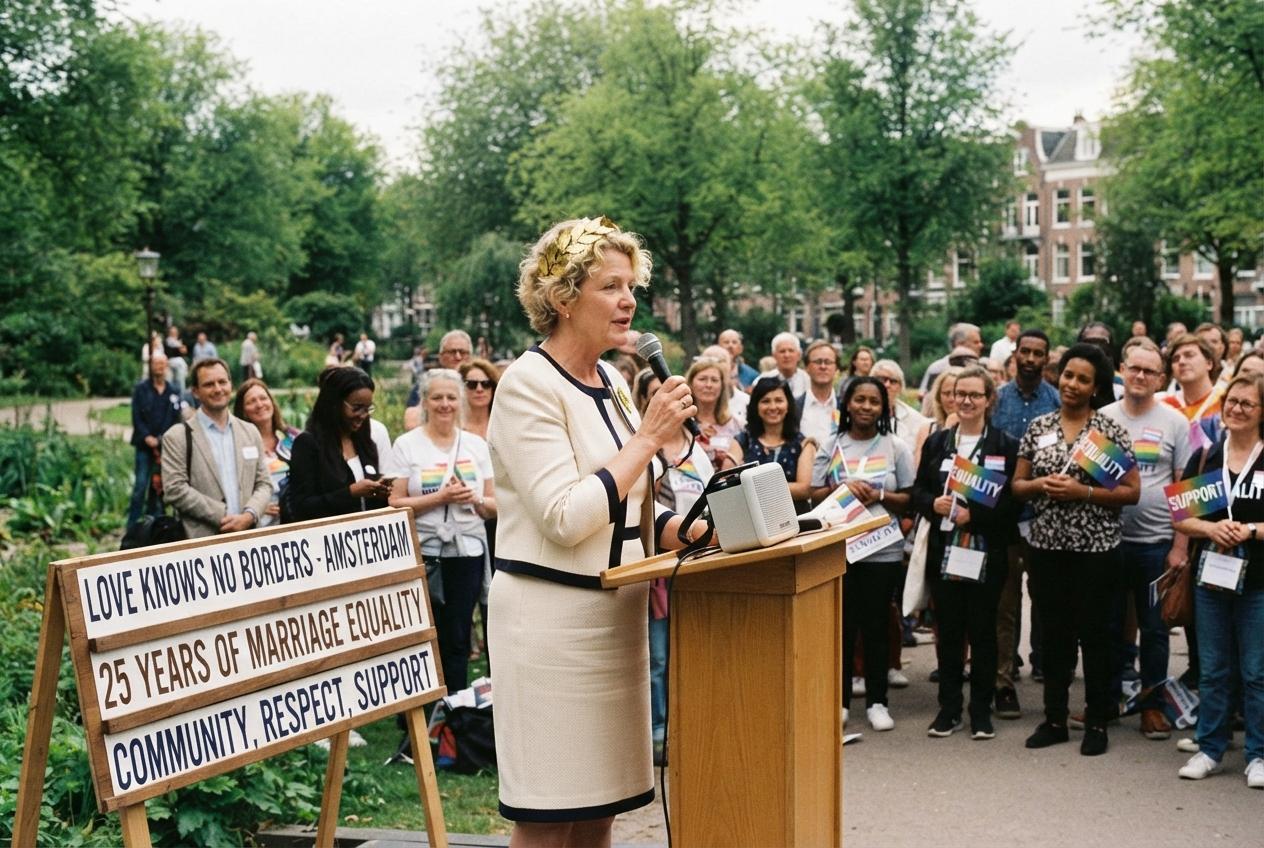
Witnessing a monarch stand with a movement felt historic: Queen Máxima of the Netherlands opened WorldPride 2026 in Amsterdam, a visual, vocal endorsement of LGBTQIA+ rights that mattered both domestically and internationally. Her appearance combined high-fashion theatre with a clear message about inclusion and human rights.
Essential Takeaways
- Historic participation: Queen Máxima became the first European royal to open WorldPride, lending the Dutch monarchy visible support for LGBTQIA+ causes.
- Striking look: She wore a semi-sheer Natan couture dress and a gold laurel headpiece, creating a ceremonial, celebratory tone.
- Local context: The Netherlands, first to legalise same-sex marriage, hosted a 25th-anniversary year of marriage equality, giving the moment extra resonance.
- Event breadth: WorldPride in Amsterdam included marches, conferences, cultural programming and an exhibition linking faith, history and queer visibility.
- Atmosphere: The opening unfolded in Vondelpark amid cheering crowds, ABBA’s “Dancing Queen” and rainbow-coloured city scenes.
A queen on a stage that still surprises
Queen Máxima’s presence on the WorldPride stage felt like a scene from a film: bright colours, an animated crowd and the soft rustle of her dress as she addressed those gathered. According to the Dutch Royal House, she opened the festival and spoke about support and being oneself, which drew warm applause from a city steeped in rainbow flags. The visual struck a chord, royalty usually stands apart, but here the symbolic closeness was the point.
Backstory matters: the Netherlands has a long record on LGBTQIA+ rights, having legalised same-sex marriage in 2001, and this edition of WorldPride arrived in a milestone year. That history gave Máxima’s participation a deeper layer; it wasn’t just a photo-op, it tied to national identity and a quarter-century of legal recognition.
Fashion that sent a message
She chose a semi-transparent, long-sleeved Natan gown with a graphic check and a dramatic golden laurel headpiece by a Dutch designer, creating a mix of courtly formality and festival flair. The look read as ceremonious rather than costume-y, and the laurel added a mythic touch, almost a nod to civic celebration.
Style-wise, it’s worth noting how clothing can carry meaning on days like this. Royals often use colour and cut deliberately; Máxima’s choice felt respectful of the occasion while being modern and approachable. If you’re attending big public events, opt for outfits that balance comfort and presence, think breathable fabrics and details that photo well from a distance.
WorldPride in Amsterdam: more than a parade
WorldPride isn’t only about floats and parties; InterPride organises an international programme that includes human rights conferences, cultural exhibitions and sports events. Amsterdam’s edition extended across the city with talks, concerts and a dedicated queer exhibition in a historic church, blending activism, arts and civic debate.
Municipal organisers emphasised inclusivity and education, not just celebration. That’s important because visibility paired with policy and dialogue helps sustain rights beyond a weekend of flags. For anyone curious about the movement’s structure, InterPride’s model shows how local pride festivals can plug into global advocacy.
Why royal endorsements matter
A royal voice quiets sceptics and amplifies conversation, especially when it’s coupled with civic commemoration. Máxima’s appearance gave institutional weight to the message that “love has no borders”, and it signalled support from the highest level of Dutch public life. For activists, that kind of attention can open doors and shift media focus to ongoing struggles elsewhere in the world.
Still, symbolism isn’t a substitute for policy. Royals can draw attention, but lasting change needs sustained legal and social effort. The crowd’s response in Vondelpark showed gratitude and joy, but the work continues in courts, parliaments and everyday communities.
How this moment might ripple out
Expect other public figures to feel a nudge to show up more visibly for causes they support. When a figure like Máxima takes the stage, it normalises solidarity at ceremonial events and can encourage civic institutions to be more overt in their support. For visitors and locals alike, it made Amsterdam’s WorldPride feel both celebratory and purposeful.
There’s also a softer cultural effect: seeing a queen among the crowd humanises institutions and invites a different kind of national storytelling. It’s a powerful reminder that public rituals evolve, and sometimes the wardrobe and words at the right moment can help change the tune.
It's a small but meaningful signal that prominence and pride can sit side by side.
Source Reference Map
Story idea inspired by: [1]
Sources by paragraph: