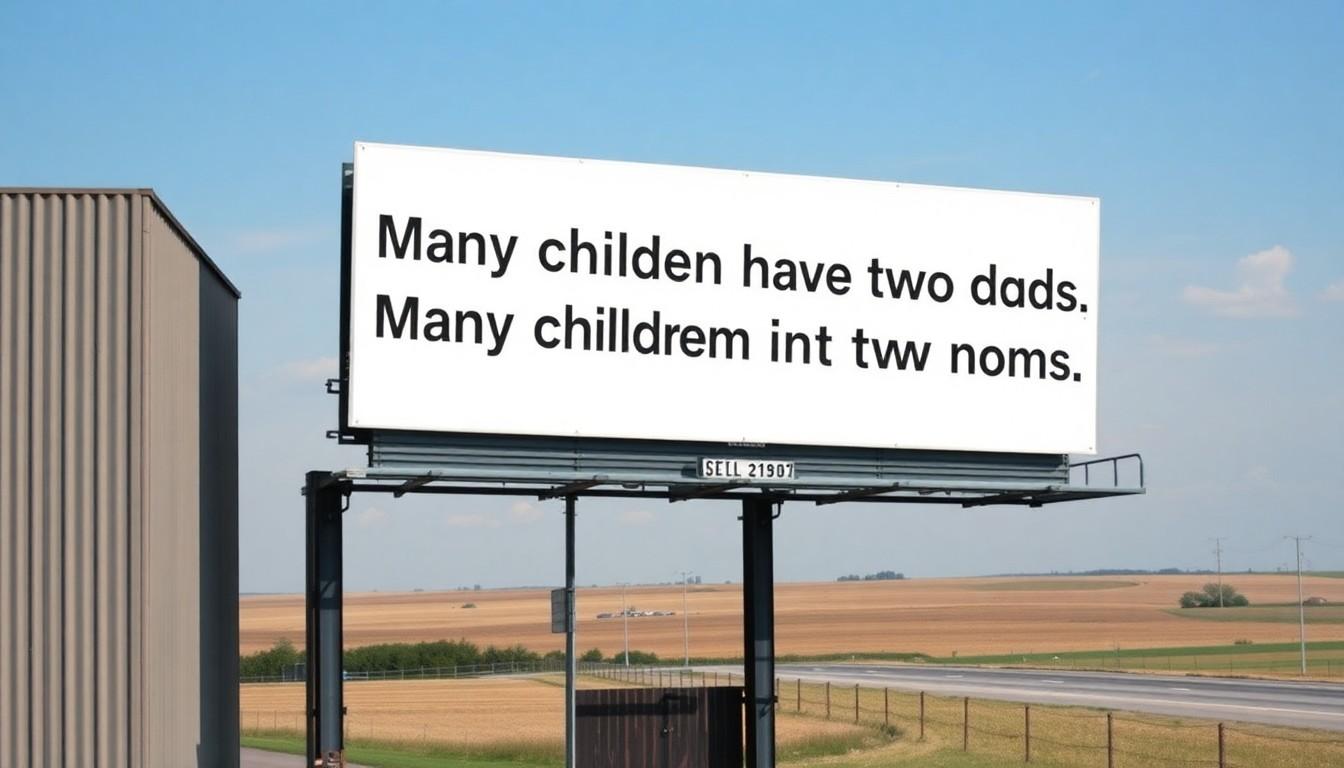
Shoppers and neighbours didn’t ignore a blunt billboard , they painted a warmer answer back. Ohio residents and local groups turned an anti-LGBTQ “No child has two dads. No child has two moms” campaign into a community push that celebrated diverse families and bought counter-billboards, rallies, and fundraising support.
Essential Takeaways
- What happened: Anti-LGBTQ billboards with the slogan denying same-sex parents appeared across rural Ohio, sparking local outrage and media attention.
- Immediate response: Grassroots activists and nonprofits quickly mounted a counter-campaign, buying billboard space that read, “Many children have two dads. Many children have two moms.”
- Community energy: Fundraisers raised substantial sums , more than US$18,000 reported , to keep supportive messaging visible and host peaceful rallies.
- Broader issue: The billboards were tied to an organisation that opposes marriage equality and other family-formation methods, prompting wider concern about an organised campaign.
- Emotional effect: The episode highlighted how personal stories, local voices and visible support can blunt public shaming and reframe what counts as a family.
A blunt sign met a louder, kinder reply
The first billboard that grabbed attention landed in Northwest Ohio and was shared online by a local resident, who said the message erased countless real households. The image felt flat and cold, and that spurred people to act rather than scroll away. According to local reporting, the photo shot across social feeds and lit a small but fierce fire among residents who wanted something more truthful on display.
Quick reactions turned symbolism into action. Local groups and individuals bought billboard space with an explicitly inclusive line that mirrored the original format but flipped the tone , welcoming, ordinary and human. Fundraising pages filled fast, proving community backlash can be both emotional and practical.
Why local groups moved from outrage to organised pushback
The nonprofits and local alliances saw a chance to do more than complain. They wanted a public correction that reflected how families actually look: foster homes, blended families, same-sex parents, single guardians, grandparents raising kids. That mattered, because the billboard wording didn’t just disagree with some households , it erased them in public.
Campaigners organised rallies where people brought cheerful, homemade signs and stories, not just slogans. The turnout was peaceful and deliberately inclusive, aiming to make the streets themselves feel like the place where families are defended. It’s a good reminder that public space still shapes community values.
Who’s behind the original billboards , and why that matters
The billboards were purchased by an organisation with a long record opposing marriage equality, IVF and no-fault divorce, and which supports campaigns to challenge Supreme Court rulings on same-sex marriage. That background shifted the story from a lone bad billboard to part of a strategic effort to influence public opinion and policy.
When a group with political aims buys lots of public-facing ads, communities tend to treat it as more than mere opinion. Local leaders and national civil-rights organisations weighed in, with critics saying the messaging wasn’t only exclusionary but actively harmful to children and families who don’t fit a narrow mould.
How communities raised money and morale at the same time
Supporters launched an online fundraiser to keep the pro-family, pro-LGBTQ billboards up and the response exceeded early expectations. The funds covered billboard time and helped stage local visibility events. People gave not just for the signage, but because they wanted a tangible, positive counterpoint in a town that suddenly found itself in the national spotlight.
There’s a practical lesson here: visibility costs money and swift fundraising paired with local organising can turn a defensive moment into forward motion. Small donors, Pride groups and volunteers combined to make the message stick , literally.
What this fight says about the future of public messaging
This episode shows how quickly public discourse can be reclaimed when neighbours decide a message doesn’t represent them. Billboards are blunt instruments, and their impact depends on context; when residents answer with empathy and fact, the conversation changes tone. Expect more of this: when national groups test messaging in local markets, communities are likelier to respond with their own signs, narratives and resources.
If you live where a controversial ad pops up, organise with existing local groups, document reactions, and consider crowdfunding to buy a counter-message. It’s a simple tactic, but it worked in Ohio because it paired authenticity with visibility.
It's a small change that can make every public message feel a bit more honest.
Source Reference Map
Story idea inspired by: [1]
Sources by paragraph: