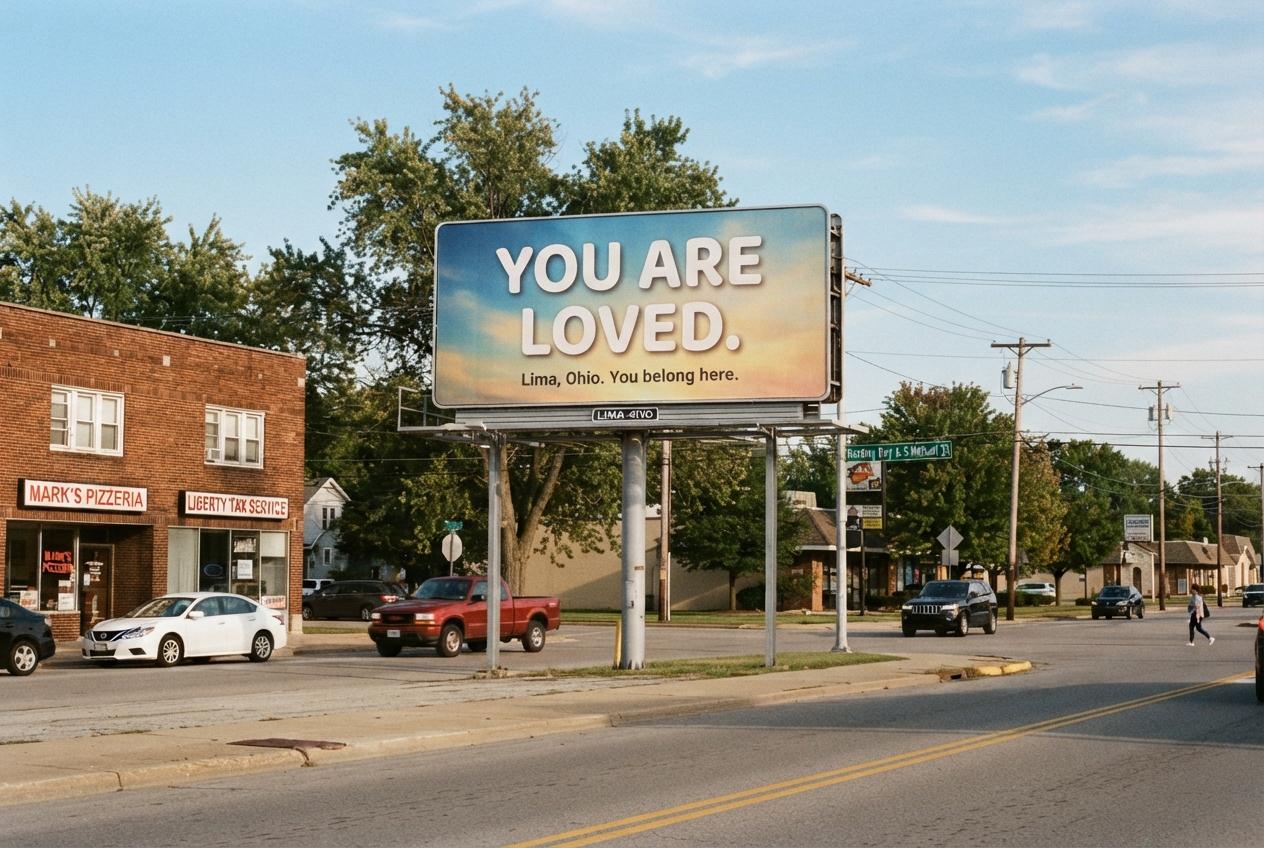
Shoppers and residents are noticing a rising row over roadside messages, as an anti-LGBTQ+ billboard appeared on Elida Road in Lima; neighbours and organisers have answered with “You are loved” signs and grassroots support, showing why community-led visibility matters for safety and belonging.
Essential Takeaways
- Visible provocation: A billboard on Elida Road used rainbow-highlighted text to target queer families, drawing local attention and concern.
- Quick community reply: A second sign reading “You are loved,” flown with the LGBTQ+ flag, appeared soon after, offering comfort and counter-message.
- Grassroots patterns: Cities across the US have seen similar exchanges; friendly billboards and crowdfunded signs have become a common local response.
- Practical support: Local groups such as Lima Pride Alliance are places to find community, resources and safety planning.
- Why it matters: Public messaging shapes how safe people feel; visible allyship can blunt harm and connect isolated residents.
Why a billboard bad-mouthing queer families still hurts
Billboards have a particular, blunt quality , they loom over your commute and catch your eye whether you want them to or not, which is exactly why advertising messages matter. The Elida Road sign used rainbow-highlighted words that made its target unmistakable, and that kind of public denigration can make queer people feel exposed and unsafe. According to reporting on similar clashes, one person’s advertisement can ripple into anxiety across a neighbourhood, so reactions aren’t merely symbolic, they’re emotional and practical.
How communities are turning pain into public reassurance
When an antagonistic message goes up, people often respond with compassion in the same public space. In Lima a supportive billboard saying “You are loved” was installed near the original, an approach we’ve seen elsewhere, from Billings, Montana to other US cities. Organisers use crowdfunding, local businesses and volunteer labour to make sure the counter-message is visible, warm and unmistakable. It’s a small, visible ritual that says: you’re not alone.
The grassroots mechanics: crowdfunding, alliances and simple signs
Across the country, groups mobilise quickly when hurtful billboards appear. Fundraisers on platforms like GoFundMe, local Pride alliances and civic groups often coordinate buying ad space, designing messages and installing signs. According to coverage of similar efforts, projects start small , a Facebook post, a shared article , and gather steam when people recognise the need to act. If you’re thinking of helping, donate, share the campaign widely, or offer practical help like site research, sign installation or design work.
What local groups and families can do right now
If the billboard has left you anxious, reach out. Local organisations such as Lima Pride Alliance, supportive churches or LGBTQ+ youth groups are practical first stops for community and resources. Keep a list of safe contacts, share plans with friends when attending events, and if you see harassment, document it safely and report it to authorities or community groups. For those wanting to respond publicly, consider tasteful, affirmative messages, clear legal checks for signage, and partnerships with businesses to host signs or events.
Bigger picture: messaging, law and what to watch next
Public messages reflect and shape local climate, but they don’t exist in a vacuum. Ohio’s history with marriage equality, resolved at the national level in 2015, shows how laws change but culture moves at its own pace. Local responses, billboards, vigils, support networks, are part of a longer social conversation. Watch for how city leaders and local media cover these incidents; public statements from officials can either de-escalate or inflame tensions.
It's a small change that can make every sign in town feel a bit safer.
Source Reference Map
Story idea inspired by: [1]
Sources by paragraph: