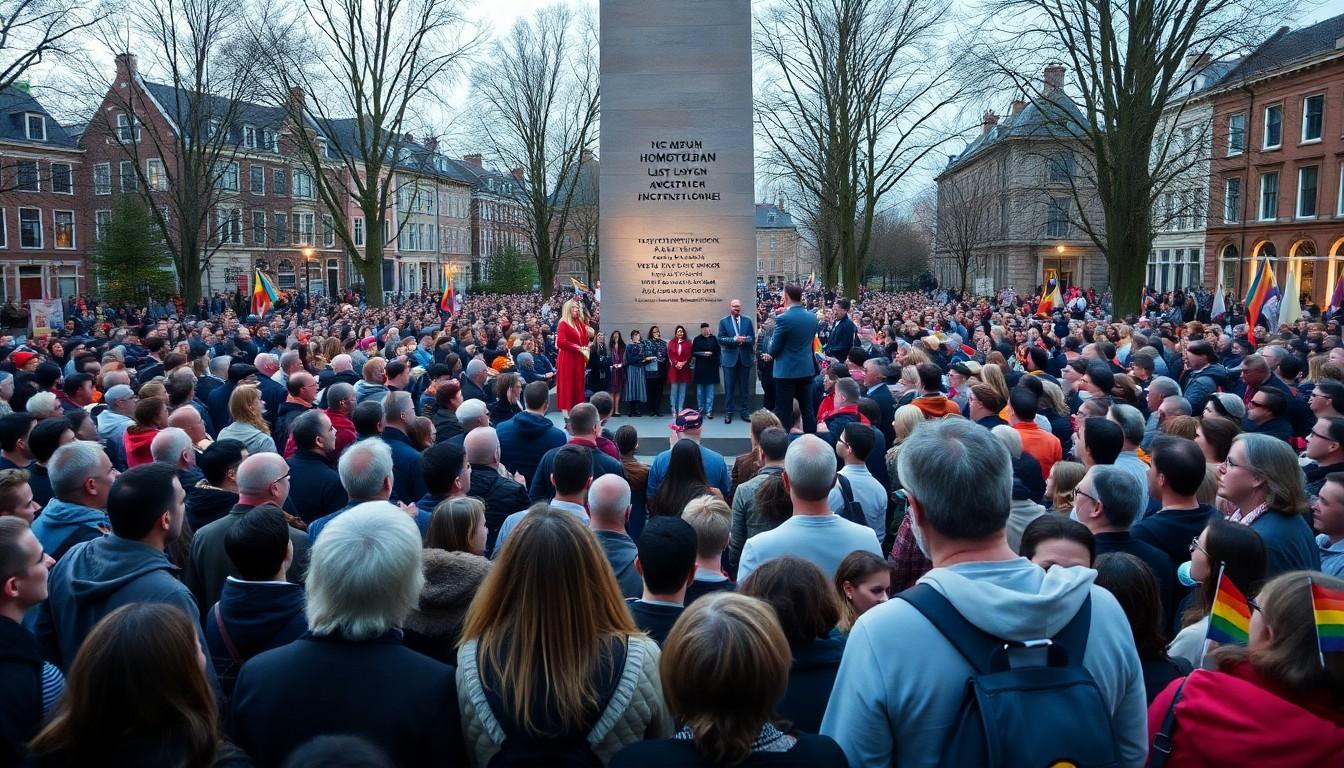
Hundreds gathered in Amsterdam at the Homomonument to honour the victims of the Berlin Pride attack, showing how local communities respond with flowers, speeches and quiet defiance; this moment matters because it blends grief with a public reminder that visibility and safety remain urgent.
Essential Takeaways
- Large turnout: Thousands showed up at the Homomonument to remember victims and support queer people, with floral tributes, candles and a minute’s silence.
- Personal tension: Some attendees felt anxious about wearing rainbow symbols in public, yet chose visibility as resistance.
- Leadership voices: City officials and LGBTQ+ leaders framed the attack as an assault on freedom and urged hope and resilience.
- Worrying trend: Recent studies point to declining acceptance among young people in Amsterdam, underlining why solidarity events matter.
- Practical atmosphere: The vigil mixed solemnity with practical care, speeches, witness accounts and community comfort felt immediate and human.
A crowd of flowers and quiet defiance sets the scene
The first thing that struck people was the visual: beds of sunflowers, roses and gerberas around the Homomonument and rows of white candles, a soft, solemn palette against the summer evening. Reporters noted that the vigil drew thousands to honour the person killed and dozens injured in the Berlin Pride attack, and organisers opened with a minute’s silence to steady the crowd. For many it was both a mourning ritual and a public message , you can be visible and unbowed.
The memorial’s emotional tone was immediate and tactile. People hugged, read names, and left handwritten notes; older couples and young activists stood side by side. That mix of generations made the point clear: this isn’t only about one incident, it’s about standing together in public spaces where queer life is celebrated.
Facing fear: why some people hesitated to show rainbow colours
Not everyone arrived wearing a flag. Several attendees admitted they’d briefly thought about covering rainbow shirts or hiding pins , practical worries about trains, neighbourhoods, or the odd violent incident get into your head, even here. That hesitation is telling: visibility brings joy and solidarity, but it can also raise practical safety questions for people who return to quieter towns after a big city vigil.
Still, many chose to stay visible. The decision to wear a rainbow or carry a sunflower became an act of defiance as much as remembrance, a way of saying fear won’t erase Pride. If you’re attending a vigil, small tips help: plan routes home, travel with a friend, and pick layers so you can feel comfortable while staying visible if you want to.
Officials and activists turn a local vigil into a global message
Speakers at the Homomonument included city leaders and LGBTQ+ figures who linked the attack in Berlin to broader threats against freedom. The mayor framed it as an assault on the very freedoms Amsterdam celebrates during WorldPride, while community leaders praised resilience and urged hope. Witnesses who had been in Berlin recounted the chaos and the grieving, adding direct testimony to the evening.
Those speeches did two things: they comforted attendees by naming shared values, and they pushed a political message , public safety and queer rights need constant attention. For organisers, turning grief into civic action is part of the ritual; for residents, it’s a reminder that municipal leadership can help shape safer public spaces.
Generational worry: acceptance among young people is slipping
A sharp note undercut the evening’s calls for hope: research shows acceptance among youth in the Amsterdam region has waned. Recent surveys indicate a notable proportion of young people don’t see same-sex relationships as entirely normal, and many question equal worth. Those figures helped explain why older attendees spoke so passionately about passing on a sense of safety to future generations.
That tension , hope for progress, worry about backsliding , is why memorials like these are staged in public and repeated often. They’re not just symbolic; they’re a form of civic education. If you care about changing attitudes, getting involved in local schools, youth programmes or community outreach can be as important as coming to a vigil.
How communities move forward , small, practical steps
After the speeches and candles, people dispersed with a quieter determination. The mood suggested several practical next steps: better safety planning for Pride events, more visible solidarity campaigns in smaller towns, and more education aimed at young people to sustain acceptance. Local groups are already talking about those ideas, and community leaders emphasised the need for continued public presence without letting fear dictate where people live or who they love.
If you want to help, join local Pride groups, volunteer at events, or donate to organisations that do outreach in schools. Showing up matters, but so does the slow work of changing hearts and minds.
It's a small change that can make every public celebration feel safer.
Source Reference Map
Story idea inspired by: [1]
Sources by paragraph: