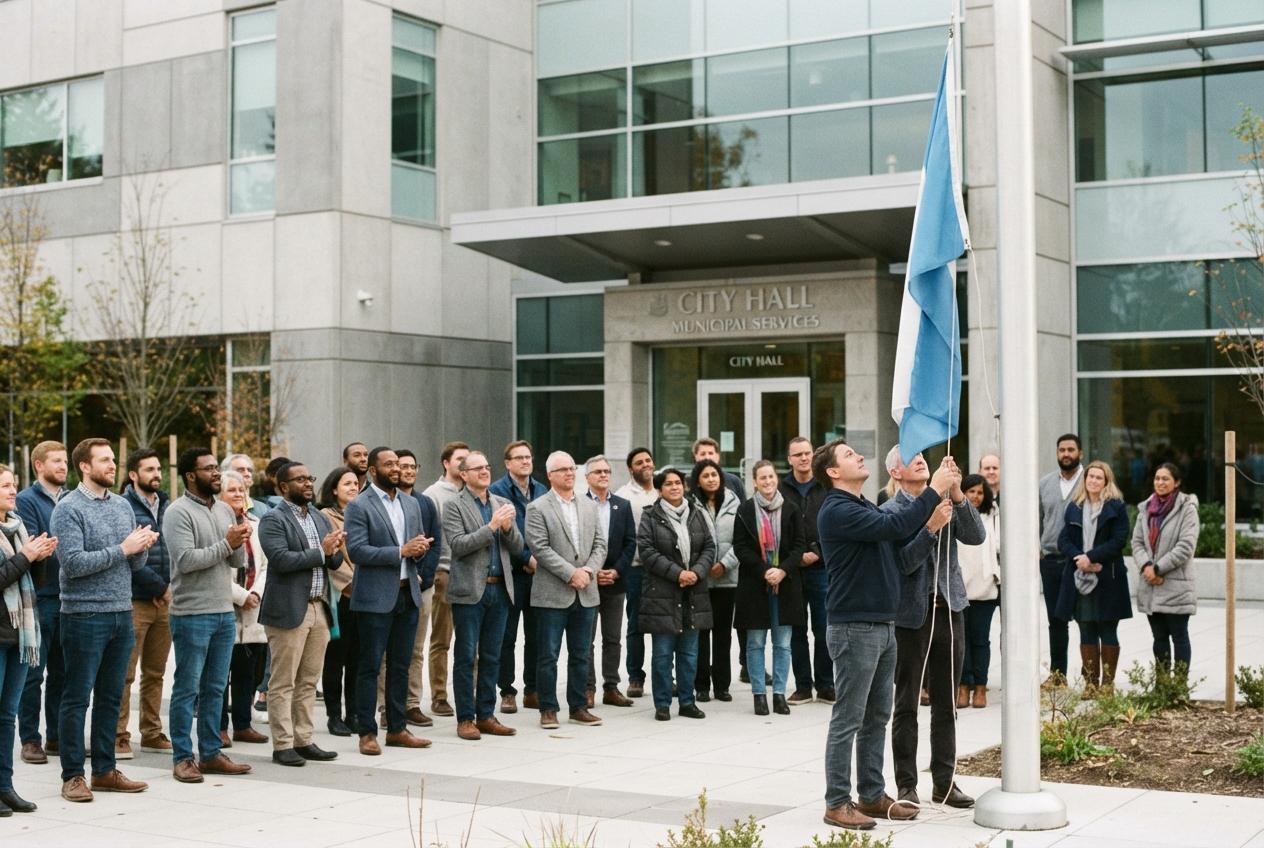
Celebrate the moment: Langley City’s annual Pride flag raising on July 27 brought elders and youth together, visible solidarity from the mayor, and a reminder that waving a flag is both symbolic and practical , it says this community exists, belongs, and deserves safety and care.
Essential Takeaways
- Community-led ceremony: Langley City’s Pride flag raising featured local advocates across generations, signalling broad civic support.
- Mayor’s message: Mayor Nathan Pachal, who is gay, emphasised the need to raise the flag “year after year” to show presence and belonging.
- Elder testimony: Lynn Richards, out since 1973, spoke about historic discrimination and the flag’s role in healing; orange represents healing.
- Youth involvement: Young organisers from Friends of Dorothy and Foundry Langley highlighted safe spaces, weekly drop-ins, and solidarity after attacks abroad.
- Ongoing work: Langley Pride Society and speakers underlined that awareness and practical supports remain essential for community safety.
A simple act with a powerful feel: why Langley keeps hoisting the Pride flag
There’s a particular hush as a flag climbs the pole, a quiet anticipation that feels almost like breathing in public. Langley City’s ceremony opened with Mayor Nathan Pachal asking the obvious question people sometimes still ask: why raise the pride flag every year? His answer was plain and practical , it signals presence, belonging and that queer people aren’t leaving. That kind of civic affirmation matters in everyday life, from schools to workplaces.
The ritual isn’t new, but the personal colour it brings is. According to Langley City council updates, flag raisings are a visible civic choice that connect municipal leaders to community groups. For residents deciding whether a council is supportive, the sight of the flag can be as persuasive as any policy paper.
Elders remind us where the fight began , and why symbols heal
Lynn Richards’ testimony gave the event a lived-history weight. She spoke about being out in 1973, losing work and facing housing discrimination, and eventually taking a grievance to the Canadian Human Rights Commission. Those stories make the flag feel less like decoration and more like a small monument to survival; Richards even noted the orange stripe stands for healing.
Hearing older voices matters because they trace the arc from exclusion to recognition, and they show the flag as part of an emotional recovery. For anyone organising local Pride events, inviting elders to speak can make the event both educational and deeply human.
Young people are organising local supports and safe spaces
Langley’s younger speakers, from the Friends of Dorothy group supported by Foundry Langley and Encompass Support Services Society, reminded the crowd that needs are ongoing and practical. Matthew McCormack co-facilitates weekly drop-ins where queer youths can talk about identity and access gender-supportive wear , those are the day-to-day things that make life livable.
Youth-led groups are increasingly the lifeline between services and young people who might otherwise fall through the cracks. If you’re a parent or school leader wondering how to help, look for local drop-ins and youth services and consider volunteering or donating clothes that affirm gender expression.
Global context: solidarity after attacks, and why local visibility matters
Speakers also pointed to threats beyond Langley, including a recent attack at a Pride event in Berlin. Taylor Saayman extended thoughts and gratitude to global communities under attack, reminding everyone that local safety is part of a wider struggle.
Municipal flag raisings are small gestures that connect to global awareness: they say your town notices the wider climate and stands with those who face violence for being themselves. Organisations such as Langley Pride Society continue to push for both symbolic acts and practical measures to protect and include community members.
What the flag means going forward , community work continues
Langley Pride Society director Kirk Day closed the loop by saying there’s always more to be done to bring people together and ensure nobody tackles this alone. Raising the flag is a beginning, not an end; it sparks conversation, points to resources, and invites action.
If you want to support similar efforts, look up your local Pride society, volunteer at youth drop-ins, or simply attend the next flag-raising. Little acts of presence add up.
It's a small public gesture that keeps conversation open and people safer.
Source Reference Map
Story idea inspired by: [1]
Sources by paragraph: