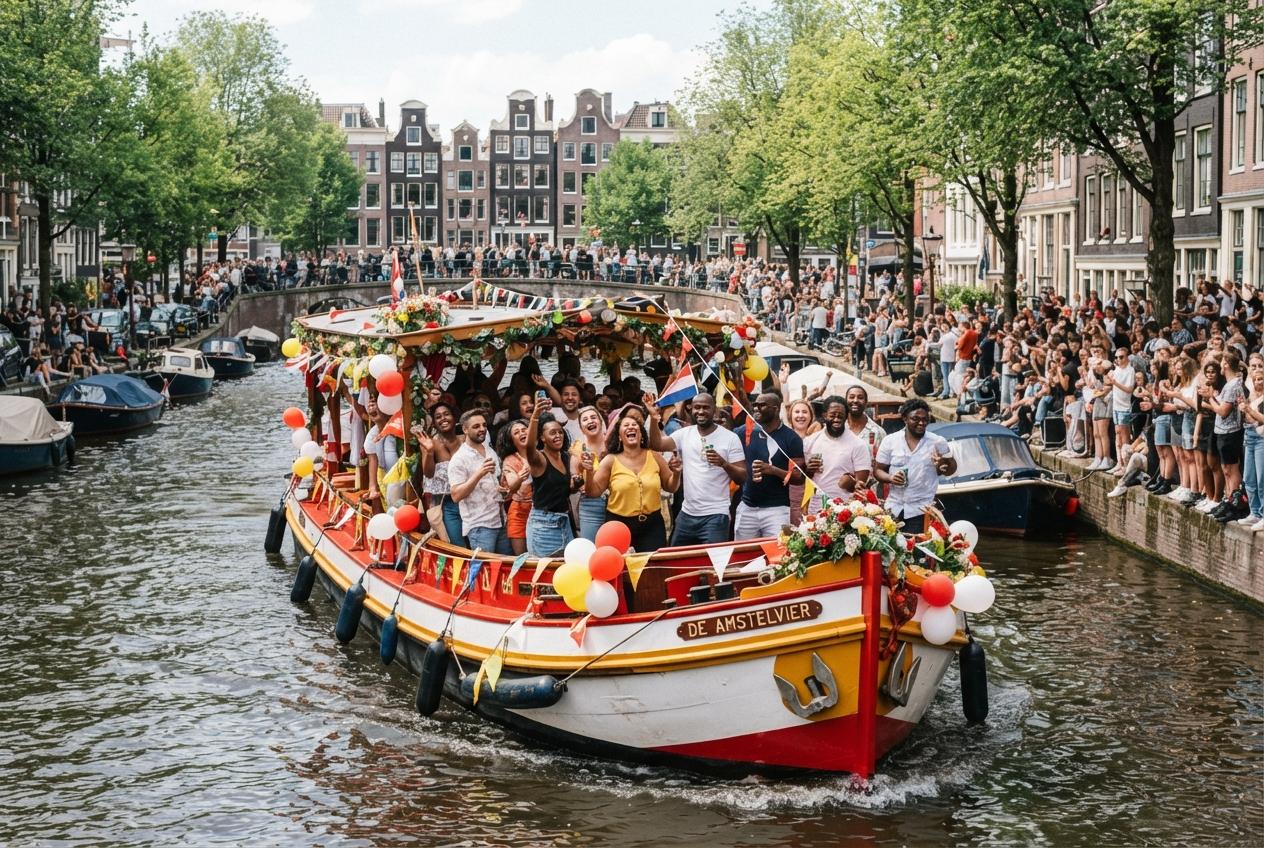
Watch a small town’s carnival colours sail into Amsterdam , and spark a debate about tradition, inclusion and where local festivals belong. Oeteldonk’s private float joins World Pride’s Canal Parade on 1 August, drawing cheers from LGBTQ+ groups and a cautious nod from the official village club.
Essential Takeaways
- Historic symbol: The Oeteldonk float brings classic red-white-yellow colours and traditional kielen to Amsterdam’s Canal Parade, signalling Oeteldonk’s link to inclusion.
- Private initiative: This is an independent friend group project; the Oeteldonksche Club of 1882 isn’t officially involved and keeps the village focus local.
- Inclusivity message: COC North-East Brabant welcomes the move as a brave, visible gesture that can increase acceptance.
- Tradition vs outreach: Club leaders stress a return-to-roots strategy , “our carnival, in our durp” , while advocates say visibility builds bridges.
- When and where: The boat sails with the Canal Pride on Saturday 1 August, between noon and 18:00; the lineup order is yet to be confirmed.
A splash of Oeteldonk on Amsterdam’s canals , and a ripple of reactions
The sight of red, white and yellow bobbing between Amsterdam’s historic canal houses is both cheerful and quietly bold; it smells of costume fabric and summer paint. According to the local reporting, a group of friends led by Rob van Helvoort has decked out a boat in Oeteldonk iconography for World Pride, complete with oversized frogs and traditional kielen. Pride Amsterdam lists the float in its Canal Parade line-up, while travel sponsors and partners have backed the project to highlight that local folklore can carry modern messages.
The move isn’t simply decorative. For supporters it signals that Oeteldonk’s values , equality and togetherness , travel beyond municipal borders. For traditionalists it raises the question of where a tightly local carnival should be promoted. Either way, it’s a visual insistence that heritage can be part of a contemporary conversation.
Why some welcome the float as a visibility win
Visibility is political, and that’s exactly the point COC representatives are making. The head of COC North-East Brabant described the boat as both powerful and courageous, arguing that seeing Oeteldonk’s colours in a queer context tells people the village stands for diversity. Organisations such as COC Amsterdam and national LGBTQ+ campaigns routinely emphasise that being seen reduces stigma; the float plugs neatly into that logic.
Practically, the float also offers a storytelling moment: the Oeteldonk tradition of wearing the same jacket or kiel instead of elaborate disguises can be framed as a longstanding statement of equality. For visitors unacquainted with Knillis and the boerenkiel, the Canal Parade becomes a living explainer.
The club’s caveat: tradition, boundaries and respect
Not everyone is popping the confetti. Jeroen Dona, Minister President of the Oeteldonksche Club of 1882, made a point of saying the float is a private initiative and that the official club is focusing on a “back to the core” approach in the village. That line , keep Oeteldonk a boertig-sjiek durp, not a festival brand to export , reflects a wider trend among heritage groups keen to preserve context and ritual.
There’s a practical edge to the club’s stance too: formal endorsement implies responsibility for representation, logistics and messaging. By staying out, the club can continue its local programming while letting neighbours experiment publicly. If you’re wondering what that means for visitors, the advice is simple: learn the background, respect the dress-code tradition and enjoy the celebration on local terms.
How to read this row in the bigger picture of festivals and identity
This isn’t just a quarrel about one boat. Across Europe, small-town customs are negotiating with national movements and international events. World Pride’s theme and organisers invite diverse groups to co-create the parade, and sponsors such as Travel Legends have picked up the Oeteldonk story as emblematic of “the world is for everyone.” That’s consistent with the World Pride programme, which aims to connect local stories to global queer histories.
If you’re a festival organiser or a curious visitor, there’s a takeaway: partnerships work best when the host community’s voice isn’t drowned out. Visibility can foster acceptance, but authenticity keeps cultural exchange respectful.
What to watch for on 1 August , and how to enjoy the moment
On the day, the boat will pass along the Canal Pride route between 12:00 and 18:00; exact placement among the fleet is still being finalised. Expect a colourful, slightly theatrical presentation , oversized frogs, traditional costumes and a clear message about belonging. If you plan to watch from the kade, bring sunscreen, patience and a willingness to listen to the stories behind the floats.
For Oeteldonk’s inhabitants and visitors alike, this episode is an invitation: keep your traditions, but notice how they can speak to others. And if you’re from outside the durp, learn a little about Knillis before you judge the costume , it makes the whole thing richer.
It's a small float with a big question: how do we carry culture into new conversations?
Source Reference Map
Story idea inspired by: [1]
Sources by paragraph: