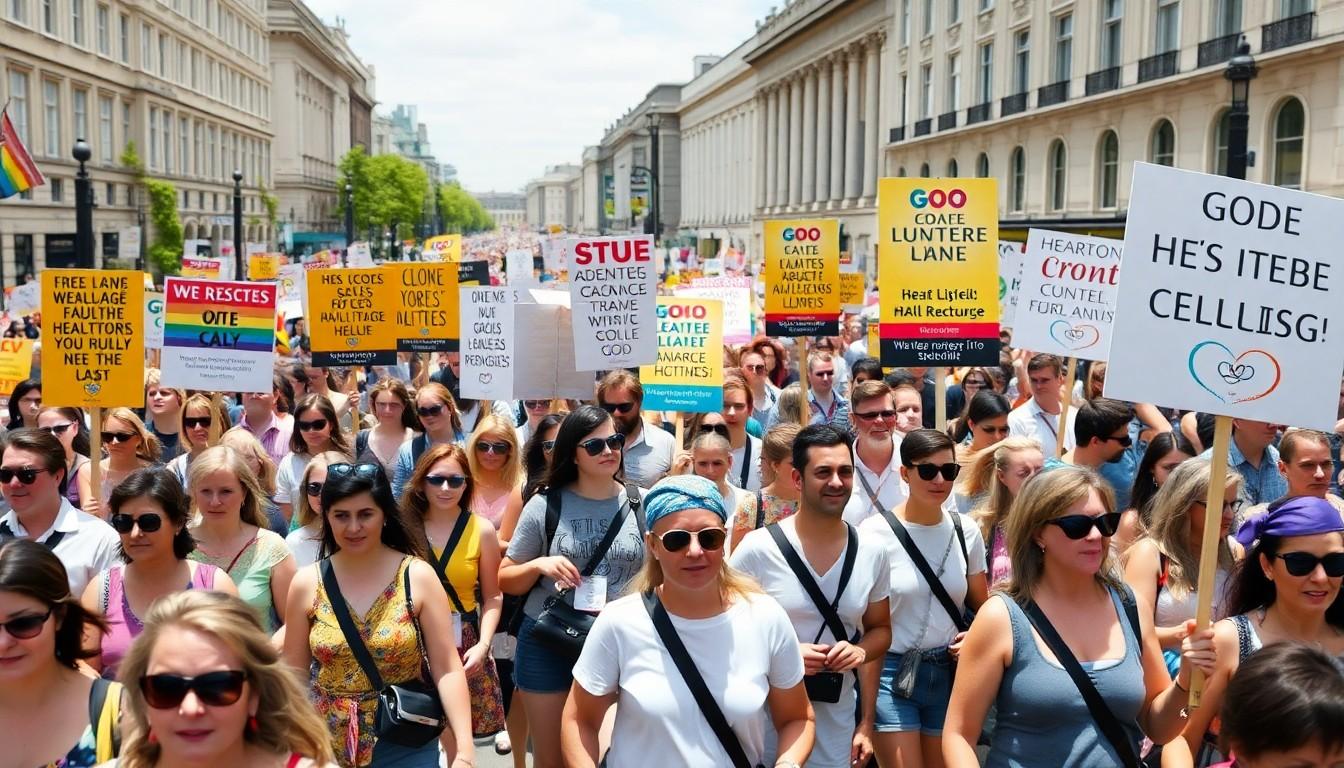
Shoppers, commuters and allies alike paused to watch as an estimated 150,000 people marched through central London for London Trans+ Pride on 25 July , a record, organisers say, and a vivid mix of protest, remembrance and celebration that matters for trans rights, healthcare access and public visibility.
Essential Takeaways
- Record attendance: Organisers estimated about 150,000 people at London Trans+ Pride, up from around 100,000 in 2025.
- Route and finale: The march began near Broadcasting House and, for the first time, finished in Trafalgar Square, filling the steps and fountains.
- Why people marched: Demonstrators pressed for stronger protections, better access to gender‑affirming healthcare and changes to guidance on single‑sex spaces.
- Emotional moments: Speeches included personal testimony about long NHS waits and the ongoing human cost of restricted care, described as life‑threatening by campaigners.
- Mix of protest and party: The event combined chants and placards with performances and art installations, signalling continued resilience and visibility.
A huge crowd, a louder message
London Trans+ Pride organisers say roughly 150,000 people took part, making this the biggest trans‑specific Pride march reported anywhere in the world. The scale felt almost cinematic , flags, loudspeakers and a steady, determined roar , and it matters because numbers translate into attention. According to local reporting, the jump from last year’s turnout underlines how many more people are willing to be visibly pro‑trans in public. For readers, that means this isn’t a niche moment: it’s a broad civic demonstration with political and cultural punch.
From Broadcasting House to Trafalgar Square , a symbolic route
The procession began near the BBC’s Broadcasting House and wound through central London, concluding in Trafalgar Square for the first time. Filling the square’s steps and circling fountains offered literal centre‑stage visibility and sent a clear signal about belonging in the capital. That choice of finish point was both practical and symbolic , it’s where speeches reach a bigger mix of Londoners and tourists , and it reinforced organisers’ point that trans people are part of public life, not confined to backstreets or private rooms.
Protest targets: guidance on single‑sex spaces and NHS waits
A large part of the march focused on the government and regulatory shifts affecting trans lives, especially changes to guidance on single‑sex spaces and the fallout from a key Supreme Court ruling. Campaigners argued the updated code could increase involuntary disclosure and exclusion from services like wards or changing rooms. Meanwhile, families and health advocates highlighted long waits for gender‑affirming care, painting a picture of human harm rather than abstract policy. If you care about practical effects, this is where policy meets people , and why protesters say urgent reversals or reforms are needed.
Personal testimony that turned heads
One of the most affecting moments came from a parent who linked NHS waiting lists to the loss of her child, calling for swift change. Those testimonies shifted the tone from abstract rights language to lived consequences: delayed appointments, deteriorating mental health and bereavement. Media coverage has carried these stories widely, and they help explain why the march blended anger with grief and resolute hope. For anyone trying to understand the stakes, hearing individual stories makes the policy implications painfully concrete.
Culture, performance and community resilience
The event wasn’t only protest. Performances, speeches and an art installation featuring casts of hundreds of trans and gender‑diverse faces framed the march as celebration too. Artists and performers helped keep the mood buoyant even as speakers demanded change. That mix is important: public protest needs drama and joy to sustain attention, and organisers used both to say that visibility is also about culture, identity and collective life, not just grievance.
It's a small change that can make every march, speech and policy debate count.
Source Reference Map
Story idea inspired by: [1]
Sources by paragraph: