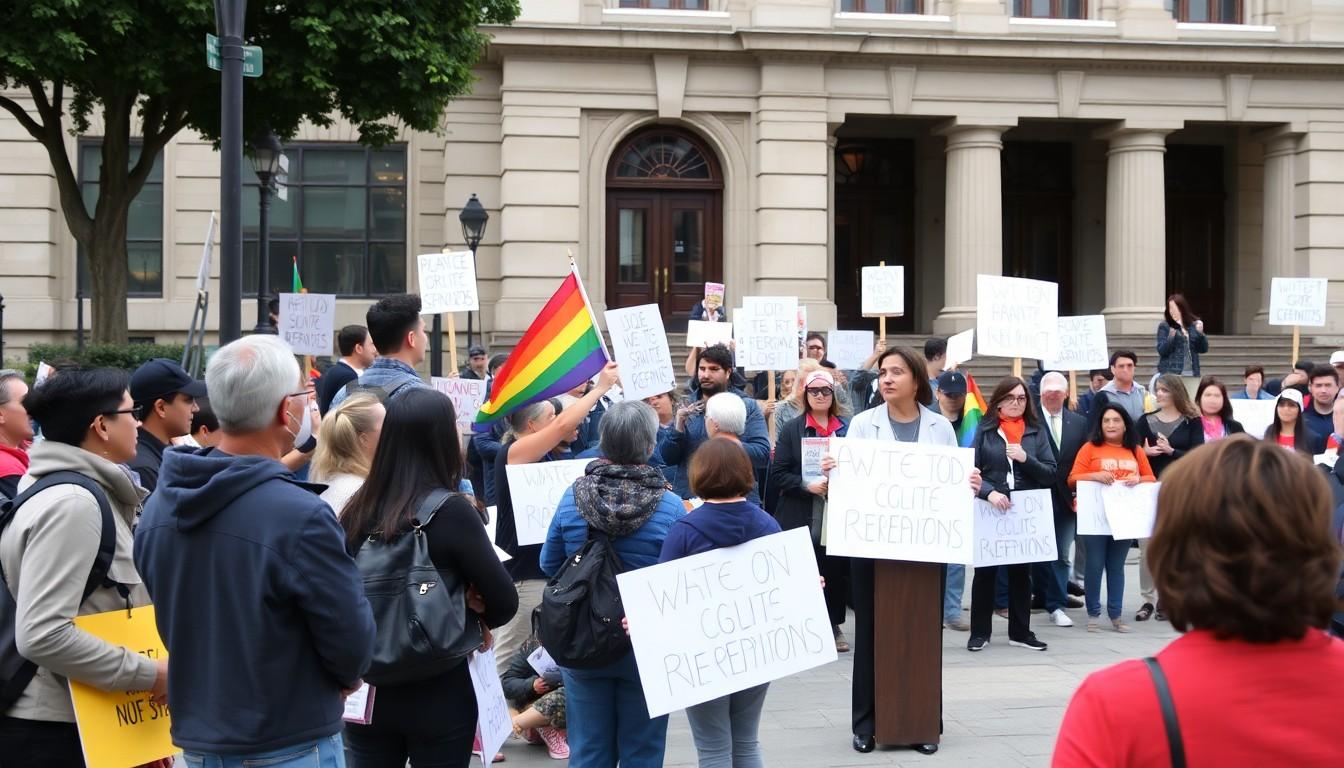
Shoppers, neighbours and activists turned out in force at Harvey Milk Plaza as queer community members rallied to demand prosecutors drop charges from two Pride weekend incidents , a trans rights march and the Stud Alley block party , arguing the arrests threaten hard-won freedoms and community safety.
Essential Takeaways
- Who’s charged: San Francisco District Attorney Brooke Jenkins filed criminal cases tied to the June 26 Trans March and arrests at the June 27 Stud Alley block party.
- Scope of charges: Four people linked to the Trans March face charges, while 18 people from Stud Alley were charged with unlawful assembly, refusing to disperse and resisting an officer.
- Community response: Dozens rallied July 24 at Harvey Milk Plaza calling for charges to be dropped and for reduced police presence at Pride events.
- Legal pushback: The San Francisco Public Defender’s office criticised the prosecutions as unprecedented and is backing a defence effort, citing rapid community support letters.
- Tensions and context: Officials say vandalism and threatening graffiti occurred; supporters call the response heavy-handed given the celebratory nature of Pride events.
Protesters made a clear, colourful demand at Harvey Milk Plaza
Dozens gathered under the plaza’s familiar banners, chanting and holding signs that read “Cops Out Everywhere, Drop the Charges.” The scene felt electric and uneasy at once, a mix of Pride’s jubilant energy and the sharp edge of political grievance. According to reporting, speakers framed the prosecutions as an attack on queer, trans and activist communities and urged immediate dismissals of the indictments.
Those who organised and spoke noted the symbolism of protesting at Harvey Milk Plaza, a civic site tied to queer political history, and argued the charges contradict that legacy. Organisers also called for fewer uniformed officers at future Pride events, saying a lighter police presence would reduce escalation and fear.
What prosecutors say and why the DA moved forward
District Attorney Brooke Jenkins has described the incidents as involving “troubling behaviour,” pointing to vandalism at several locations along the march route and to defaced security cameras. Authorities say paint was fired through water guns and that graffiti included hostile phrases aimed at police. Officials identified suspects they say damaged property, including a church.
The DA’s office charged several people after investigators reviewed footage and witness accounts. Jenkins and prosecutors argue the charges are a proportional response to actions that crossed into criminal conduct, particularly when public safety and private property were affected.
Defence teams call the prosecutions unprecedented and excessive
Public defenders and defence allies describe the charges , especially unlawful assembly and failure to disperse , as unusual for San Francisco and argue the response escalated peaceful protest. Defence lawyers point out that much of the paint used was washable and that arrest tactics included riot gear, drones and aggressive field procedures that chilled participation in community events.
Supporters mobilised quickly: more than 70 letters backing those charged were reportedly filed with the court within a day. Legal teams say those letters reflect widespread local concern and will be part of a broader strategy to challenge the prosecutions.
The community reckons with protest, policing and Pride’s future
For many attendees, the arrests struck a chord because of the nearby 1966 Compton’s Cafeteria Riot, an early and seminal transgender resistance. Speakers framed the current prosecutions as historically fraught, arguing that policing at Pride risks repeating patterns of suppression. Others cautioned that vandalism and threats can’t be ignored and that public safety must be balanced with civil liberties.
Expect more civic theatre: public hearings, court filings and more rallies are likely as defence teams and activists press for dismissal while prosecutors defend their decisions. The debate touches on broader trends , from how cities police marches to how prosecutors weigh community impact against public-safety claims.
What this means for people planning Pride events or attending protests
If you’re organising or attending future Pride actions, expect heightened scrutiny and to plan with an eye on de-escalation. Practical steps: document your event with assigned marshals and clear routes, brief attendees on non-violent conduct, and keep legal-aid contacts handy. For participants, simple precautions , carrying ID, staying in groups, and avoiding property damage , can reduce legal risk and keep the focus on celebration and advocacy.
Whether the charges stand will shape how San Francisco balances policing and protest at community events; for now, organisers and civil-rights advocates are watching closely.
It's a small change in policing practice that could have big consequences for how Pride is policed , and for who feels welcome to show up.
Source Reference Map
Story idea inspired by: [1]
Sources by paragraph: