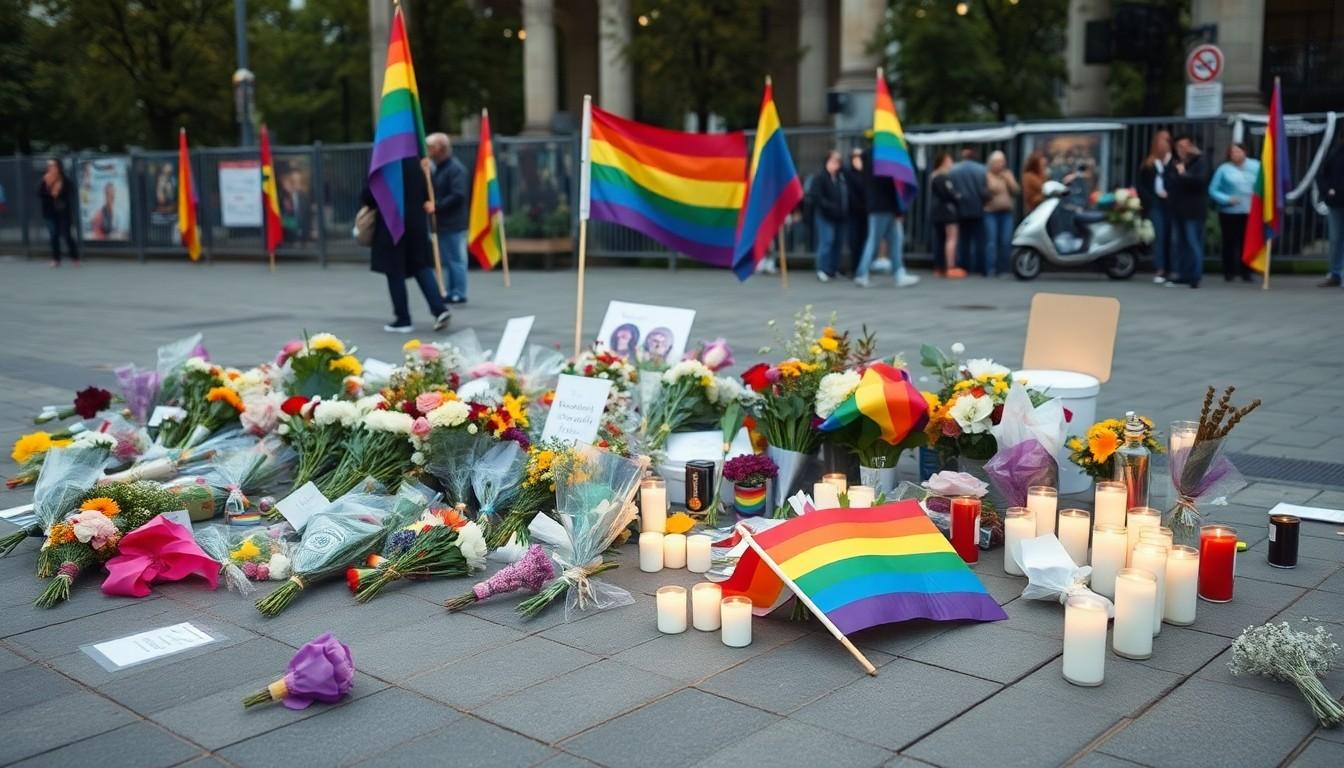
Shoppers and onlookers have watched as Berlin streets filled with flowers, candles and rainbow flags, as mourners remember victims of the deadly attack on a Pride march; the spontaneous memorials matter because they show solidarity, help communities grieve and keep pressure on authorities to act.
Essential Takeaways
- Visible solidarity: Streets near the attack filled with flowers, candles and rainbow flags, creating a quiet, poignant scene.
- Community grief: Survivors and witnesses expressed shock and anger, describing Berlin as shaken and vulnerable.
- International response: Memorials and services have been organised beyond Germany, from Amsterdam to other European cities.
- Calls for answers: Authorities face questions about motive, security and how to protect public LGBTQIA+ events.
- Practical support: Local groups and crisis services are offering counselling and information for those affected.
A city draped in petals and light , what the memorials looked like
Mourners laid down bunches of bright flowers, lit dozens of candles and left personal notes beside rainbow flags, turning pavements into soft, flickering shrines. According to Euronews, the vigil scenes were both gentle and urgent, a visual insistence that lives were lost and remembered. People visiting the sites spoke of a quiet, heavy atmosphere , the sort of communal grief that makes strangers stop and talk. If you plan to visit a memorial, bring something small and respectful: a single bloom, a brief note, and patience for others who are grieving.
Shock in a city that prides itself on openness
Berlin has long promoted itself as a welcoming, queer-friendly place, which is why the attack has felt especially disorientating. Le Monde reported locals saying they "never thought this could happen" in a city famed for Pride and tolerance. That sense of betrayal is common after public attacks: the places where people feel safest suddenly feel exposed. For residents and visitors, the immediate aftermath is a balance of fear and determination , fear of more violence, and determination to continue public life and demonstrate solidarity.
Grief, anger and demands for accountability
Reports by RTE and other outlets captured both sorrow and righteous anger among the LGBTQIA+ community, who are calling for swift investigations and clearer security measures. Protesters and community leaders want answers about motive and why preventive steps failed. Politicians and police have promised investigations, but history shows that public pressure often matters to keep enquiries moving. If you care about safety at public events, consider supporting local charities and campaigning for better protections for community gatherings.
Memorials spreading across borders , a European ripple
This was not just a local response. NLTimes and other sources noted memorial events and services planned in Amsterdam and elsewhere, a clear sign that attacks on Pride are seen as assaults on shared values across Europe. Small vigils and official commemorations help keep the story alive and offer solidarity to survivors and bereaved families. If you’re organising or attending a memorial outside Berlin, coordinate with local LGBTQIA+ groups to ensure your event supports survivors and avoids retraumatisation.
Practical advice for those affected or wishing to help
If you were at the march or witnessed the attack, reach out to local crisis services and support groups; many offer counselling, legal help and practical guidance, according to local reporting. For allies who want to help: donate to vetted support organisations, attend vigils peacefully, and amplify verified information rather than rumour. And if you’re planning to attend future Pride events, check organisers’ guidance on safety measures and look out for official updates about routes and stewarding.
It's a small change , showing up, listening and supporting , but it can make every memorial and march a little safer and more meaningful.
Source Reference Map
Story idea inspired by: [1]
Sources by paragraph: