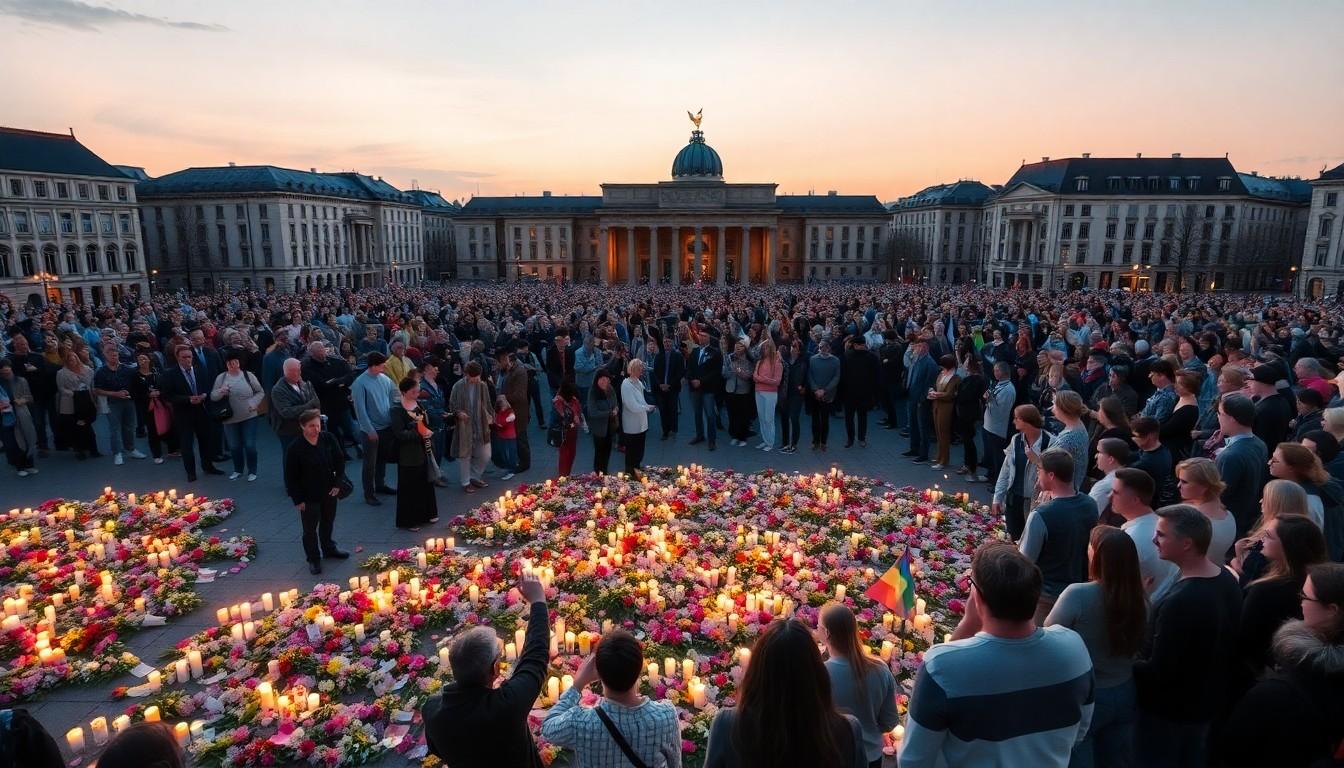
Thousands gathered in Pariser Platz after a vehicle and knife attack at Berlin’s Christopher Street Day left one woman dead and dozens injured; the vigil and cancelled events underlined grief, solidarity and renewed debate about how to protect Pride crowds across Europe.
Essential Takeaways
- One fatality, many injured: Officials confirmed one woman killed and at least 29 people hurt after a car ploughed into a crowd and several people were reportedly stabbed.
- Suspect identified and killed: Authorities named a 21-year-old suspect with alleged Islamist links; he was shot dead after a police search when he allegedly attacked officers.
- Vigil packed and emotional: A spontaneous vigil in Pariser Platz reached capacity quickly, with Pride flags, moments of silence and signs reading "From grief, to anger to resistance!"
- Events cancelled, solidarity widespread: Organisers cancelled further Pride activities; international and Irish groups publicly expressed support and called for unity.
- Security and community resilience: The incident has prompted urgent questions about policing, event safety, and how Pride remains both a celebration and a vulnerable public space.
What happened and the immediate human impact
A white vehicle drove into a crowd at Tiergarten near the Brandenburg Gate late on Saturday night, and reports say some victims were also stabbed with a blade that looked like a machete. The scene was chaotic and, by early hours, authorities confirmed one woman had died and dozens were injured. The image of flags fluttering against the sober backdrop of Pariser Platz at the vigil is a sharp contrast to the violence, and you can still feel the shock in the way people held each other and kept silent.
According to reports, police later located a crashed vehicle and, in a city-wide operation, identified a 21-year-old suspect. Officials said he had links to Islamist extremism and a history with law enforcement. This detail has intensified public debate about how potential threats are monitored without stigmatising whole communities.
A vigil that filled quickly , grief, anger and resolve
When thousands turned up to Pariser Platz on Sunday, organisers tried to balance commemoration with safety, limiting numbers once capacity was reached. People held a minute’s silence, waved Pride banners and carried placards that moved swiftly from sorrow to defiance. For many, Pride is one of the few places to be openly visible, so the emotional stakes are high.
Local and international groups were quick to speak out. Irish public figures and Pride organisations issued messages of support, while Berlin’s own CSD team emphasised solidarity and warned against political exploitation. The tone at the vigil , one of mourning fused to determination , felt like a message that Pride refuses to be erased by violence.
Why organisers cancelled events and what that means for Pride culture
In the immediate aftermath, many Pride activities were called off. Organisers thanked emergency services and volunteers, and made clear they wouldn’t allow the attack to be used to divide people or single out groups. Cancelling events is a practical response to risk, but it also underscores the difficult balance between safety and refusing to cede public space to fear.
This incident is part of a wider conversation about how to keep mass gatherings safe without turning celebrations into fortress-like spectacles. Expect discussions on bag checks, barriers, trained volunteer stewards and the visible presence of trauma-informed medical teams at future parades.
Security, policing and the thorny question of prevention
Authorities said the suspect had been radicalised and previously convicted for preparing a serious act of violence, with a suspended or deferred sentence and parole supervision. That fact has stoked questions about risk assessment, monitoring and early intervention. People are asking: how do police and social services work together to prevent someone slipping from supervision into an act of mass harm?
There’s no easy answer. Experts often point to better information-sharing, community-led prevention programmes and tailored mental-health support as parts of the puzzle. At the same time, the community response shows another prevention form: visibility and solidarity make it harder for hatred to sit unchallenged.
What this means for Pride events across Europe , practical tips for attendees
This attack will change how many cities plan Pride for the foreseeable future. If you’re going to large public events, consider these simple steps: travel with friends, agree on a meeting point, keep mobile phones charged, take note of exits, and be aware of first-aid or help stations. Event organisers should publish clear safety guidance, increase trained steward numbers, and work with local LGBTQ+ groups to create spaces that feel both secure and welcoming.
Police and festival teams will be under pressure to strike the right tone , visible security without turning marches into militarised parades. The community’s refusal to back down, shown in vigils and statements from Pride groups, suggests the culture of Pride will adapt rather than retreat.
It's a small change that can make every gathering safer and keep Pride proudly public.
Source Reference Map
Story idea inspired by: [1]
Sources by paragraph: