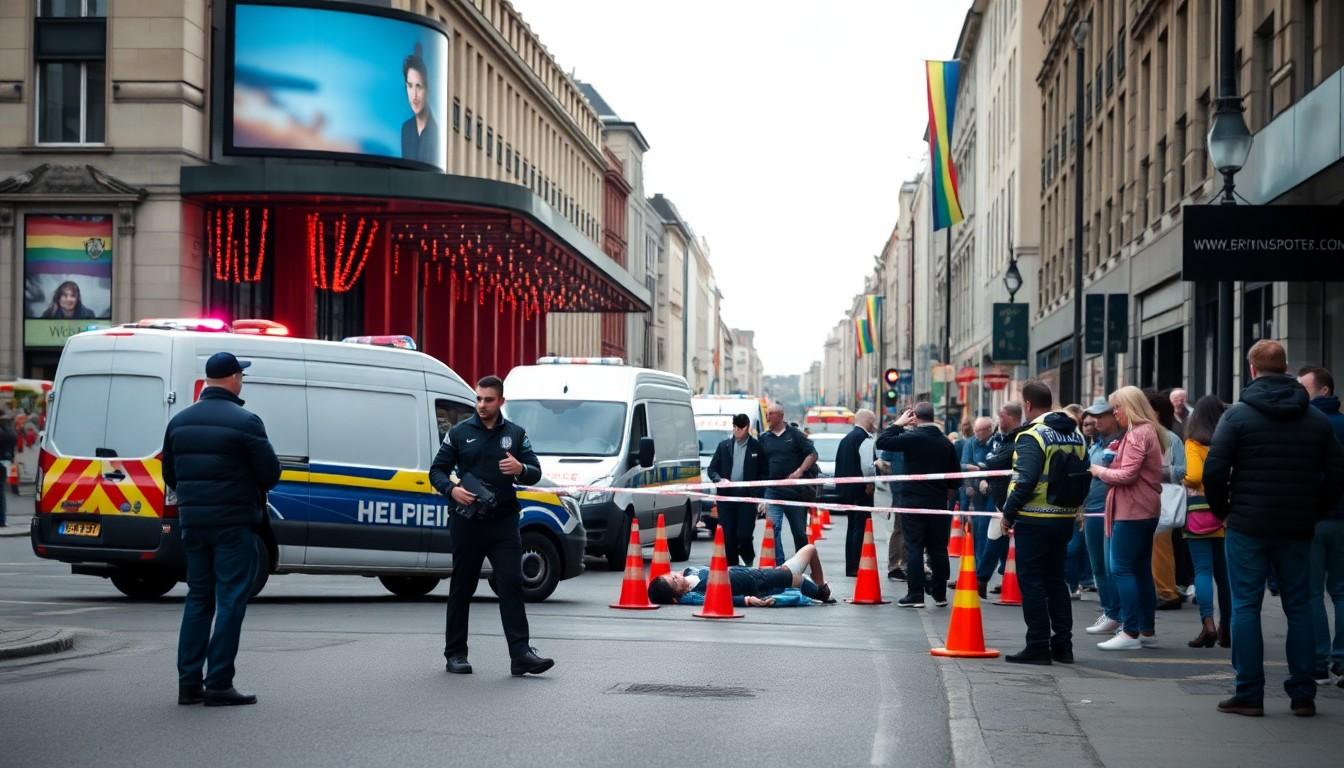
Shoppers, neighbours and festivalgoers paused in shock as a van ploughed into a crowd at a vibrant Berlin LGBTQ event, leaving grief, questions and demands for tougher safety measures , here’s what happened, who was affected, and why this matters for public gatherings across Europe.
Essential Takeaways
- Incident summary: A van drove into participants at a central Berlin LGBTQ event, killing at least one person and injuring many, leaving a scene described as chaotic and traumatic.
- Immediate response: Police arrested a suspect at the scene; emergency services and bystanders helped the wounded, and authorities quickly treated the incident as a violent attack.
- Victim profile: Attendees included festival-goers and families; the crowd was celebrating queer culture when the crash occurred, heightening communal shock.
- Security implications: The attack has reignited debates about event safety, vehicle barriers, and policing at public LGBTQ gatherings across Germany and beyond.
- Community reaction: Organisers and rights groups condemned the attack, called for solidarity, and urged support for victims while planning memorials and security reviews.
What we know so far: the scene and basic facts
First responders and stunned onlookers described a sudden, brutal interruption to what had been a colourful, noisy celebration. Witnesses told reporters there was screaming and confusion as people were struck; ambulances and police swarmed the site. Authorities say at least one person died and many were injured.
The Washington Post and AP both reported that officers detained a suspect nearby, and investigators were treating the event as an attack rather than an accident. Emergency crews and civilians worked together to pull people from harm and provide first aid. This was a public, crowded event , which is why the human toll feels so big.
Who was affected and why the LGBTQ context matters
This wasn’t just a random public gathering; it was a queer event that had drawn people to celebrate identity, community and visibility. Local and international outlets noted the symbolic weight: attacks on LGBTQ spaces often reverberate far beyond the immediate victims.
Organisers, community leaders and attendees described a scene of grief and disbelief. Berlin’s queer community, which has a long history of resilience, immediately mobilised to support the injured and to make sure victims’ needs are met. That response matters because it shapes how communities heal and how future events are safeguarded.
Questions about motive, investigation and legal process
Police moved fast to secure the area and detain a suspect, and investigations are ongoing. Officials said they were looking into motive and whether the crash was premeditated. Media reports point to a thorough forensic and witness-led inquiry, with prosecutors likely to review surveillance footage and interview dozens of people.
Germany has mechanisms for investigating violent incidents, and the legal process will determine charges and next steps. In high-profile attacks, the inquiry often spans criminal law and counterterrorism considerations, especially when victims are part of a minority community.
Safety, prevention and the debate over security at public events
Events that draw large crowds , marches, parades and festivals , have grown used to thinking about vehicle-based attacks. Since the early 2010s, cities across Europe have installed bollards, deployed barriers and rethought crowd flows to limit vehicle access. After this incident, expect fresh calls for barriers at parade routes, stricter vehicle checks near event perimeters, and more visible policing.
Organisers and municipal officials will need to balance openness and warmth with physical protections. Practical advice for organisers includes mapping safe entry/exit routes, renting temporary barriers, coordinating with local police early and training volunteers in crowd response. For attendees, staying aware of exits and reporting suspicious activity quickly can make a real difference.
Community response and what comes next
Rights groups and political leaders quickly condemned the attack and offered condolences. In Berlin, vigils and memorials are likely, as the community mourns and seeks solidarity. Meanwhile, organisers of queer events across Europe will review security plans and engage with authorities.
Longer term, this incident may change how public celebrations are staged, from permanent street redesigns to temporary vehicle exclusion zones during events. But many will also stress the importance of refusing fear: maintaining visibility, joy and protest has always been part of LGBTQ resilience.
It's a small change that can make every gathering safer and every celebration a little more secure.
Source Reference Map
Story idea inspired by: [1]
Sources by paragraph: