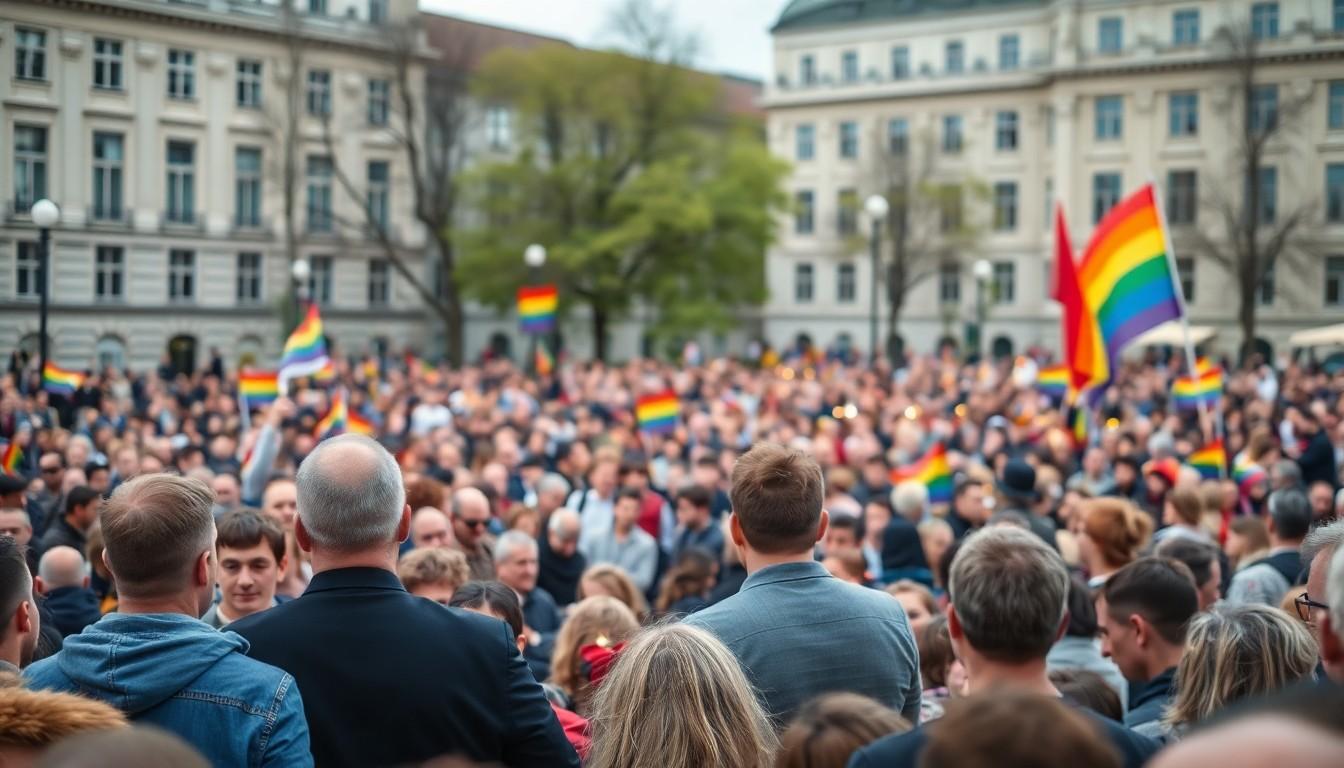
Witnessing a city come together: Munich residents and officials gathered in large numbers to mourn, support victims and defend LGBTQ+ rights after the suspected terror attack at Berlin’s Christopher Street Day, a quiet but powerful reminder that solidarity still matters.
Essential Takeaways
- Large turnout: Organisers and police estimated about 4,000 people joined the vigil at Marienplatz, creating a solemn, packed square.
- Visual solidarity: Munich’s mayor ordered rainbow flags flown at the town hall, a visible signal of support and tolerance.
- Victims remembered: Speeches and moments of silence honoured the woman killed and the dozens injured in Berlin.
- Civic defence: Officials framed the gathering as a defence of democratic rights, sexual self-determination and minority protection.
- Community mood: The event felt both mourning and resolute , quiet grief with a clear message: public spaces must remain safe.
A packed Marienplatz, soft light and firm resolve
Munich’s central square filled with people holding candles, flowers and placards , a calm, tactile scene after the shock of the Berlin attack. According to the CSD Munich organisers, about 4,000 people were present, a figure later matched to police estimates. The crowd’s mix , activists, families, allies , gave the vigil a quietly determined feel, like a community holding its breath together.
Organisers said they wanted to leave room for grief and for solidarity. The gathering’s tone reflected those aims; there was no spectacle, just steady presence. If you’ve ever stood in a crowd that’s both sad and stubbornly defiant, you’ll know the particular comfort that brings.
Why the mayor hung rainbow flags , and what it tells us
Munich’s new mayor ordered rainbow flags to fly in front of the town hall, a simple gesture that carried weight. Dominik Krause, who had recently marched in Munich’s own CSD, sent a letter to Berlin’s mayor calling the act an attack on the LGBTIQ+ community and on democratic society. That language framed the vigil as more than tribute; it was a civic statement.
Symbols matter in moments like this. A flag doesn’t heal, but it signals that authorities recognise the harm and choose to stand visibly with those targeted. For residents wondering whether their city cares, it’s a clear answer.
How organisers and speakers kept the focus on victims and rights
Speakers at the vigil emphasised victims and survivors rather than politics-for-its-own-sake. The CSD Munich director reminded attendees that thoughts are with the injured, the bereaved and everyone who witnessed the attack. That kept the event grounded: remembrance first, rhetoric second.
This approach is practical too. When communities respond to violence by centring the harmed, they reaffirm support structures , counselling, legal aid, community spaces , that matter long after media attention fades. If you’re planning or attending a vigil, look for groups offering follow-up resources.
What this means for public events and safety discussions
The attack , an alleged vehicle ramming at Berlin’s CSD , has prompted fresh debate about safety at large gatherings. Munich’s gathering was a reminder that mourning and security concerns can coexist. Officials stressed the importance of defending demonstration rights and minority protections while also reviewing event safety.
That balance is tricky. Communities want open, celebratory spaces; they also want practical safeguards. If organisers, police and local government coordinate early , from crowd routes to emergency plans , public events can stay both festive and safer.
A community that mourns and prepares
In the days after the attack, Munich’s response felt like a clasped hand: supportive, steady, visible. People came to remember and to remind each other that queer lives matter, that public demonstrations are a democratic right, and that cities will work to protect them. It was small comfort in a hard moment, but a meaningful one.
Let this be a nudge to check in with local groups, donate to survivor funds where they exist, and support efforts to keep public gatherings safe and inclusive.
It's a small change that can make every public moment a little safer.
Source Reference Map
Story idea inspired by: [1]
Sources by paragraph: