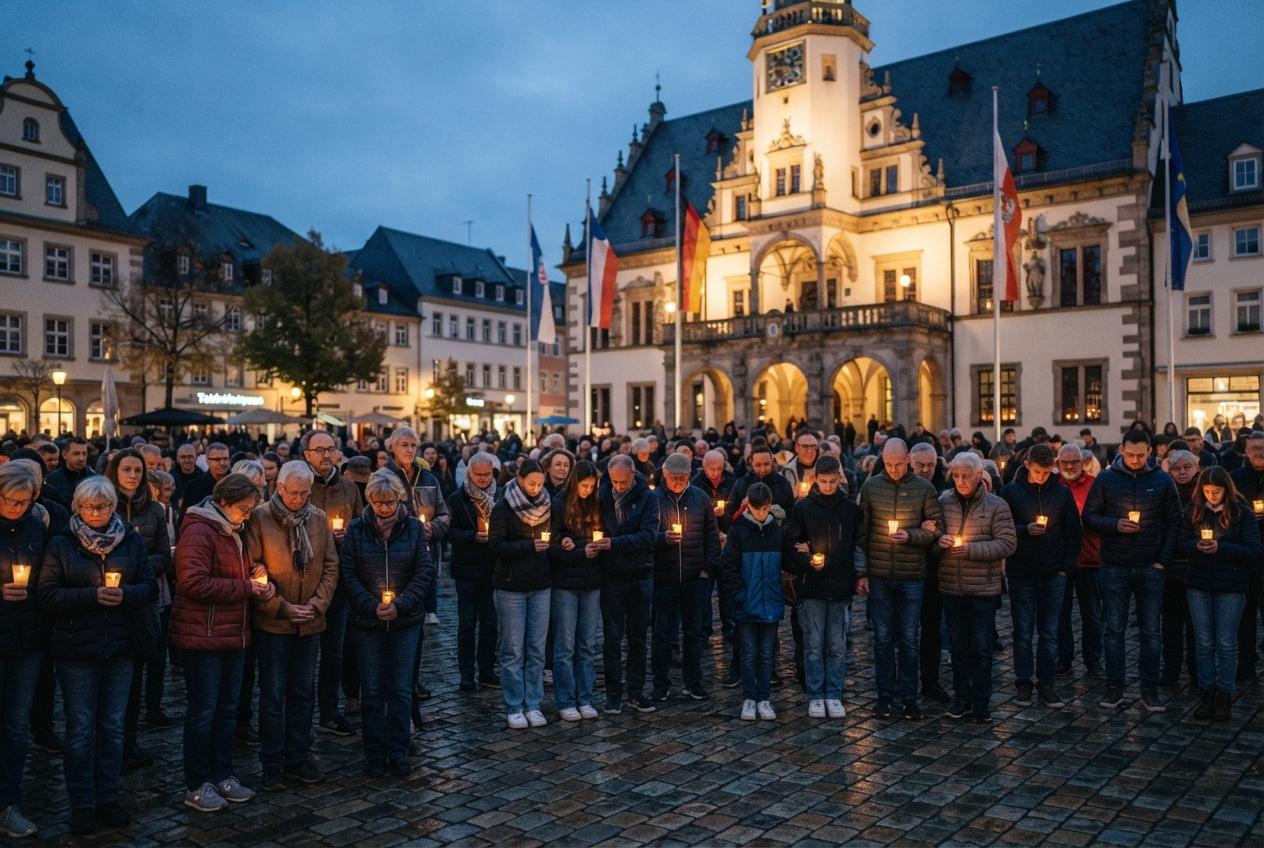
Shoppers and residents in Kiel have been gathering, lighting candles and laying flowers after the deadly attack at Berlin’s Christopher Street Day; community groups have organised vigils and a spontaneous rally to defend queer freedom and visibility, signalling local grief, anger and a push for safer events.
Essential Takeaways
- Public vigils: Around 200 people already gathered on Kiel’s Rathausplatz, leaving flowers and candles, with town hall flags at half-mast and rainbow flags displayed.
- Spontaneous rally planned: A demonstration titled “Defend Queer Freedom and Visibility” is set for Europaplatz at 17:00, called by local groups including Fridays for Future Kiel.
- Community message: Organisers stress solidarity with victims and relatives, and insist on staying visible and vocal against queer-directed violence.
- Broader context: The Berlin attack has shaken Pride events nationwide, prompting conversations about security and how to keep celebrations both safe and open.
- Emotional tone: The mood mixes grief and resolve; people want space to mourn but also to demand action.
Vigils and ribbons: how Kiel is showing grief and solidarity
Kiel’s Rathausplatz became a quiet, solemn scene, flowers at the Olympic flame, candles flickering and a red placard reading “Hate is deadly”. The visual felt immediate and human, small memorials giving people somewhere to gather and grieve. According to local reports, around 200 people attended the first vigil on Sunday evening, and organisers say the town’s symbols were lowered to half-mast as a sign of respect.
This kind of spontaneous memorial is familiar after sudden acts of violence; it’s both ritual and protest. People told reporters they wanted to create visible solidarity with those affected in Berlin, and to insist that queer lives matter. If you plan to join a vigil, bring water, a small candle in a holder and a respectful demeanour, these gatherings are both emotional and fragile.
The rally: who’s calling it and what they want
A spontaneous rally scheduled for Europaplatz at 17:00 has been called by a mix of local climate and social groups, including Fridays for Future Kiel and the Turbo-Klima-Kampfgruppe. Their statement links the attack directly to an assault on visibility and freedom: the very things Pride parades are meant to celebrate. Organisers want a space for mourning, solidarity and a clear, loud refusal of queerphobic violence.
This coalition underlines how community defence often cuts across causes; environmental activists standing with queer communities sends a strong message of broad civic solidarity. If you’re attending, expect speeches, placards and collective moments of silence, arrive early to find a good spot and to avoid crowding at the front.
Security and the future of Pride events: safety vs openness
Nationwide, the attack has set off a debate about how to balance safety at Pride with the openness that makes it meaningful. Media coverage from larger outlets notes that organisers across Germany are reassessing security measures, while still trying not to turn parades into heavily fortified events that feel like a police operation. For Kiel, which typically draws thousands to its Christopher Street Day celebrations, the conversation will be practical: stewarding, clear arrival routes, visible first aid and liaising with local police without losing the festival vibe.
If you’re an event organiser, simple steps help: publish clear safety guidance beforehand, mark help points on maps, train stewards in de-escalation and make medical support visible. For attendees, stick with friends, agree on meeting points and report anything suspicious promptly.
Emotion and activism: why visibility still matters
Many participants emphasise that visibility itself is a form of protection and affirmation, by being out and present you counteract the isolation attackers try to create. Yet that same visibility can make communities targets, and it’s a painful paradox. Local organisers in Kiel have been explicit: mourn, support victims, but continue to be seen. That urgency explains why rallies and vigils are happening now rather than later.
There’s also a civic lesson here. According to regional coverage, large public events have always relied on communities showing up for each other. The emotional impact of the Berlin attack has prompted calls for policy-level responses as well as grassroots action, from better protection to education aimed at reducing queerphobic attitudes.
What you can do if you want to help or take part
Show up if you can, and do so thoughtfully: bring water and a small candle, follow organisers’ guidelines, and be mindful of space for grieving families. Consider donating to verified local support networks that assist survivors and bereaved relatives, and amplify messages from queer-led organisations rather than taking centre stage yourself. Finally, talk to friends and neighbours, community safety is as much about everyday solidarity as it is about event security.
It’s a small change in behaviour that can make public moments safer and more supportive for everyone.
Source Reference Map
Story idea inspired by: [1]
Sources by paragraph: