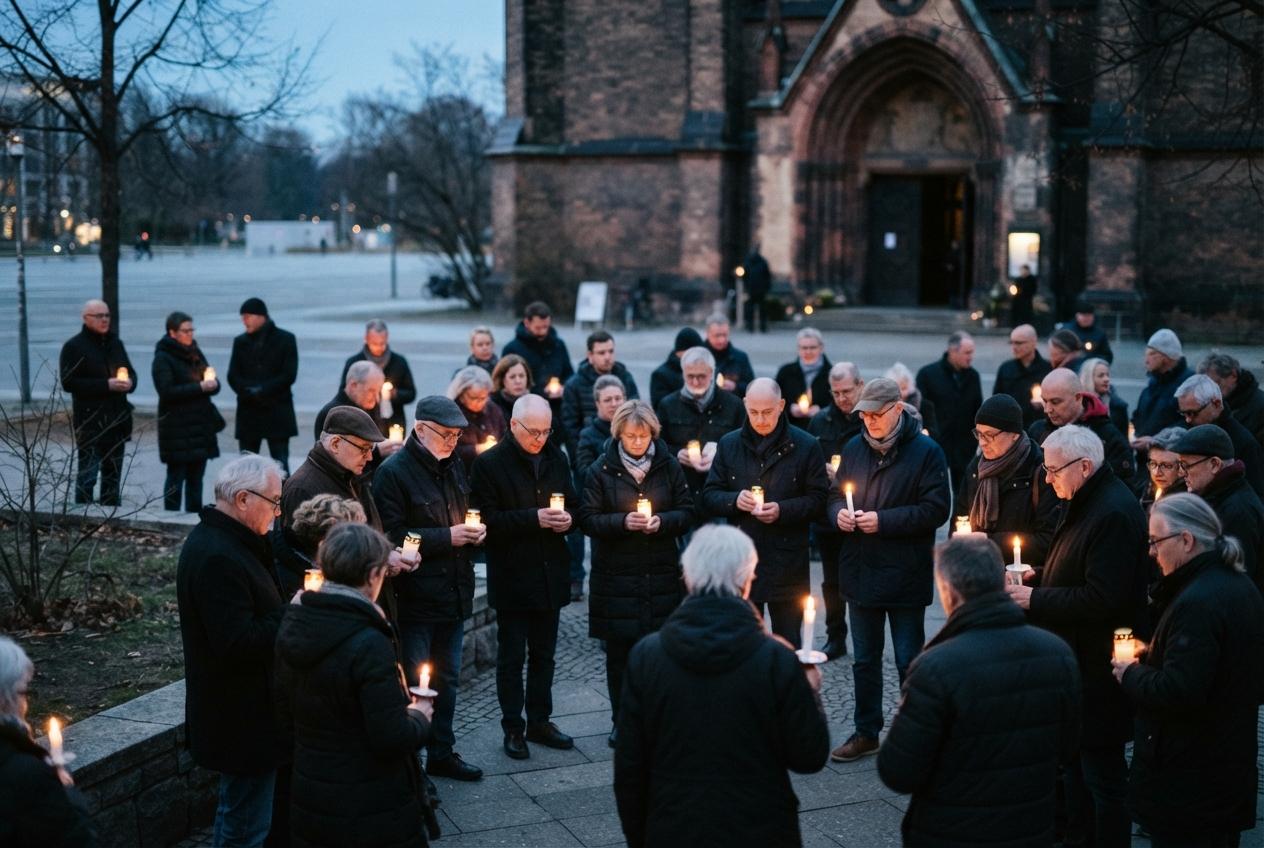
Witnesses and organisers rallied in Kreuzberg and at the Brandenburger Tor after a vehicle attack during Berlin’s Christopher Street Day, showing grief, solidarity and a determination to keep Pride visible despite fear and disrupted plans.
Essential Takeaways
- Immediate care: Police and organisers quickly secured sites around Heilig-Kreuz-Kirche and the Tiergarten, creating visible barriers that comforted some and unsettled others.
- Public mourning: Dozens laid flowers along the vehicle’s route; hundreds gathered for a vigil at the Brandenburger Tor with tearful embraces and speeches.
- Mixed emotions: Participants described a sudden loss of safety and a resolve to keep celebrating; many said they’d return next year.
- Community voice: Speakers urged political action, not just symbolic gestures, and warned against blaming migrants for the attack.
- Ongoing concern: Events like the CSD breakfast were cancelled on safety grounds, and state investigators are probing homophobic and potentially extremist motives.
A shock in the park, and the quiet of the morning after
The morning after the attack, police vans were parked like shields outside Heilig-Kreuz-Kirche, and officers patrolled the area; the sight, one worshipper said, brought immediate relief even as it underscored a new unease. According to local reporting, the vehicle had driven several hundred metres through the Tiergarten, leaving behind torn bark and plastic fragments, while pink and orange markings on the grass mapped the route. For people who’d spent the weekend feeling safe, the contrast was sharp and painful.
Flowers, notes and a community tending its wounds
Around the crash site, visitors left sunflowers and handwritten messages , “We stand together” and “Live long, Dancing Queen” among them , turning a stretch of park into a makeshift memorial. Accounts from attendees describe long, wordless embraces and young people travelling from other federal states laying flowers in tribute to victims and survivors. The act of coming together, simple and tactile, became the first step in processing a public trauma.
A vigil at the Brandenburger Tor that mixed grief and politics
Thousands gathered on the Pariser Platz for a Mahnwache, where grief mixed with pointed calls for structural change. A Muslim, gay speaker reminded the crowd that solidarity can’t be a reflex after tragedy; it must start with political choices that keep queer life visible and services funded. That sentiment , applause for asking for durable support, not only flags at half-mast , shaped the mood and nudged the conversation beyond mourning to demands.
Safety measures and cancelled plans: the practical fallout
Organisers and police pulled back some elements of the weekend: the big communal breakfast was called off on security grounds, and visible barriers and fences ringed central sites. Some attendees said the police presence felt reassuring; others noticed it made them more aware of the loss of normality. Authorities are reported to be investigating the motivation behind the attack and other hostile incidents that occurred around the CSD, underscoring that practical safety remains an urgent concern.
Why people promise to “be loud and colourful” again
Despite fear, many declared they’d return to Pride next year , “we are a community,” one participant said , seeing celebration as a form of resistance. Organisers and community members emphasised that refusing to be silenced is itself a political act, a way to honour those hurt and to insist on visibility. The mood was raw but resolute: grief and anger sitting beside a determination to keep queer culture alive in public spaces.
It's a small change that can make every gathering safer and keeps the memory of the day tethered to both mourning and resolve.
Source Reference Map
Story idea inspired by: [1]
Sources by paragraph: